










Product Details
Product Overview
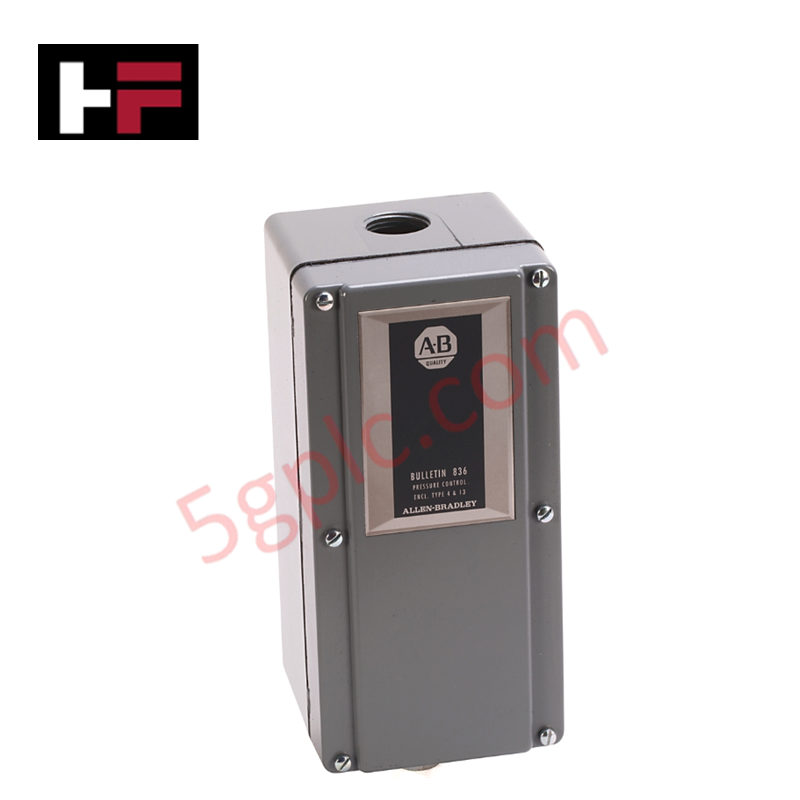
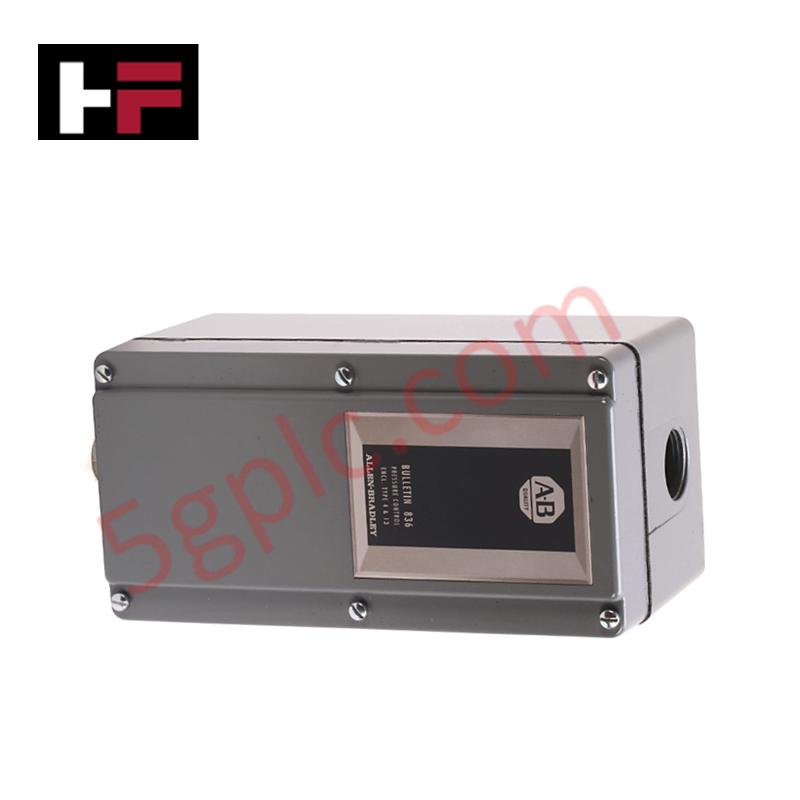
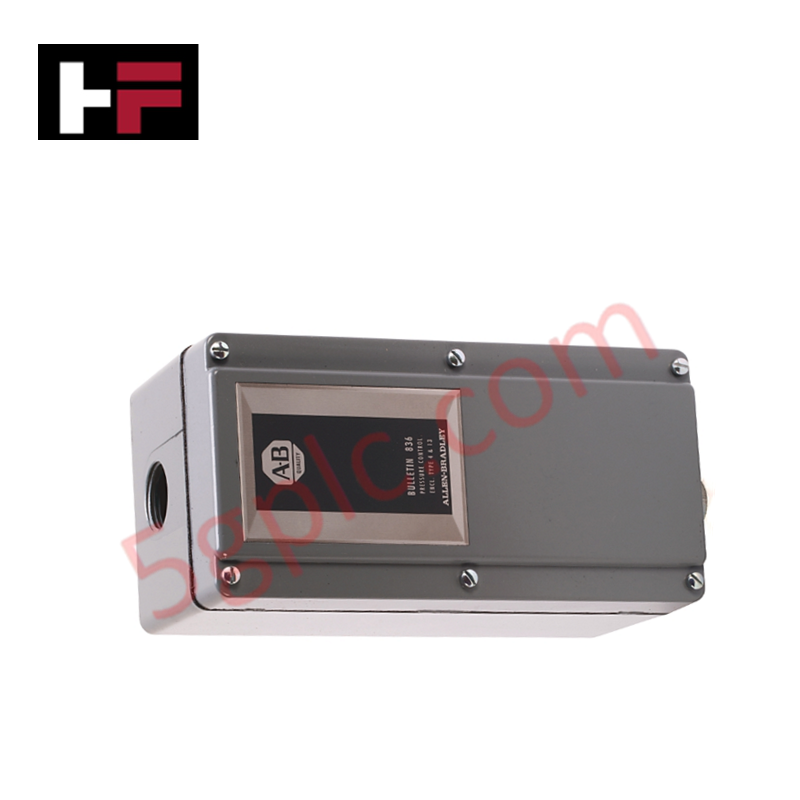
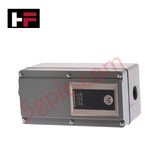
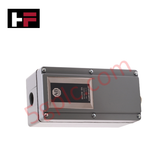
The Allen Bradley 836-C9 operates as a heavy-duty industrial pressure switch designed for precise control in pneumatic and hydraulic systems. This Style C device utilizes an external copper alloy bellows to actuate electrical contacts when system pressure reaches pre-defined setpoints. We supply this unit as 100% Brand New, ensuring factory-calibrated accuracy for critical safety interlocks and process automation.
Technical Specifications
The 836-C9 combines a broad operating range with high surge tolerance to accommodate volatile industrial environments.
| Feature | Specification |
| Manufacturer | Allen Bradley (Rockwell Automation) |
| Model | 836-C9 |
| Pressure Range | 35 to 375 PSI |
| Max Line Pressure | 900 PSI |
| Port Size | 1/4 inch FNPT (Female National Pipe Thread) |
| Enclosure Type | Style C |
| Sensing Element | External Copper Alloy Bellows |
| Weight | 1.65 lbs (0.75 kg) |
Engineering Advantages
-
Superior Media Compatibility: The external copper alloy bellows resists corrosion and fatigue when exposed to non-corrosive liquids and gases. This material choice ensures a long service life even in systems prone to frequent pressure fluctuations.
-
High Surge Protection: While the switch operates within the 35–375 PSI range, the internal architecture withstands line pressures up to 900 PSI. This safety margin prevents mechanical failure and recalibration requirements following system pressure spikes or "water hammer" events.
-
Precise Mechanical Switching: The Style C design provides high repeatability for critical setpoints. The mechanical snap-action contacts eliminate the "hunting" behavior often found in low-quality electronic sensors, providing a definitive electrical signal to your PLC or motor starter.
-
Standardized Integration: The 1/4 inch FNPT port allows for direct mounting or connection via standard industrial fittings. This universal threading simplifies the replacement of older units and allows for easy integration into existing manifold blocks without custom adapters.
FAQs
-
Can the 836-C9 handle corrosive chemical applications?
The 836-C9 utilizes copper alloy for its bellows. You must verify that your process media does not react with copper. For ammonia or highly acidic environments, consult the 1756 or 836 series stainless steel variants to prevent bellows rupture.
-
Is the pressure setpoint adjustable?
Yes. The 836-C9 allows for manual adjustment of the trip point within the 35 to 375 PSI range. Use the internal adjustment screws to calibrate the switch to your specific process requirements.
-
What mounting orientation provides the best performance?
While the 836-C9 functions in multiple orientations, mounting the unit vertically with the pressure port facing downward prevents sediment and moisture from accumulating in the bellows, thereby extending the maintenance interval.
-
Does this switch require a separate power supply for sensing?
No. The 836-C9 is an electro-mechanical device. The pressure of the process fluid physically moves the bellows to trip the electrical contacts. It operates without external power, making it an ideal choice for fail-safe hardwired interlocks.
Additional Information
- 100% Genuine Parts: All products are original and authentic, ensuring reliable industrial performance.
- 30-Day Refund Guarantee: Return any in-stock item within 30 days in original, unopened packaging for a full refund (excluding shipping and fees).
- 12-Month Warranty: Covers defects in materials or workmanship; excludes misuse, normal wear, or unauthorized modifications.
- Worldwide Shipping: We ship via USPS, UPS, FedEx, and DHL. Delivery times vary by country and may be subject to customs or import fees.
- Support & Contact: Technical and warranty assistance is available anytime. Contact us here: Contact.
- Purchase Guidance: Check product specifications and compatibility carefully before ordering to ensure proper application.
Tech & Buying Guide

Understanding Marshalling Cabinets in Industrial Control Systems Architecture
Industrial control system deployments rely on structured signal distribution to bridge field instrumentation with central processing hardware. A marshalling cabinet serves as the vital intermediate connection point between heavy field home-run multi-pair cables and delicate input/output (I/O) modules housed inside Programmable Logic Controller (PLC) or Distributed Control System (DCS) enclosures. By segregating field cable terminations from control hardware, engineers maintain system flexibility, safeguard controller components, and streamline commissioning workflows.

FAT vs SAT in Industrial Control Systems: Key Differences and Execution Guide
Industrial control system deployment relies on strict verification protocols to guarantee operational safety, system stability, and regulatory compliance. Commissioning complex Programmable Logic Controller (PLC) racks, Distributed Control Systems (DCS), and Safety Instrumented Systems (SIS) requires two critical milestones: the Factory Acceptance Test (FAT) and the Site Acceptance Test (SAT). Both procedures validate that system automation meets design specifications, but they occur at different stages of project execution and target distinct operational risks.

Hub vs Switch vs Router in Industrial Automation Architecture
Modern factory automation relies on reliable industrial networking infrastructure to exchange real-time field data across operational technology systems. Engineers often encounter networking hardware like hubs, switches, and routers when integrating Programmable Logic Controllers, Distributed Control Systems, and SCADA monitoring nodes. Although these devices share physical ports, they operate at different layers of the Open Systems Interconnection reference model and deliver distinct traffic management capabilities.