












Product Details
Module Overview
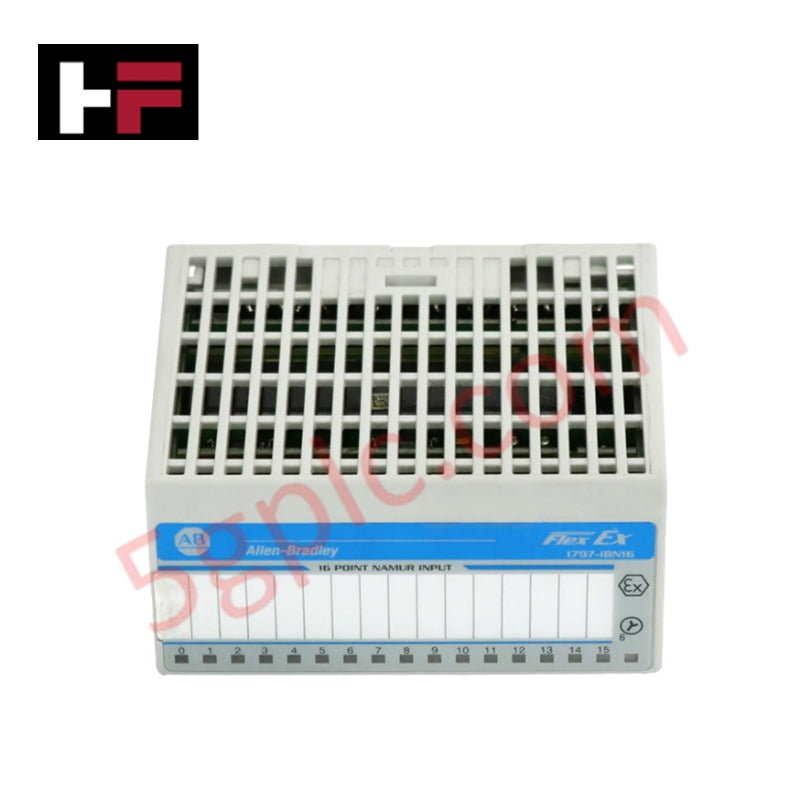
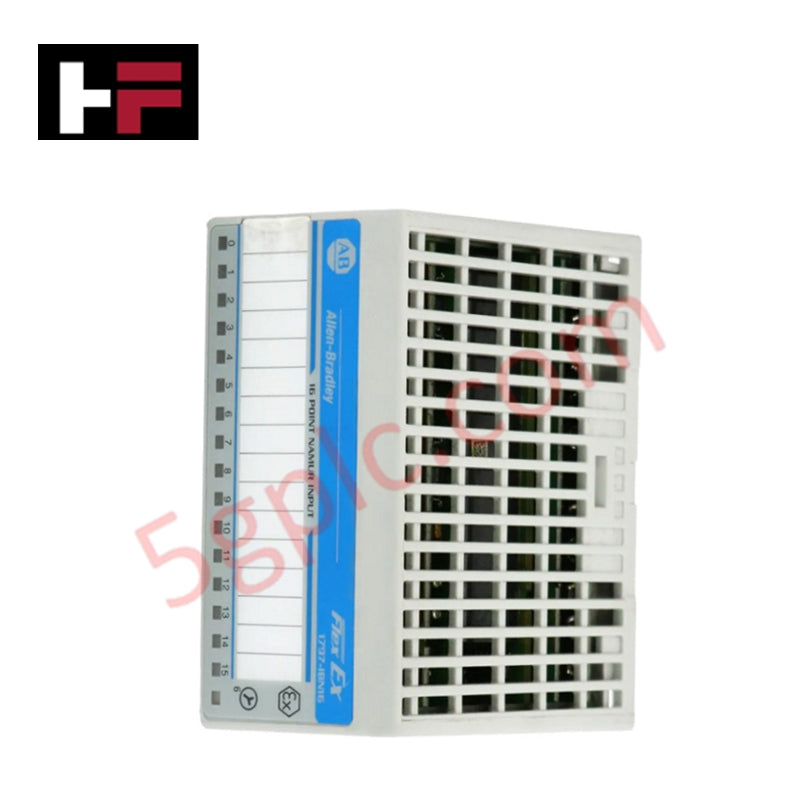
The 1797-IBN16 is a high-density, intrinsically safe (IS) digital input module specifically engineered for hazardous environments. Part of the Allen-Bradley FLEX Ex I/O family, this module is designed to interface directly with up to 16 NAMUR-compatible proximity sensors or dry contact switches located in Zone 1 or Zone 2 (Class I, II, III, Division 1) areas. By integrating intrinsic safety barriers directly into the I/O hardware, the 1797-IBN16 eliminates the need for external isolation barriers, significantly reducing cabinet space and wiring complexity. It provides advanced diagnostics, including open-circuit and short-circuit detection, to ensure maximum uptime in critical process applications such as chemical refining and oil and gas production.
Detailed Engineering Specifications
The 1797-IBN16 is a non-isolated, sinking input module that adheres to strict international explosion protection standards.
-
Number of Inputs: 16 Channels (Non-isolated, Sinking)
-
Input Type: NAMUR (IEC 60947-5-6) compatible
-
Intrinsic Safety Ratings: * Ex ia IIB/IIC T4 / AEx ia IIC T4
-
Class I, II, III, Division 1, Groups A–G T4
-
On-State Current: > 2.1 mA
-
Off-State Current: < 1.2 mA
-
Hysteresis: 0.2 mA
-
Maximum Load Voltage: 7.5V DC
-
Input Frequency: 1000 Hz (Max)
-
Input Pulse Width: > 500 µs (On or Off)
-
Selectable Filter Times: 1 ms, 2 ms, 3 ms, 5 ms, 9 ms, 17 ms, or 33 ms
-
Indicators: * 16 Yellow (Status)
-
16 Red (Fault/Wire-off/Short-circuit)
-
1 Green (Module Power)
-
Power Dissipation: 2.8 Watts
-
Thermal Dissipation: 9.6 BTU/hr (Max)
-
Physical Weight: 0.81 lbs (0.37 kg)
NAMUR Diagnostics and Fault Detection
The defining feature of the 1797-IBN16 is its adherence to the NAMUR sensor standard. This allows the module to distinguish between four distinct line states:
-
OFF: Normal state where current is between 1.2 mA and 2.1 mA.
-
ON: Normal state where current is above 2.1 mA.
-
Short-Circuit: Detected when the circuit resistance drops too low (current > 6 mA).
-
Open-Circuit (Wire-Off): Detected when the circuit resistance is too high (current < 0.15 mA).
If a fault is detected, the corresponding red LED illuminates, and a diagnostic bit is sent to the Logix controller, allowing for immediate identification of field wiring issues without manual troubleshooting.
Installation and Hazardous Area Wiring
The 1797-IBN16 must be used with a specific FLEX Ex terminal base, either the 1797-TB3 (screw) or 1797-TB3S (spring-clamp). Because this is an intrinsically safe module, it must be installed in a protected environment (like a NEMA 4X enclosure) and powered by an approved 1797-PS series IS power supply. Maintenance personnel can safely perform "Removal and Insertion Under Power" (RIUP) even in hazardous areas, provided the system was designed following the specific FLEX Ex entity parameters.
Technical FAQ
Can I use standard "dry contact" limit switches with this module?
Yes, but to maintain the line-monitoring diagnostics (Open/Short circuit), you must install two resistors at the switch: one in series and one in parallel. This mimics the impedance of a NAMUR sensor.
What is the maximum wire length for sensors connected to the 1797-IBN16?
The distance is limited primarily by the capacitance and inductance of the cable to maintain intrinsic safety. Generally, distances up to 1,000 feet are achievable with standard 12 AWG (4 $mm^2$) instrument cable, but a formal IS entity calculation should be performed.
Does this module require an external barrier?
No. The 1797-IBN16 is an "associated apparatus" that contains its own internal IS limiting circuitry. It is designed to be the barrier between the safe-area backplane and the hazardous-area field sensors.
Additional Information
- 100% Genuine Parts: All products are original and authentic, ensuring reliable industrial performance.
- 30-Day Refund Guarantee: Return any in-stock item within 30 days in original, unopened packaging for a full refund (excluding shipping and fees).
- 12-Month Warranty: Covers defects in materials or workmanship; excludes misuse, normal wear, or unauthorized modifications.
- Worldwide Shipping: We ship via USPS, UPS, FedEx, and DHL. Delivery times vary by country and may be subject to customs or import fees.
- Support & Contact: Technical and warranty assistance is available anytime. Contact us here: Contact.
- Purchase Guidance: Check product specifications and compatibility carefully before ordering to ensure proper application.
Tech & Buying Guide
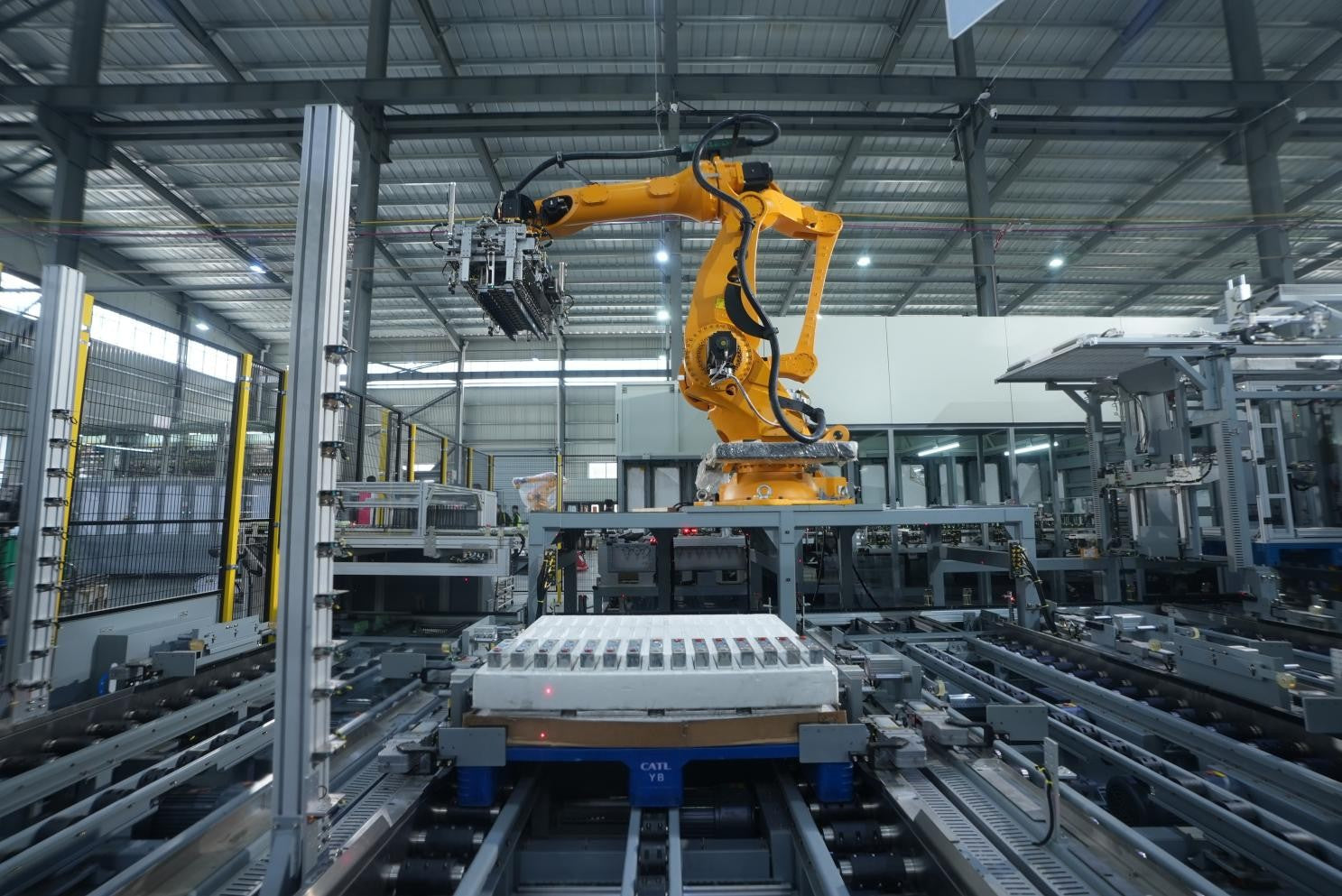
Strategic Selection: Choosing the Right SCADA Software for Your PLC Project
In industrial automation, the SCADA (Supervisory Control and Data Acquisition) system acts as the bridge between raw machine data and actionable human intelligence. Selecting the incorrect software platform can lead to integration bottlenecks, scalability issues, and excessive long-term maintenance costs. As an automation consultant with 15 years of experience, I have guided many projects through the selection process. Below are the essential criteria for choosing a platform that ensures both performance and longevity.

Ensuring Operational Continuity: The Strategic Value of Redundant Automation Systems
In modern industrial landscapes, unplanned downtime is the ultimate adversary. For sectors relying on complex PLC and DCS architectures, a single hardware failure can trigger catastrophic production losses. Therefore, implementing redundant automation systems is no longer a luxury; it is a fundamental requirement for mission-critical operations. In this article, I analyze why redundancy remains the backbone of reliable industrial infrastructure.

Selecting the Right Cables for Industrial Automation: A Comprehensive Guide
Selecting the appropriate cabling infrastructure is critical for the success of any industrial automation project. Improper cable selection often leads to signal degradation, system instability, and costly downtime. As an automation engineer, I frequently see projects compromised by poor cabling choices in harsh industrial environments. This guide simplifies the complex landscape of cabling to help you make informed decisions for your PLC, DCS, and control systems.