Selecting the Right Cables for Industrial Automation: A Comprehensive Guide
- 〡
- 〡 by WUPAMBO
Selecting the appropriate cabling infrastructure is critical for the success of any industrial automation project. Improper cable selection often leads to signal degradation, system instability, and costly downtime. As an automation engineer, I frequently see projects compromised by poor cabling choices in harsh industrial environments. This guide simplifies the complex landscape of cabling to help you make informed decisions for your PLC, DCS, and control systems.
Categorizing Cables by Sheath Material
Material choice dictates how a cable handles environmental stress. PVC (Polyvinyl Chloride) cables represent the industry standard for general-purpose applications. They offer reliable performance under moderate mechanical stress and provide excellent chemical resistance. However, for high-vibration or heavy-duty factory automation settings, PUR (Polyurethane) cables are superior. PUR provides exceptional wear resistance and is flame-retardant. Furthermore, in food and beverage plants, PUR is preferred for its microbial resistance. Finally, for extreme environments involving heavy welding sparks, POC (Polyolefin Copolymer) cables remain the industry preference. These cables withstand temperatures up to 150°C, providing the thermal ruggedness that PVC and PUR cannot match.
Understanding Industrial Networking Standards
Modern communication demands robust networking cables. Unshielded Twisted Pair (UTP) is common, yet its lack of shielding makes it susceptible to electromagnetic interference (EMI). Therefore, I rarely recommend UTP for factory floors with high-frequency drives or large motors. Instead, Shielded Twisted Pair (STP) serves as the primary choice for industrial networks. The added shielding protects data integrity from the noise prevalent in control cabinets. For applications requiring extreme noise immunity, Coaxial cables remain a specialized solution. Their multi-layer construction effectively blocks signal interference from fluorescent lighting and high-power electrical equipment.
The Role of Optical Fiber in High-Speed Data
Optical fiber technology has revolutionized long-distance communication in large-scale industrial plants. By transmitting data via light pulses, these cables achieve virtually zero electromagnetic susceptibility. They consist of a core, cladding, and protective coating, utilizing total internal reflection to maintain signal clarity over significant distances. In my experience, migrating to fiber-optic backbones between DCS controllers and remote I/O significantly improves network latency. While initial deployment costs are higher, the reliability and bandwidth advantages are essential for modern, high-speed data acquisition.
Strategic Application: Selecting the Right Solution
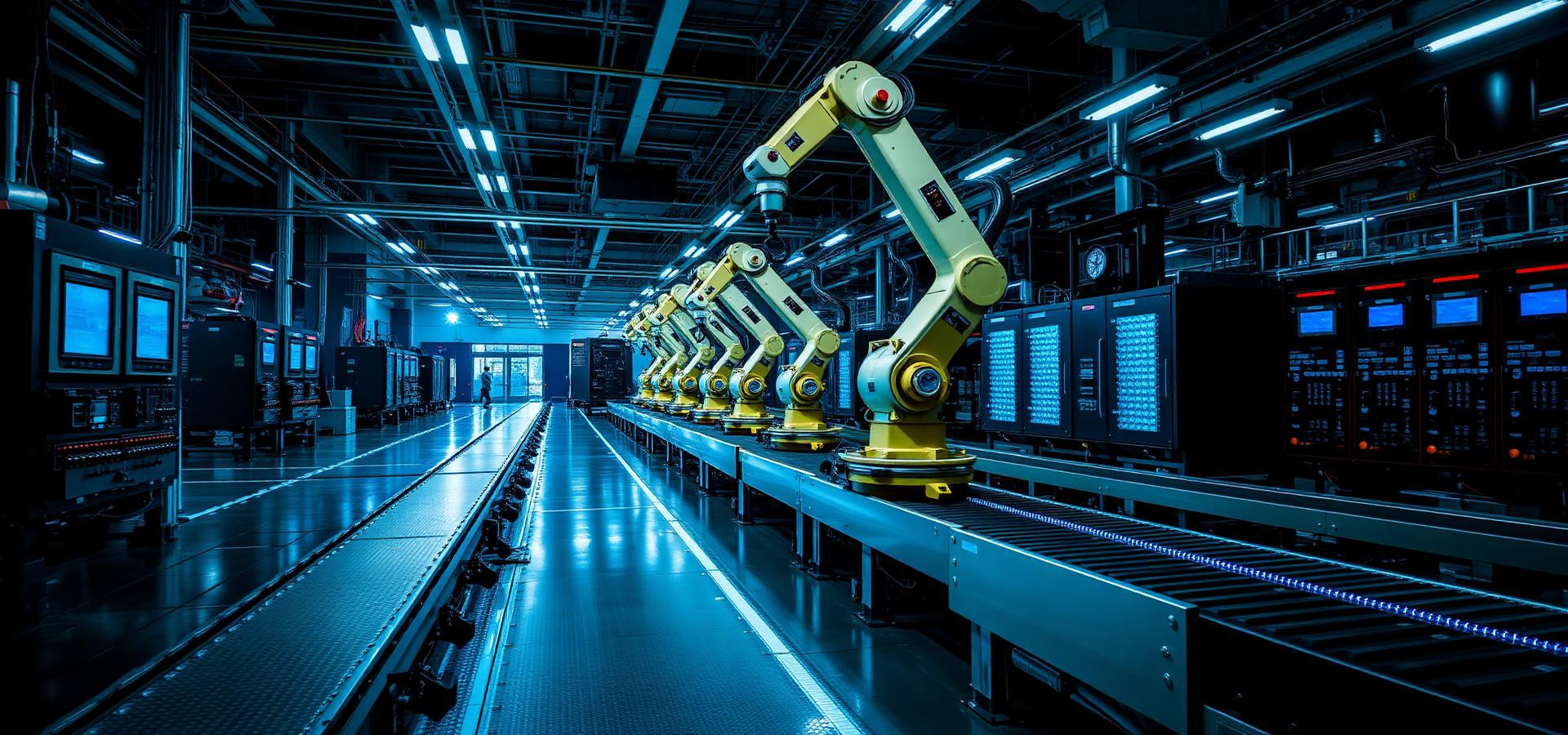
Choosing the right cable is not just about the technical specs; it is about environment-specific reliability. For a high-speed assembly line with robotic welding, I recommend a hybrid approach. Use PUR-jacketed cabling for motion-intensive robotic arms to handle mechanical fatigue. Simultaneously, deploy shielded CAT6A (STP) for PLC communication to ensure signal purity amidst electrical noise. When connecting distributed I/O across a facility, fiber optics provide the necessary noise immunity for long-range data transmission. Always consult manufacturer guidelines and local electrical standards to ensure your installation meets safety requirements.
About the Author: Chen Haoran
Chen Haoran is a Senior Technical Consultant with over 15 years of experience in global industrial automation. He specializes in the design and implementation of complex PLC and DCS architectures, with a deep background in industrial communication protocols and electrical system hardening. He has provided technical expertise to several leading automation hardware manufacturers and continues to advocate for standardized, high-performance cabling practices in mission-critical manufacturing environments.
- Posted in:
- Cable Selection
- DCS
- Electrical Engineering
- Ethernet
- Fieldbus
- Industrial Automation
- Networking
- PLC