










Product Details
Product Overview
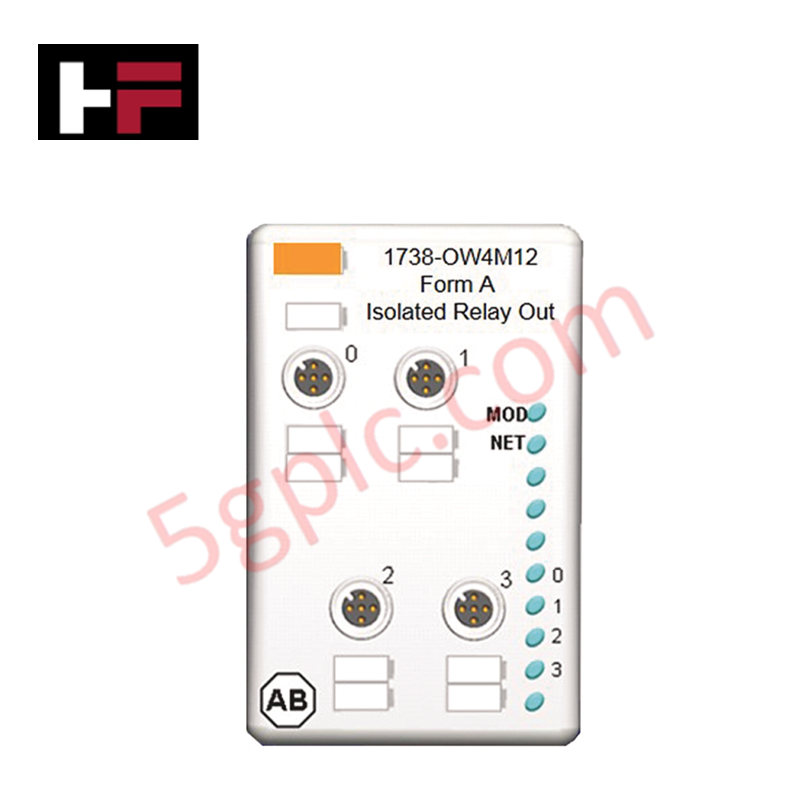
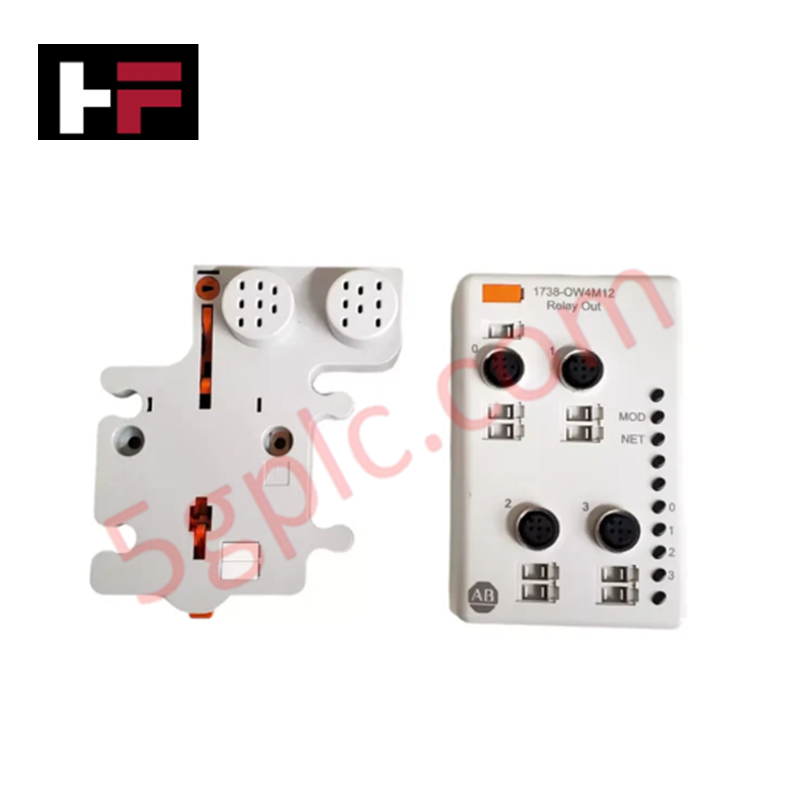
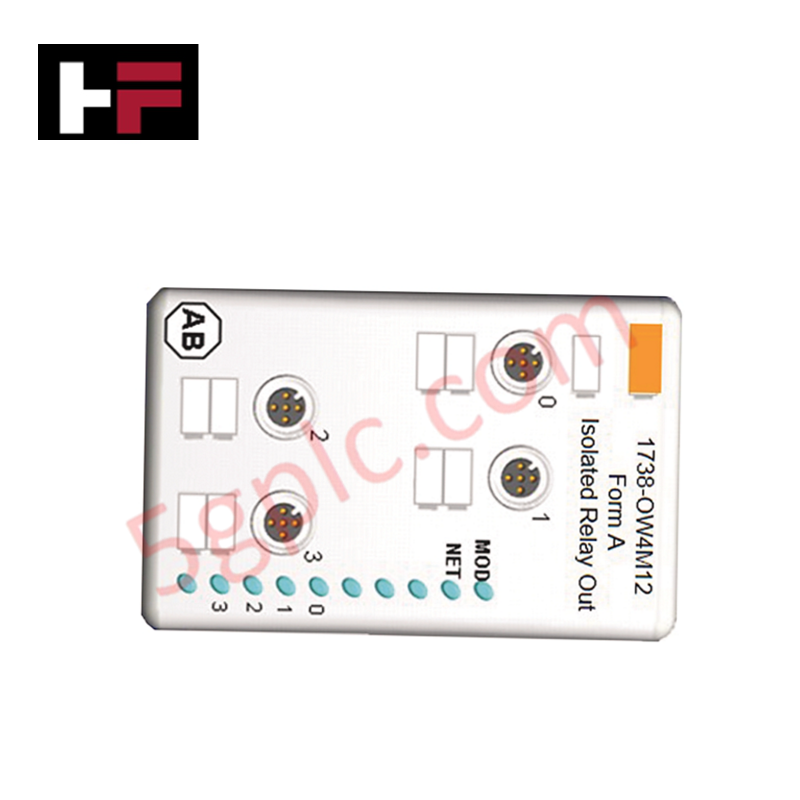
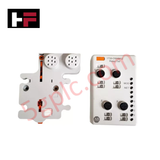
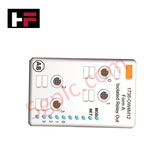
The Allen-Bradley 1738-OW4M12 operates as a ruggedized, on-machine discrete relay output module within the ArmorPoint I/O family. This distributed hardware component distributes control commands directly to field actuators, valves, and indicators without passing through a centralized electrical cabinet.
Featuring an IP67-rated sealed housing and standard M12 quick-disconnect hardware, this unit enables decentralized, cabinet-free architecture on automated production lines, heavy conveyor setups, and material handling systems. We supply this module exclusively as a 100% brand new, original factory-sealed unit to guarantee complete seal integrity, zero contact resistance, and immediate operational readiness.
Technical Specifications
The table below logs the precise electrical, physical, and connection parameters of the ArmorPoint output module:
| Parameter | Performance & Hardware Specifications |
| Manufacturer | Allen-Bradley / Rockwell Automation |
| Part Number | 1738-OW4M12 |
| Product Series | ArmorPoint I/O |
| Module Type | Discrete Contact Output Module |
| Output Configuration | 4 Points, Form A (Normally Open) Isolation Contacts |
| Connection Hardware | Threaded M12 Output Connectors |
| Enclosure Rating | Environmentally Sealed (IP67 Class) |
| Control Category | PLCs / Machine Control Hardware |
| Net Weight | 0.53 lbs (0.24 kg) |
Engineering Advantages
-
Eliminates Costly Central Enclosures: The IP67 sealed design allows engineers to bolt this module directly onto the machine frame. This on-machine placement removes the need for long, expensive multi-conductor cable runs back to a central control cabinet, lowering infrastructure wiring costs and drastically shrinking the required footprint inside the factory floor.
-
Simplifies Toolless Field Replacement: Threaded M12 quick-disconnect connectors provide secure, keyed physical interfaces for the 4 discrete channels. Field technicians swap failed actuator cables or replace modules in seconds without using wire strippers, screwdrivers, or terminal labels, minimizing error rates and slashing mean time to repair (MTTR).
-
Isolates Mixed Voltage Circuits via Form A Relays: The 4 independent Form A mechanical contacts provide complete galvanic isolation between the internal logical bus and the field loads. This layout permits the module to switch diverse voltage rails (such as combining 24V DC solenoids and small AC pilot lights on the same block) without causing cross-talk or backfeeding noise into the underlying PLC network.
FAQs
-
Can I use the 1738-OW4M12 module to switch high-current inductive motor loads directly?
No. While the Form A contact design provides physical isolation, these small-form relays handle low-power pilot duties, such as driving interposing relay coils, small solenoids, and indicator beacons. Directly connecting high-current inductive motor loads causes contact-welding and premature module failure. Always verify the maximum contact amperage rating against your specific load parameters before commissioning.
-
What mounting techniques ensure that the IP67 environmental seal prevents moisture ingress?
Technicians must mount the module flat against a rigid machine surface using the integrated mounting holes. To ensure a true IP67 seal, torque all mating M12 cable connectors to the factory-specified seating limit. You must also install tightly sealed protective dust caps onto any unused M12 ports to prevent cutting fluids, washdown water, or airborne particulate matter from fouling the contact pins.
-
Does this module require a separate network adapter to communicate with a ControlLogix or CompactLogix processor?
Yes. The 1738-OW4M12 functions as a component slice within an ArmorPoint stack. You must link the module to an ArmorPoint network adapter (such as a 1738-AENTR EtherNet/IP adapter) to bridge the local backplane data across the industrial Ethernet network to your master programmable automation controller.
Additional Information
- 100% Genuine Parts: All products are original and authentic, ensuring reliable industrial performance.
- 30-Day Refund Guarantee: Return any in-stock item within 30 days in original, unopened packaging for a full refund (excluding shipping and fees).
- 12-Month Warranty: Covers defects in materials or workmanship; excludes misuse, normal wear, or unauthorized modifications.
- Worldwide Shipping: We ship via USPS, UPS, FedEx, and DHL. Delivery times vary by country and may be subject to customs or import fees.
- Support & Contact: Technical and warranty assistance is available anytime. Contact us here: Contact.
- Purchase Guidance: Check product specifications and compatibility carefully before ordering to ensure proper application.
Tech & Buying Guide

Understanding Marshalling Cabinets in Industrial Control Systems Architecture
Industrial control system deployments rely on structured signal distribution to bridge field instrumentation with central processing hardware. A marshalling cabinet serves as the vital intermediate connection point between heavy field home-run multi-pair cables and delicate input/output (I/O) modules housed inside Programmable Logic Controller (PLC) or Distributed Control System (DCS) enclosures. By segregating field cable terminations from control hardware, engineers maintain system flexibility, safeguard controller components, and streamline commissioning workflows.

FAT vs SAT in Industrial Control Systems: Key Differences and Execution Guide
Industrial control system deployment relies on strict verification protocols to guarantee operational safety, system stability, and regulatory compliance. Commissioning complex Programmable Logic Controller (PLC) racks, Distributed Control Systems (DCS), and Safety Instrumented Systems (SIS) requires two critical milestones: the Factory Acceptance Test (FAT) and the Site Acceptance Test (SAT). Both procedures validate that system automation meets design specifications, but they occur at different stages of project execution and target distinct operational risks.

Hub vs Switch vs Router in Industrial Automation Architecture
Modern factory automation relies on reliable industrial networking infrastructure to exchange real-time field data across operational technology systems. Engineers often encounter networking hardware like hubs, switches, and routers when integrating Programmable Logic Controllers, Distributed Control Systems, and SCADA monitoring nodes. Although these devices share physical ports, they operate at different layers of the Open Systems Interconnection reference model and deliver distinct traffic management capabilities.