










Product Details
Product Overview
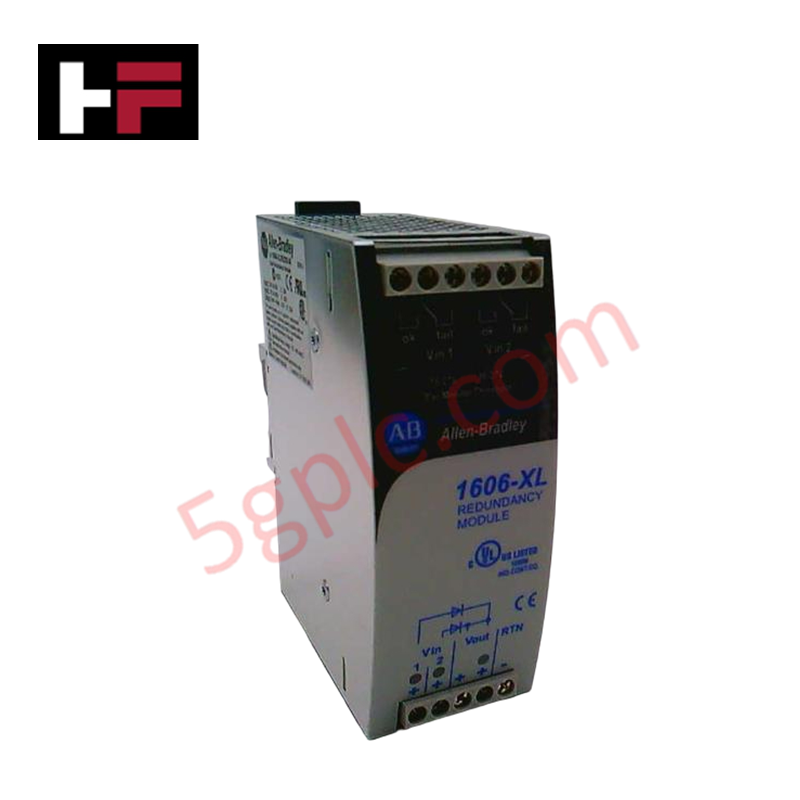
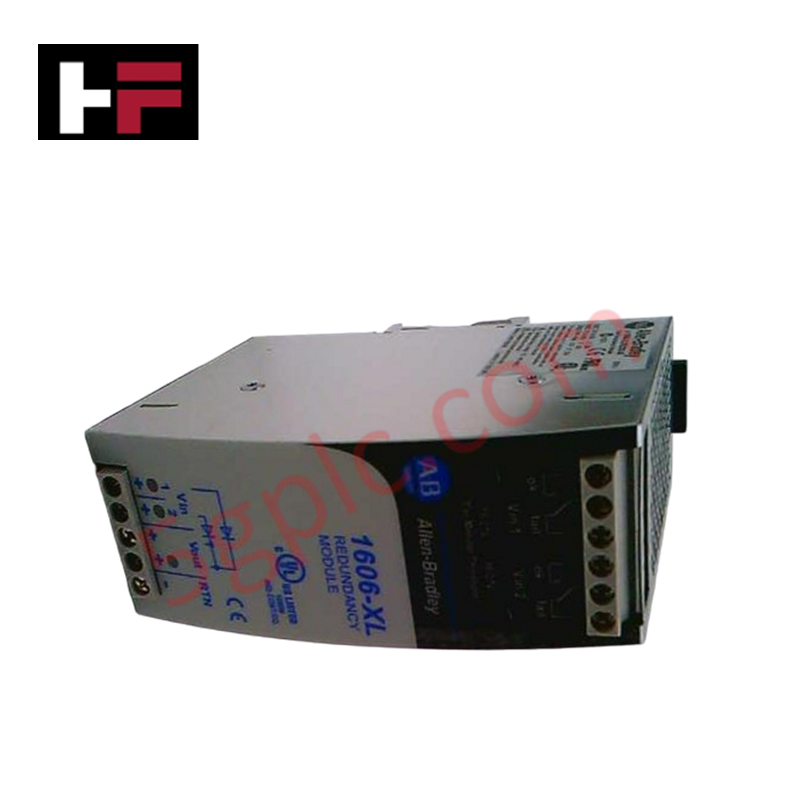
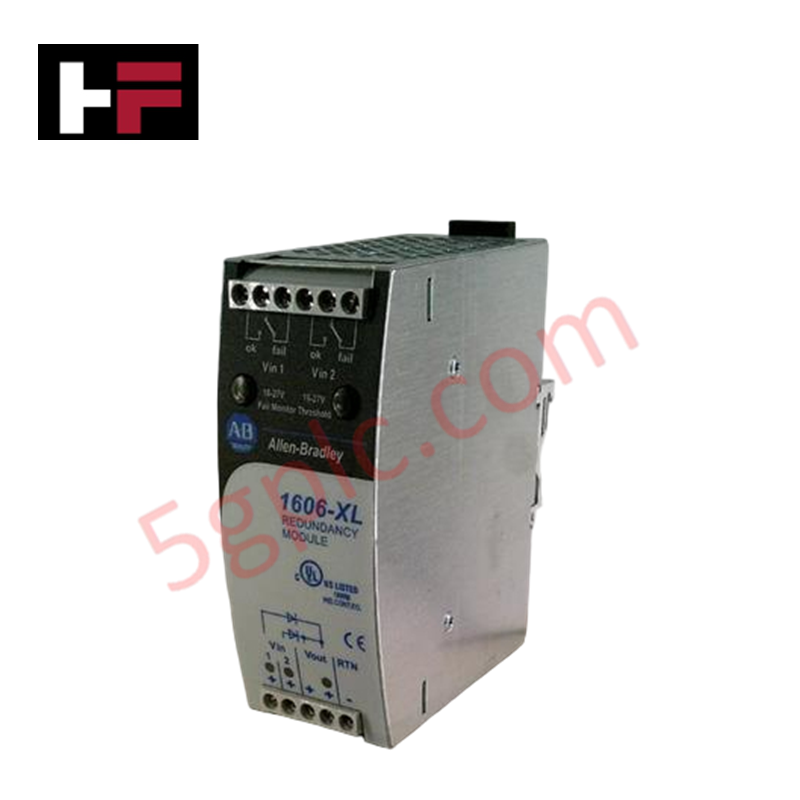
The Allen-Bradley 1606-XLRED20-30 functions as a heavy-duty, diode-based dual redundancy module within the Bulletin 1606 power management ecosystem. This hardware component isolates and decouples two independent 24V DC power supplies running in parallel. By preventing a failing power supply from dragging down the secondary unit, this module builds a highly resilient, fault-tolerant 24V DC bus line for critical PLCs, safety controllers, and factory network infrastructure.
We supply this component strictly as a 100% brand new, original factory-sealed unit to ensure clean internal contact traces and zero thermal degradation of the built-in power diodes.
Technical Specifications
The following parameters outline the structural layout and electrical performance profiles of the redundancy interface:
| Parameter | Performance Specification |
| Manufacturer | Allen-Bradley / Rockwell Automation |
| Model Number | 1606-XLRED20-30 |
| Product Line | Bulletin 1606 Power Supplies |
| Product Type | Standard Dual Redundancy Module |
| Nominal Input / Output Voltage | 24 VDC |
| Internal Diode Voltage Drop ($V_{out}$) | 0.5 VDC |
| Maximum Total Continuous Power | 720 Watts |
| Mounting Architecture | Standard 35mm DIN Rail Mount |
| Hardware Revision | Series A |
Engineering Advantages
-
Prevents Backfeeding and Supply Contamination: High-performance internal decoupling diodes isolate each input channel. If an internal short circuit destroys primary power supply A, the 1606-XLRED20-30 blocks the electrical backflow immediately, forcing secondary power supply B to maintain the 720W downstream load without encountering overcurrent trips.
-
Streamlines High-Density DIN Rail Layouts: The slim chassis design conserves valuable horizontal space inside tight marshalling panels. The integrated, heavy-duty DIN rail mounting clip snaps securely onto standard 35mm top-hat rails, preventing lateral shifting or vibration displacement in harsh machinery environments.
-
Optimizes Thermal Dissipation via Low-Drop Silicon: Ultra-low internal resistance restricts the voltage drop across the isolation stage to just 0.5 VDC. This low-voltage drop minimizes the heat generated by the module at a full 720W throughput, eliminating the need for active cooling fans or large ventilation gaps inside closed electrical enclosures.
FAQs
-
Can I combine two different brands of 24V DC power supplies using the 1606-XLRED20-30 module?
Yes. The module accepts inputs from any standard 24V DC power supplies, provided they match the voltage output profile. However, to ensure balanced current sharing and symmetrical thermal profiles, we recommend pairing identical Allen-Bradley Bulletin 1606 power supplies.
-
What are the critical wiring practices when installing this redundancy module to ensure a true failsafe setup?
Technicians must wire each power supply to its own dedicated input terminal block on the 1606-XLRED20-30 using identical cable lengths and cross-sections. This balancing minimizes resistance variances, ensuring both supplies share the load evenly during normal factory operation. Additionally, ensure the input wiring bypasses any shared circuit breakers.
-
Does this standard module contain auxiliary signaling contacts for remote monitoring?
This standard module relies purely on passive diode isolation to achieve maximum solid-state longevity. To route alarm statuses (such as a power supply failure) back to a PLC input card, engineers utilize the integrated "DC-OK" dry relay contacts built directly into the upstream Bulletin 1606 power supplies rather than relying on the redundancy module itself.
Additional Information
- 100% Genuine Parts: All products are original and authentic, ensuring reliable industrial performance.
- 30-Day Refund Guarantee: Return any in-stock item within 30 days in original, unopened packaging for a full refund (excluding shipping and fees).
- 12-Month Warranty: Covers defects in materials or workmanship; excludes misuse, normal wear, or unauthorized modifications.
- Worldwide Shipping: We ship via USPS, UPS, FedEx, and DHL. Delivery times vary by country and may be subject to customs or import fees.
- Support & Contact: Technical and warranty assistance is available anytime. Contact us here: Contact.
- Purchase Guidance: Check product specifications and compatibility carefully before ordering to ensure proper application.
Tech & Buying Guide

Understanding Marshalling Cabinets in Industrial Control Systems Architecture
Industrial control system deployments rely on structured signal distribution to bridge field instrumentation with central processing hardware. A marshalling cabinet serves as the vital intermediate connection point between heavy field home-run multi-pair cables and delicate input/output (I/O) modules housed inside Programmable Logic Controller (PLC) or Distributed Control System (DCS) enclosures. By segregating field cable terminations from control hardware, engineers maintain system flexibility, safeguard controller components, and streamline commissioning workflows.

FAT vs SAT in Industrial Control Systems: Key Differences and Execution Guide
Industrial control system deployment relies on strict verification protocols to guarantee operational safety, system stability, and regulatory compliance. Commissioning complex Programmable Logic Controller (PLC) racks, Distributed Control Systems (DCS), and Safety Instrumented Systems (SIS) requires two critical milestones: the Factory Acceptance Test (FAT) and the Site Acceptance Test (SAT). Both procedures validate that system automation meets design specifications, but they occur at different stages of project execution and target distinct operational risks.

Hub vs Switch vs Router in Industrial Automation Architecture
Modern factory automation relies on reliable industrial networking infrastructure to exchange real-time field data across operational technology systems. Engineers often encounter networking hardware like hubs, switches, and routers when integrating Programmable Logic Controllers, Distributed Control Systems, and SCADA monitoring nodes. Although these devices share physical ports, they operate at different layers of the Open Systems Interconnection reference model and deliver distinct traffic management capabilities.