












Product Details
Product Overview
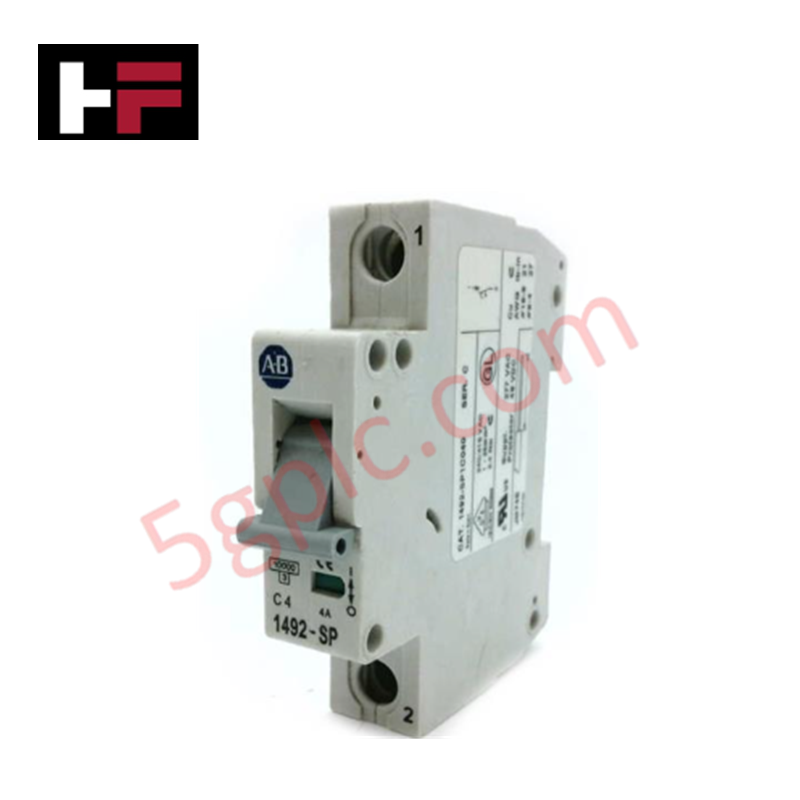
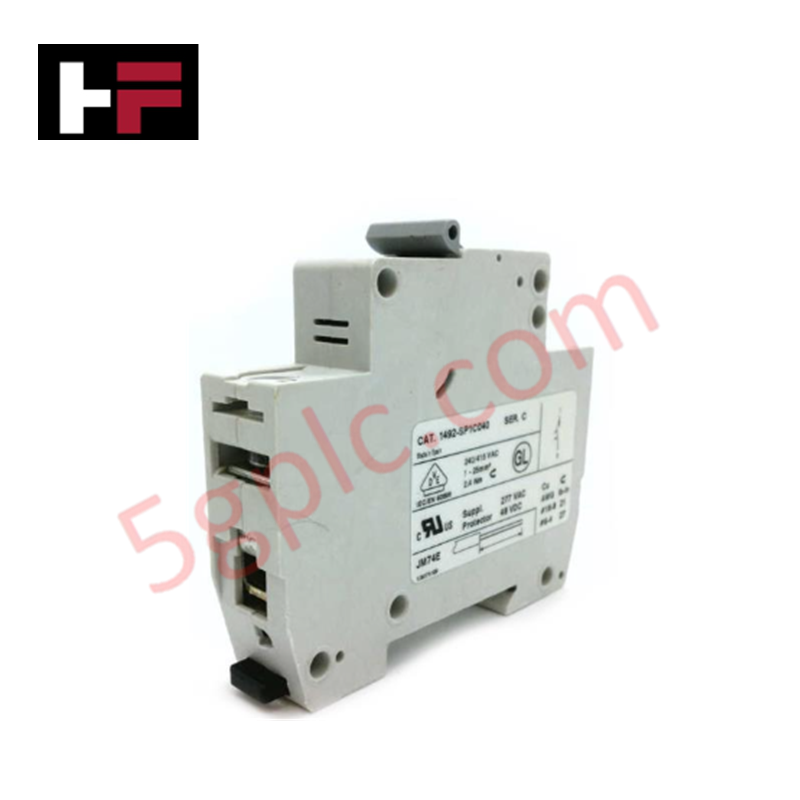
The Allen Bradley 1492-SP1C040 functions as a high-performance supplemental protector within the 1492-SP wiring system. This single-pole miniature circuit breaker provides critical overcurrent protection for control circuits, solenoids, and PLC I/O points. We supply this component as 100% Brand New and Factory Original, ensuring that the internal thermal-magnetic trip mechanisms meet strict factory calibration for equipment safety.
Technical Specifications
The 1492-SP1C040 utilizes precision-engineered components to handle 1-phase AC voltage ranges efficiently:
| Feature | Specification |
| Number of Poles | 1-Pole |
| Continuous Current | 4 Amperes |
| Trip Curve | C-Curve (Magnetic Trip 5...10 x $I_{n}$) |
| Voltage Rating | 240–415V AC (Max 277V AC per UL/CSA) |
| Interrupting Rating (AIC) | 10 kA at 277V AC |
| Protection Type | Thermal-Magnetic |
| Connection Type | Feed-through |
| Terminal Torque | 2.4 Newton-meters (21 lb-in) |
| Weight | 3.00 lbs (1.36 kg) per bulk pack / approx. 0.25 lbs per unit |
Engineering Advantages
-
C-Curve Magnetic Response: The C-curve characteristic manages moderate inrush currents typical of inductive loads like small motors and transformers. It prevents nuisance tripping during startup while providing instantaneous protection against high-level short circuits.
-
Dual Trip Functionality: The breaker employs a bimetal element for long-time thermal overload protection and an electromagnetic solenoid for instantaneous short-circuit response. This "LI" (Long-time/Instantaneous) capability safeguards downstream components from both gradual overheating and catastrophic faults.
-
Space-Efficient Feed-Through Design: The 0.4-inch (10mm) slim profile maximizes rail density in crowded control cabinets. This allows engineers to fit more protection points into restricted enclosure footprints without compromising thermal dissipation.
-
Finger-Safe Terminals: The housing design guards against accidental contact with live parts. The 2.4 N-m torque rating ensures a high-pressure wire connection that resists loosening caused by machine vibrations or thermal expansion cycles.
FAQs
-
Is this 1492-SP1C040 unit 100% Brand New?
Yes. We supply only 100% Brand New original Allen Bradley stock. Each breaker features the original factory markings and has undergone no prior installation or use.
-
What is the primary application for a C-Curve breaker?
Engineers typically specify the C-curve for general-purpose industrial circuits. It handles the initial surge of inductive loads better than a B-curve, making it ideal for PLC power supplies and solenoid valves where a slight delay in magnetic tripping is required.
-
Can I use this breaker as a primary branch circuit protector?
The 1492-SP series serves as a Supplemental Protector (UL 1077). You should use it for protection inside an appliance or control panel where branch circuit protection (UL 489) already exists upstream.
-
What wire size does the terminal accommodate?
The terminal accepts standard industrial copper wiring. To maintain the 10 kA AIC rating and prevent hotspots, always use a calibrated torque wrench to tighten the screw terminals to exactly 2.4 Newton-meters.
Additional Information
- 100% Genuine Parts: All products are original and authentic, ensuring reliable industrial performance.
- 30-Day Refund Guarantee: Return any in-stock item within 30 days in original, unopened packaging for a full refund (excluding shipping and fees).
- 12-Month Warranty: Covers defects in materials or workmanship; excludes misuse, normal wear, or unauthorized modifications.
- Worldwide Shipping: We ship via USPS, UPS, FedEx, and DHL. Delivery times vary by country and may be subject to customs or import fees.
- Support & Contact: Technical and warranty assistance is available anytime. Contact us here: Contact.
- Purchase Guidance: Check product specifications and compatibility carefully before ordering to ensure proper application.
Tech & Buying Guide

Understanding Marshalling Cabinets in Industrial Control Systems Architecture
Industrial control system deployments rely on structured signal distribution to bridge field instrumentation with central processing hardware. A marshalling cabinet serves as the vital intermediate connection point between heavy field home-run multi-pair cables and delicate input/output (I/O) modules housed inside Programmable Logic Controller (PLC) or Distributed Control System (DCS) enclosures. By segregating field cable terminations from control hardware, engineers maintain system flexibility, safeguard controller components, and streamline commissioning workflows.

FAT vs SAT in Industrial Control Systems: Key Differences and Execution Guide
Industrial control system deployment relies on strict verification protocols to guarantee operational safety, system stability, and regulatory compliance. Commissioning complex Programmable Logic Controller (PLC) racks, Distributed Control Systems (DCS), and Safety Instrumented Systems (SIS) requires two critical milestones: the Factory Acceptance Test (FAT) and the Site Acceptance Test (SAT). Both procedures validate that system automation meets design specifications, but they occur at different stages of project execution and target distinct operational risks.

Hub vs Switch vs Router in Industrial Automation Architecture
Modern factory automation relies on reliable industrial networking infrastructure to exchange real-time field data across operational technology systems. Engineers often encounter networking hardware like hubs, switches, and routers when integrating Programmable Logic Controllers, Distributed Control Systems, and SCADA monitoring nodes. Although these devices share physical ports, they operate at different layers of the Open Systems Interconnection reference model and deliver distinct traffic management capabilities.