











Product Details
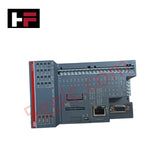
Product Overview
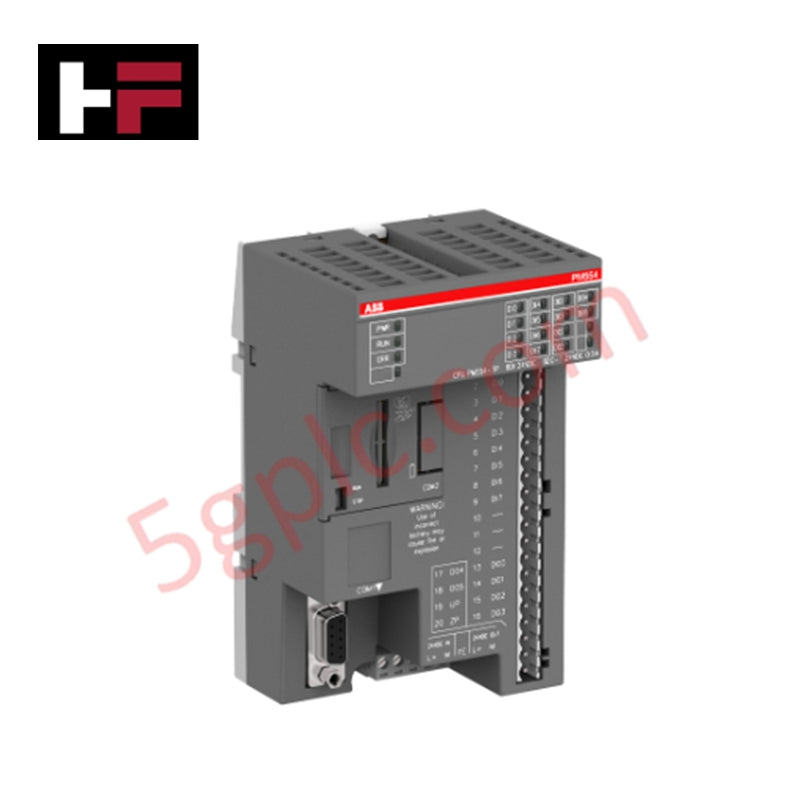
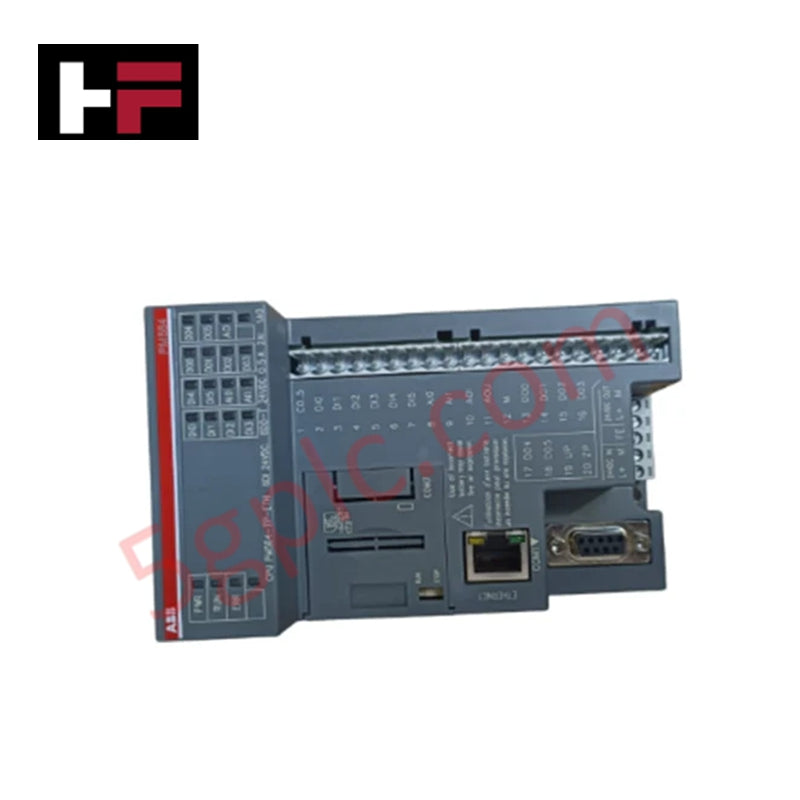
The ABB PM554-TP-ETH (1SAP120600R0071) functions as a high-performance, compact central processing unit within the AC500-eCo entry-level PLC family. This specific model integrates an on-board Industrial Ethernet interface, bridging the gap between small-scale machine control and plant-wide networking. It features 128kB of user memory and a built-in I/O array consisting of 8 digital inputs and 6 digital transistor outputs. We supply this unit as 100% Brand New and Original, ensuring your decentralized automation systems operate with factory-sealed, manufacturer-certified hardware.
Technical Specifications
The PM554-TP-ETH delivers precise control through a high-speed internal architecture:
-
Processor Type: AC500-eCo CPU
-
Memory Size: 128 kB (User Data) / 142 kB (Internal RAM)
-
Processing Time: 0.00008 ms per instruction
-
On-board Ethernet: 1 x RJ45 Industrial Ethernet
-
Serial Interface: 1 x RS-485
-
Digital Inputs: 8 Channels (24V DC)
-
Digital Outputs: 6 Channels (Transistor, 24V DC)
-
Supply Voltage: 24V DC (Range: 20.4 – 28.8 VDC)
-
Option Slots: 2 x Slots for additional functional submodules
-
Dimensions: 82 mm (W) x 135 mm (H) x 74 mm (D)
-
Net Weight: 0.287 kg
Engineering Advantages
-
Integrated Ethernet Gateway: The on-board Ethernet port supports Modbus TCP and HTTP protocols. This allows the CPU to communicate directly with SCADA systems, HMI panels, or web-based monitoring tools without requiring additional communication couplers.
-
Ultra-Fast Execution: A processing time of 0.00008 ms per instruction ensures high-speed logic execution. This deterministic performance effectively handles complex mathematical operations and fast-cycle industrial processes with minimal jitter.
-
Solid-State Reliability: The 6 digital transistor outputs support high-frequency switching and Pulse Width Modulation (PWM). Unlike mechanical relays, these outputs eliminate contact wear, making them ideal for driving sensitive electronic actuators or high-speed solenoid valves.
-
Enhanced Connectivity Expansion: Two integrated option slots accommodate additional serial interfaces or specialized I/O submodules. This feature allows engineers to tailor the controller’s hardware profile to specific machine requirements without increasing the physical footprint.
-
Compact Vertical Integration: The 82 mm width optimizes DIN rail density. Its rugged housing withstands industrial cabinet environments, providing a space-saving solution for machine builders who require advanced networking in restricted enclosures.
FAQs
-
Can the PM554-TP-ETH host a local web server for diagnostics?
Yes. The integrated Ethernet port supports web server functionality. You can host simple visualization pages directly on the CPU, enabling remote monitoring of process variables via a standard web browser on a networked PC.
-
What is the advantage of the Transistor (TP) outputs over Relay types?
Transistor outputs offer nearly infinite switching cycles and support high-speed pulse applications like PWM. This eliminates the mechanical failure risks associated with relays, providing a much longer service life in high-cycle automation.
-
How do the option slots expand the system?
The two option slots allow you to add RS-232 or RS-485 submodules. This enables simultaneous communication with multiple field devices, such as barcode scanners and frequency drives, while the main Ethernet port handles the primary network uplink.
-
Does this PLC require a separate backup battery?
The PM554-TP-ETH utilizes non-volatile memory for program storage. However, you should check your specific application needs for retentive data; if required, you can add an optional battery module or capacitor to ensure data persistence during power loss.
Additional Information
- 100% Genuine Parts: All products are original and authentic, ensuring reliable industrial performance.
- 30-Day Refund Guarantee: Return any in-stock item within 30 days in original, unopened packaging for a full refund (excluding shipping and fees).
- 12-Month Warranty: Covers defects in materials or workmanship; excludes misuse, normal wear, or unauthorized modifications.
- Worldwide Shipping: We ship via USPS, UPS, FedEx, and DHL. Delivery times vary by country and may be subject to customs or import fees.
- Support & Contact: Technical and warranty assistance is available anytime. Contact us here: Contact.
- Purchase Guidance: Check product specifications and compatibility carefully before ordering to ensure proper application.






Tech & Buying Guide

Understanding Marshalling Cabinets in Industrial Automation and Control Systems
Marshalling cabinets serve as the crucial connection hub between field instruments and centralized processing units. In large DCS and PLC control system architectures, hundreds of multipair field cables run from local junction boxes to the central instrument equipment room. The marshalling cabinet houses field terminal blocks, surge arresters, intrinsic safety isolation barriers, and interposing relays. By segregating field field-wiring terminations from sensitive processor hardware, engineers protect expensive controller backplanes from high-voltage transients. Consequently, this modular separation dramatically streamlines maintenance workflows and simplifies system expansion.

Essential Best Practices for PLC Wiring and Installation in Industrial Automation
Successful control system deployment begins with thoroughly reviewing manufacturer technical documentation. Controllers from major brands like Allen-Bradley, Siemens, and Schneider Electric feature unique terminal layouts. Engineers must verify voltage requirements before connecting power cables to prevent catastrophic equipment damage. Standard line connections require strict adherence to regional electrical codes and proper wire color coding. Furthermore, panel builders should always establish a robust low-impedance ground connection using at least 16-AWG copper conductor tied directly to the main plant grounding grid.
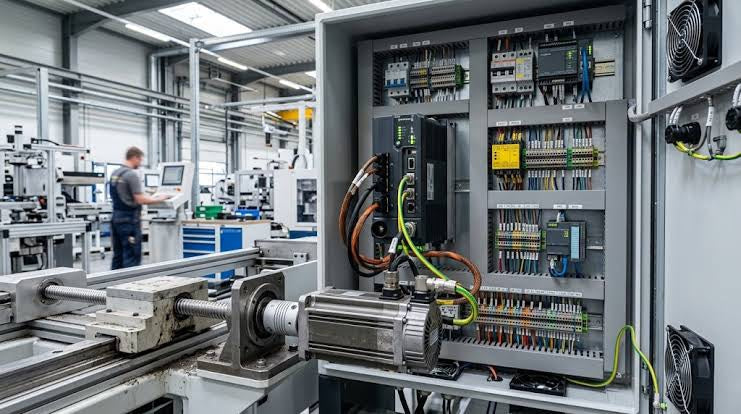
Demystifying Programmable Logic Controllers: Comprehensive Guide to PLC Classification and Selection in Industrial Automation
Modern industrial automation heavily relies on Programmable Logic Controllers (PLCs) to drive factory floor efficiency. Over my 15 years as an industrial automation expert working with DCS, TSI, and control systems, I have seen PLCs evolve into the central nervous system of modern manufacturing. Selecting the right controller requires a deep understanding of PLC types based on physical size, hardware architecture, and power supply configurations.