












Product Details
Product Overview
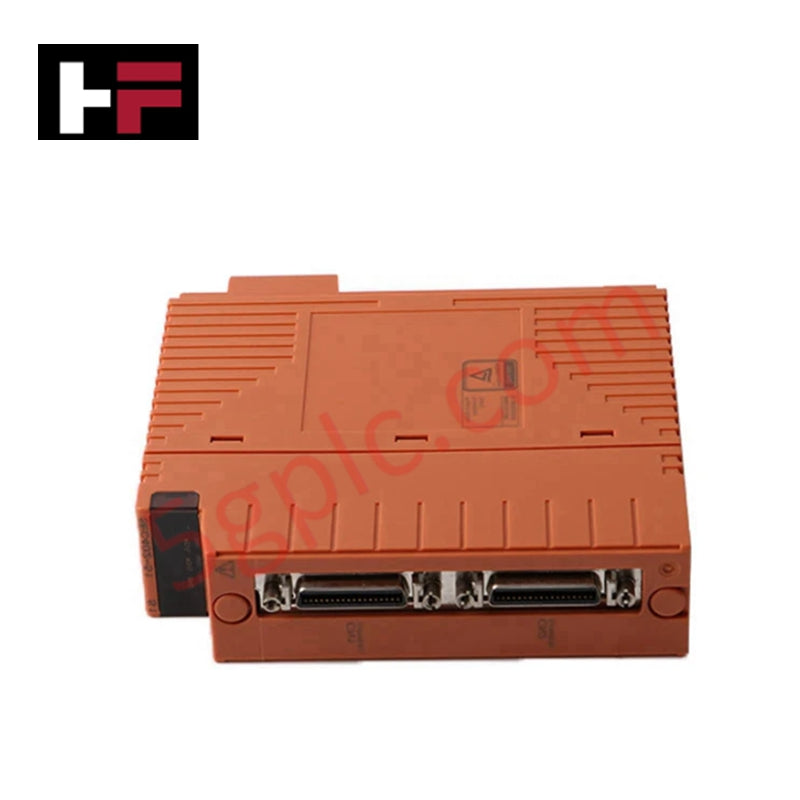
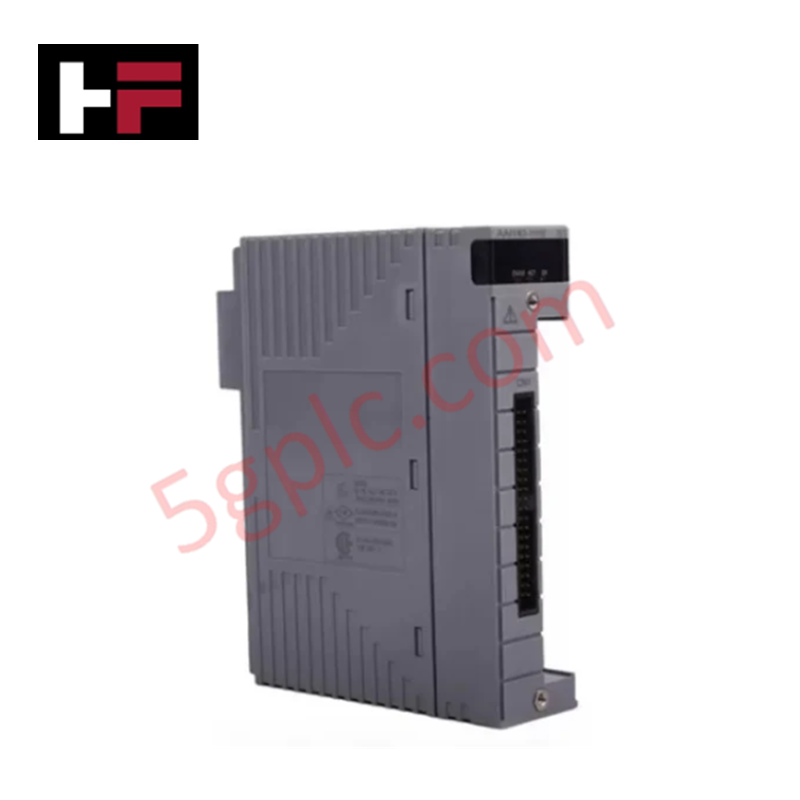
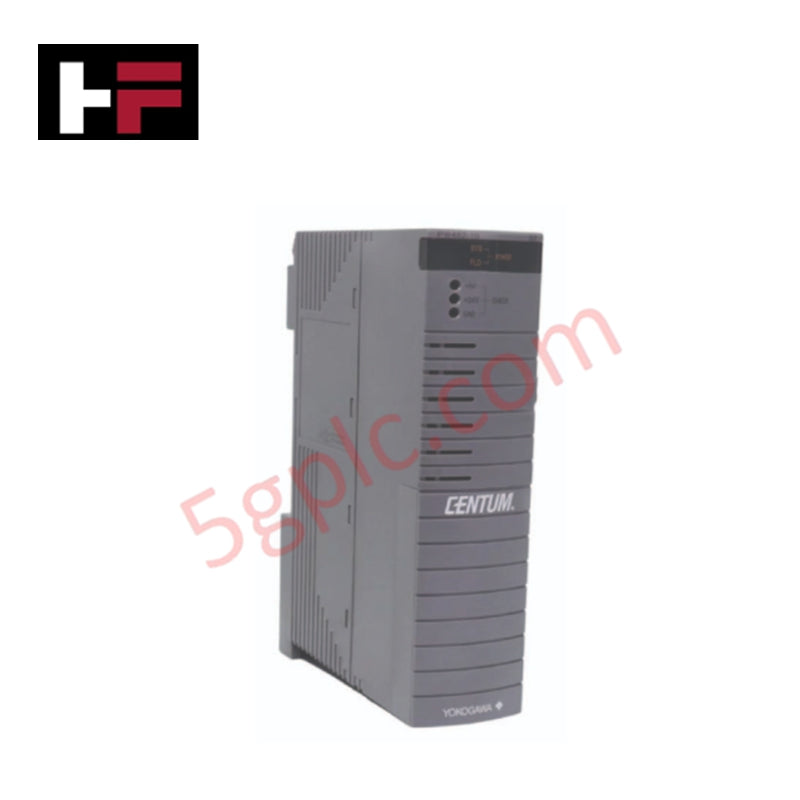
The Yokogawa SEC402-51 serves as the high-performance dual-port ESB (Enhanced Serial Bus) master interface, engineered to bridge Field Control Units (FCU) with distributed Node Units in the CENTUM VP architecture. It resolves complex cabling constraints in large-scale control cabinets by supporting a unique split-bus topology, allowing up to 9 I/O units on the upper bus and 9 on the lower bus simultaneously. With a dedicated 128 Mbps transmission speed, this module ensures deterministic, low-latency data exchange critical for fast-loop process control in power generation and petrochemical refining. Its robust design supports both standard and hazardous location variants, providing flexible deployment options while maintaining the rigorous reliability standards expected of Yokogawa DCS infrastructure.
Technical Specifications
|
Parameter |
Specification |
|---|---|
|
Product Type |
ESB Bus Coupler Module (Dual-Port Master) |
|
Brand / Series |
Yokogawa / CENTUM VP |
|
Model Number |
SEC402-51 (Variant of SEC402-5 Series) |
|
Primary Function |
ESB Bus Master Interface for FCU-to-Node communication |
|
Port Configuration |
2-Port (Upper Bus & Lower Bus independent channels) |
|
Connectable Units |
Max 9 units per port (Total 18 units per module) |
|
Transmission Speed |
128 Mbps (High-speed I/O data transfer) |
|
Max Transmission Distance |
10 meters per segment (Upper & Lower independent) |
|
Current Consumption |
0.5 A @ 24 VDC (Typical) |
|
Weight |
Approx. 0.24 kg (0.53 lbs) |
|
Certification Options |
Standard, Explosion Protected, ISA G3 Compliance |
|
Mounting |
DIN Rail or CENTUM VP Node Slot |
|
Application |
High-density I/O expansion, Redundant Bus Topologies |
Model Code Decomposition
The Yokogawa SEC402 series utilizes a specific suffix logic to define port count, safety ratings, and environmental compliance. Understanding these codes is essential for selecting the correct module for hazardous vs. non-hazardous areas.
Part Number Structure: SEC402-5XX
-
SEC: Series identifier for CENTUM VP ESB Communication Modules.
-
402: Functional code denoting the ESB Bus Coupler (Master) with dual-port capability.
-
5: Base hardware revision indicating the 2-Port architecture.
-
Suffix Codes (The last characters define the variant):
-
-E (e.g., SEC402-5E): Standard Type. No explosion protection. Suitable for general industrial control rooms and non-hazardous areas.
-
-1 (e.g., SEC402-51): Explosion Protected Type. Designed for installation in hazardous locations where flammable gases or dust may be present. Meets specific intrinsic safety or flameproof standards required for oil & gas zones.
-
-G3 (e.g., SEC402-5G3): ISA G3 Compliance. Indicates the module meets the ISA-71.04 Grade G3 standard for corrosive environments (severe chemical exposure), often used in wastewater treatment or chemical processing plants.
-
Note: The model "SEC402-51" specifically refers to the Explosion Protected variant of the dual-port coupler. Always verify the full suffix against your facility's area classification drawings before procurement.
Installation Recommendations and Wiring Guidelines
Proper installation of the SEC402-51 is critical to leveraging its dual-bus capability. Mount the module securely in the Field Control Station slot or on the DIN rail adjacent to the FCU. The defining feature of this unit is its ability to drive two independent ESB segments; utilize this by routing the "Upper" bus cable to one bank of I/O nodes and the "Lower" bus cable to a separate bank. This reduces cable clutter and improves signal integrity by keeping segment lengths short.
Strictly adhere to the 10-meter maximum distance limit for each ESB cable run. Exceeding this length at 128 Mbps will result in data corruption and communication faults. Use only Yokogawa-certified ESB twisted-pair cables with proper shielding. Ensure termination resistors are installed at the physical end of each of the two bus segments (Upper and Lower) to prevent signal reflection. For the "-1" (Explosion Protected) variant, all wiring must comply with local hazardous area codes (e.g., NEC, ATEX, IECEx), utilizing approved seals, conduits, and grounding methods to maintain the integrity of the explosion protection system. Verify the 24 VDC power supply stability, as voltage dips can cause the ESB master to reset, disconnecting up to 18 I/O units instantly.
Frequently Asked Questions (FAQ)
Q: What is the main advantage of the SEC402-51 over single-port couplers?
A: The SEC402-51 features two independent ESB ports (Upper and Lower). This allows a single module to control up to 18 I/O units (9 per port) compared to 9 units on a single-port model. It effectively halves the number of coupler slots required in the FCU for high-density applications and simplifies cabinet wiring by splitting the load into two shorter, manageable cable runs.
Q: Can I mix standard and explosion-protected modules in the same rack?
A: Yes, provided the rack installation location matches the highest safety requirement. If the rack is located in a hazardous area, all modules within that specific enclosure typically must meet the hazardous location rating. If the rack is in a safe area but controls field devices in a hazardous zone, the field wiring barriers determine the safety rating, not necessarily the backplane module. Consult your system integrator for specific zoning compliance.
Q: Is the SEC402-51 compatible with older CENTUM CS3000 systems?
A: The SEC402 series is primarily designed for the CENTUM VP platform. While Yokogawa maintains some backward compatibility, ESB bus architectures and firmware handshakes differ between CS3000 and VP. Using this module in a CS3000 system requires verifying the FCU type and firmware version; it is generally recommended for new VP installations or VP upgrades.
Q: What does the "ISA G3" certification mean for my application?
A: ISA-71.04 Grade G3 indicates the module is built to withstand severe corrosive environments (e.g., high concentrations of sulfur dioxide, chlorine, or ammonia). If your plant is a wastewater treatment facility, pulp and paper mill, or coastal chemical plant, selecting the -G3 variant prevents premature failure of the circuit board due to atmospheric corrosion.
Q: How do I troubleshoot if one of the two buses fails?
A: The CENTUM VP engineering station (Vx-Toolset) and Operator Station will report specific alarms distinguishing between "Upper ESB Bus Error" and "Lower ESB Bus Error." Check the LED status on the module; typically, individual LEDs indicate the health of each port. Isolate the fault by checking the termination and cabling of the specific failed segment without affecting the operational status of the second bus.
Additional Information
- 100% Genuine Parts: All products are original and authentic, ensuring reliable industrial performance.
- 30-Day Refund Guarantee: Return any in-stock item within 30 days in original, unopened packaging for a full refund (excluding shipping and fees).
- 12-Month Warranty: Covers defects in materials or workmanship; excludes misuse, normal wear, or unauthorized modifications.
- Worldwide Shipping: We ship via USPS, UPS, FedEx, and DHL. Delivery times vary by country and may be subject to customs or import fees.
- Support & Contact: Technical and warranty assistance is available anytime. Contact us here: Contact.
- Purchase Guidance: Check product specifications and compatibility carefully before ordering to ensure proper application.
Tech & Buying Guide

Navigating Industrial Automation Failures: Types, Causes, and Mitigation Strategies
Modern manufacturing relies heavily on automated control systems to maximize throughput and maintain product quality. However, unplanned downtime in industrial automation can cost facility operators thousands of dollars per hour. Understanding how programmable logic controllers (PLCs), distributed control systems (DCS), and field instrumentation fail empowers engineering teams to implement robust preventive maintenance strategies.

Essential Motion Control Commands: A Practical Guide for Engineers
Automation engineers often rely on precise position and speed control to drive modern factory machinery. Modern industrial systems, such as Programmable Logic Controllers (PLCs) and Distributed Control Systems (DCS), depend heavily on standardized motion instructions. Mastering these commands ensures operational safety, protects mechanical components, and optimizes cycle times across production lines.

The Role of Intrinsic Safety Barriers in PLC and DCS Architectures
Implementing robust protection in hazardous industrial environments represents a fundamental safety requirement in factory automation. Process facilities often handle volatile gases, dusts, and chemical agents that pose significant combustion risks. Consequently, control system engineers must deploy energy-limiting interfaces to isolate safe-area control cabinets from hazardous-area field instrumentation. This article examines the function, selection, and electrical principles of intrinsic safety barriers within modern PLC and DCS networks.