











Product Details
Overview
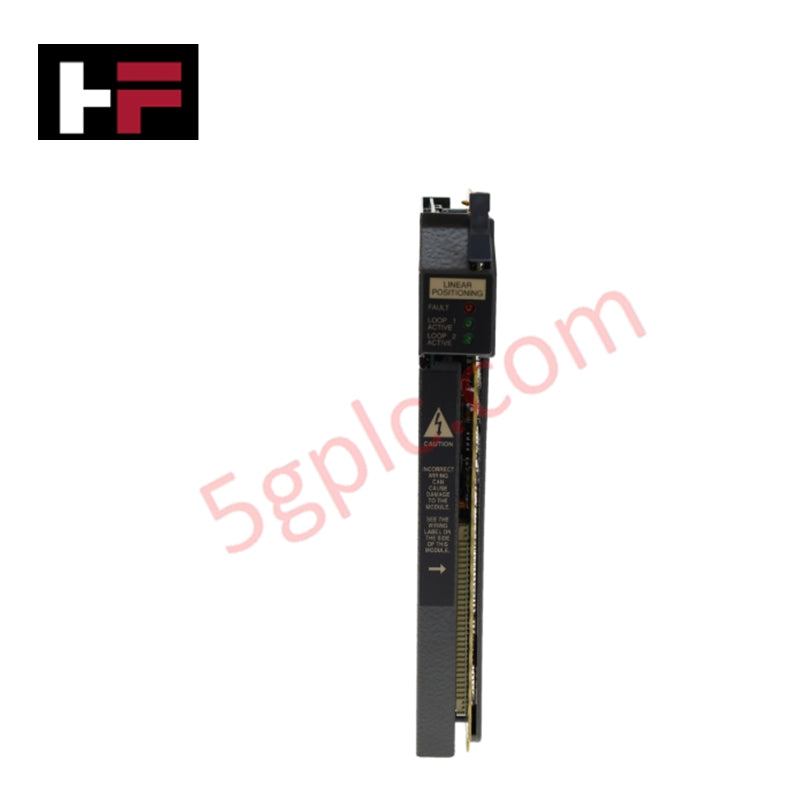
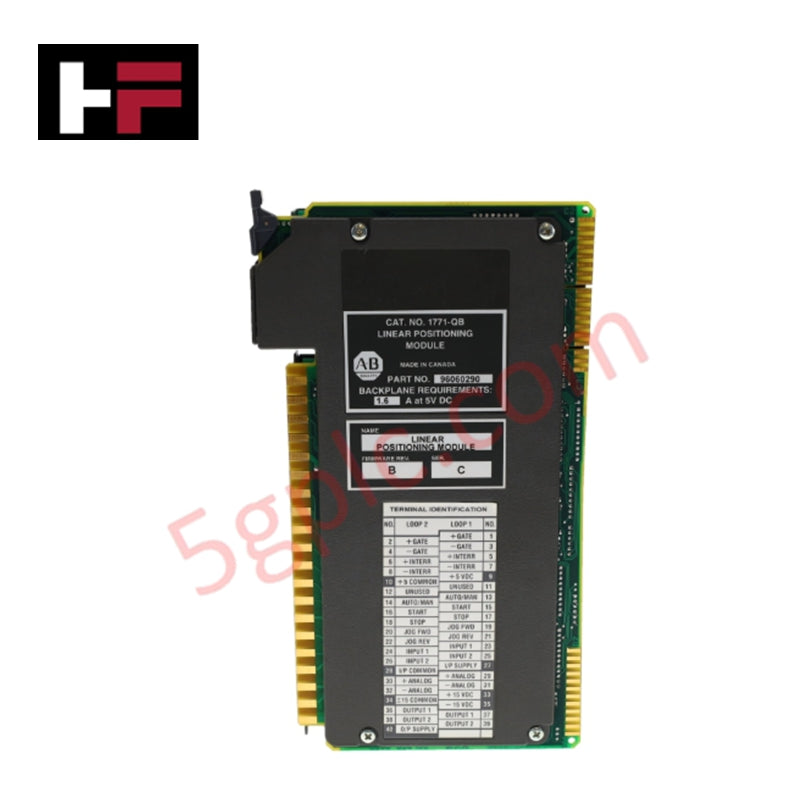
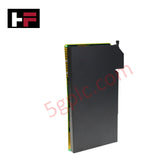
The 1771-QB (1771-QB) is a specialized single-slot motion control module designed for the PLC-5® Universal I/O chassis. It provides precision closed-loop linear positioning by interfacing directly with high-accuracy transducers. This module is engineered to handle complex hydraulic or pneumatic servo positioning tasks by calculating position data every 2 milliseconds. By offloading motion intensive calculations from the main processor, the 1771-QB (1771-QB) ensures high-speed response times and deterministic performance for industrial machinery.
Detailed Technical Specifications
-
Module Type: Linear Positioning Control
-
System Platform: PLC-5 Universal I/O
-
Sampling Rate: 2 ms per axis update period
-
Backplane Power Consumption: 1.1A typical / 1.6A maximum at 5V DC
-
Supported Transducers: MTS Temposonics, Balluff BTL, and Norstat GYRG (Linear Displacement)
-
Analog Output Resolution: 12-bit
-
Analog Servo Outputs: +/-10V DC (10 mA), +/-20 mA (600 ohms), +/-50 mA (240 ohms), +/-100 mA (240 ohms)
-
Discrete Input Logic: 10-30V DC for Logic 1; 0-4V DC for Logic 0
-
Discrete Input Current: 8 mA at 12V DC; 16 mA at 24V DC
-
Discrete Sourcing Outputs: 100 mA maximum per output (ON state)
-
Circuit Protection: 3 Amp, 250V Normal-Blow Fuse
-
Required Wiring Arm: 1771-WN or 1771-WNF (40 terminals)
-
Maximum Wire Size: 14 AWG stranded with 3/64 inch insulation
-
Physical Weight: 6.00 lbs (2.72 kg)
-
Chassis Space: 1 Slot
Positioning Capabilities and Connectivity
The 1771-QB (1771-QB) is built for versatility in feedback integration, supporting multiple magnetostrictive transducer brands. It features auxiliary digital inputs and outputs for home indexing, end-of-travel limits, and drive enable signals. The high-resolution 12-bit analog output allows for exceptionally smooth control of servo valves. For remote applications, the module is compatible with the 1771-PSC cable assembly, ensuring signal integrity over a 5.5 ft distance between the module and its interface.
Engineering FAQ
-
Which transducers are compatible with the 1771-QB? The 1771-QB (1771-QB) is primarily designed to interface with magnetostrictive linear displacement transducers (LDTs) that utilize specialized pulse-based or start/stop signals, such as those from MTS Temposonics or Balluff.
-
Can this module control more than one axis? The 1771-QB (1771-QB) is a single-axis positioning module. For multi-axis synchronized movement, multiple modules must be installed and coordinated via the PLC-5 backplane.
-
Is the 1771-QB hot-swappable? While the 1771 chassis is rugged, it is standard engineering practice to remove power from the I/O chassis before replacing the 1771-QB (1771-QB) to prevent damage to the sensitive analog servo outputs.
Additional Information
- 100% Genuine Parts: All products are original and authentic, ensuring reliable industrial performance.
- 30-Day Refund Guarantee: Return any in-stock item within 30 days in original, unopened packaging for a full refund (excluding shipping and fees).
- 12-Month Warranty: Covers defects in materials or workmanship; excludes misuse, normal wear, or unauthorized modifications.
- Worldwide Shipping: We ship via USPS, UPS, FedEx, and DHL. Delivery times vary by country and may be subject to customs or import fees.
- Support & Contact: Technical and warranty assistance is available anytime. Contact us here: Contact.
- Purchase Guidance: Check product specifications and compatibility carefully before ordering to ensure proper application.
Tech & Buying Guide

Top 5 Operational Advantages of HMIs in Modern Factory Automation

Importance of Safety Barriers in PLC and DCS Control Systems
