










Product Details
Product Overview
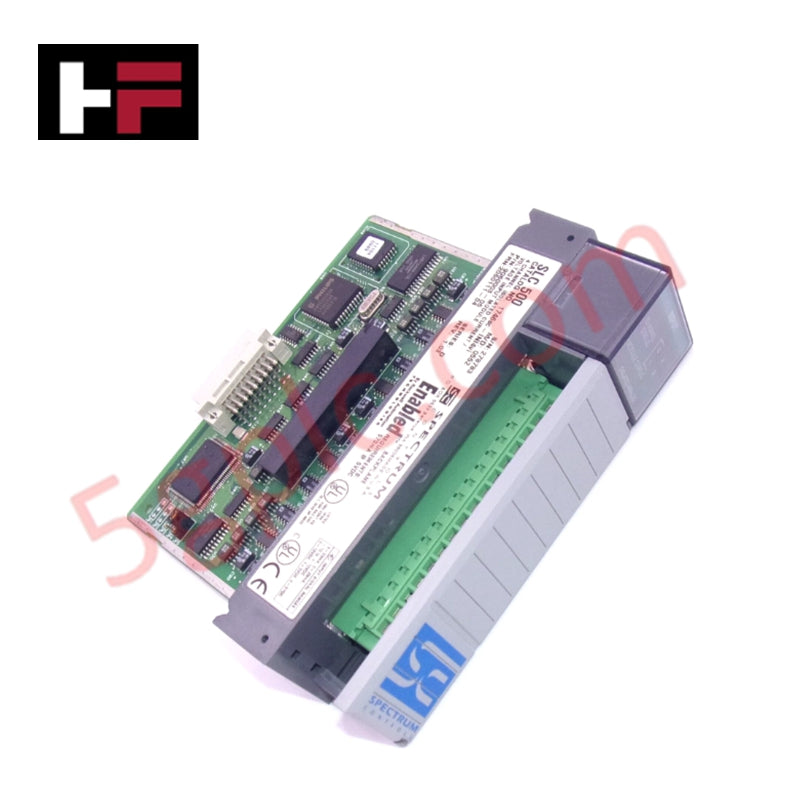
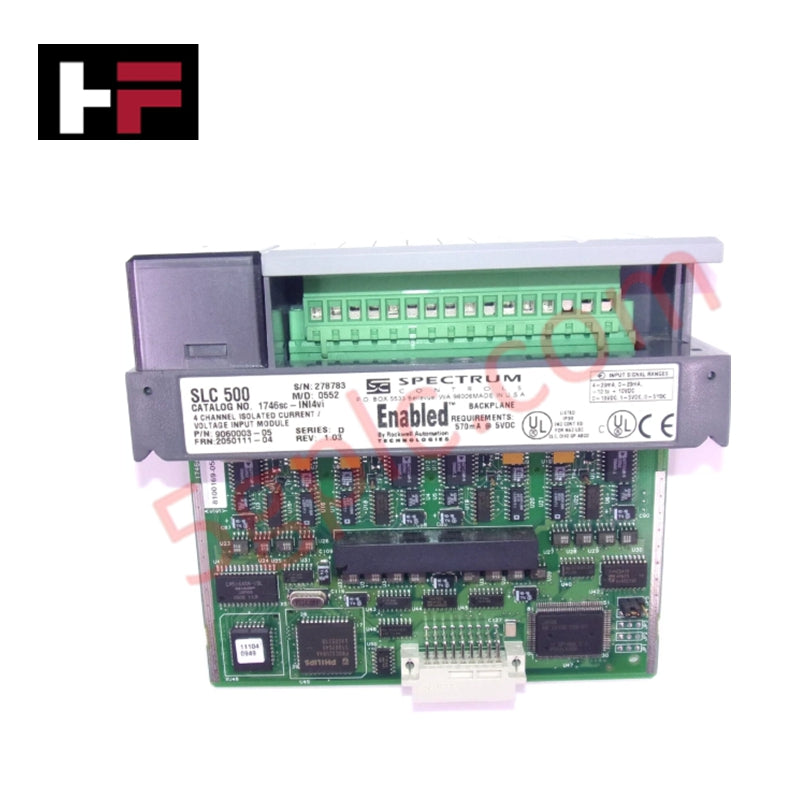
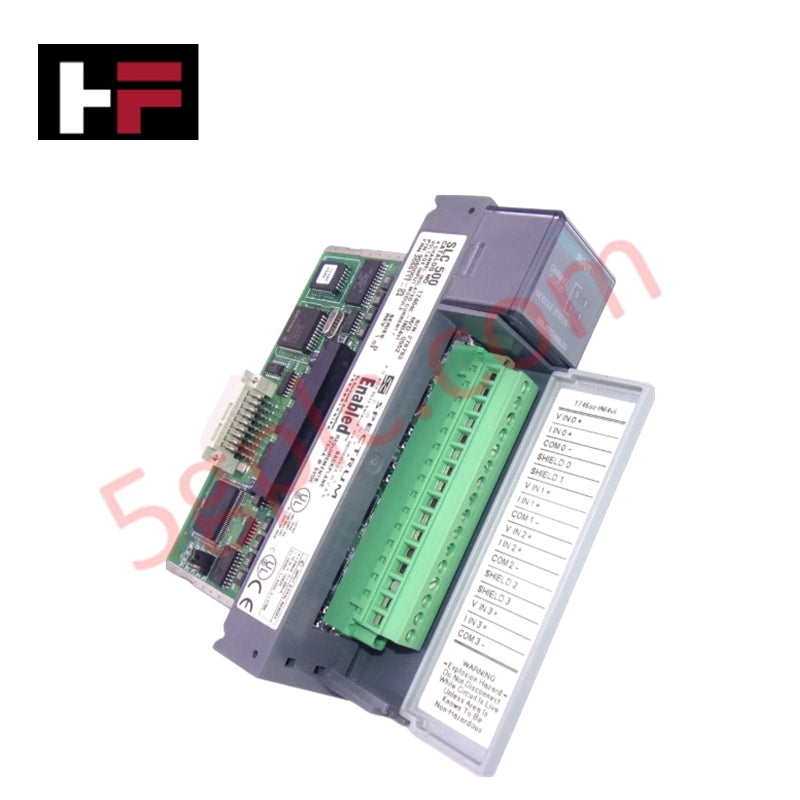
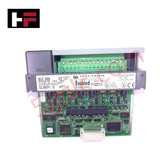
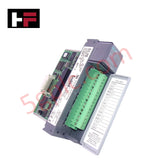
The Allen-Bradley 1746SC-INI4VI serves as a high-precision, isolated analog input solution for the SLC 500 platform. This specialty module provides four channels of channel-to-channel isolation, protecting your control system from ground loops and high-voltage transients. We supply this unit as 100% Brand New and Original, ensuring peak signal integrity for mission-critical measurements in chemical processing, power generation, and water treatment applications.
Technical Specifications
| Parameter | Specification Details |
| Module Type | Isolated Analog Input |
| Number of Channels | 4 Isolated Channels |
| Conversion Method | Sigma-Delta (High Precision) |
| Backplane Current | 570 mA @ 5V DC |
| Thermal Dissipation | 3.25 Watts |
| Normal Mode Rejection | 98 dB @ 50/60 Hz |
| Calibration Interval | Automatic every 10 seconds |
| Input Filtering | Programmable Notch Filters |
| Module Location | Standard 1746 I/O Slot |
| Weight | 0.50 lbs (0.23 kg) |
Engineering Advantages
-
Elimination of Ground Loops: The channel-to-channel isolation architecture interrupts electrical paths between different field sensors. This design prevents common-mode noise and ground potential differences from corrupting sensitive 4-20mA or 0-10V signals.
-
Continuous Auto-Calibration: The 1746SC-INI4VI performs an internal calibration cycle every 10 seconds. This feature compensates for component aging and thermal drift automatically, ensuring long-term measurement accuracy without manual intervention or system downtime.
-
Superior Noise Rejection: Utilizing Sigma-Delta analog-to-digital conversion and programmable notch filters, the module achieves a 98 dB normal mode rejection ratio. It successfully filters out 50/60 Hz line noise, which often plagues analog signals in high-interference industrial environments.
-
Hardware-Level Protection: High-quality isolation barriers shield the SLC backplane from field-side electrical faults. If a sensor fails or a cable shorts to a high-voltage line, the module confines the damage to the input circuitry, preserving the expensive CPU and other rack components.
FAQs
-
Can I mix voltage and current inputs on the same 1746SC-INI4VI module? Yes. The isolated architecture allows you to configure individual channels for different signal types. This flexibility reduces the total module count in systems where you must monitor a variety of sensor outputs (e.g., pressure transmitters and flow meters) within a single rack.
-
Does this module require external calibration tools? No. The module features a self-calibrating circuit that executes every 10 seconds. This ensures the Sigma-Delta converter maintains its precision across varying cabinet temperatures without requiring periodic field calibration by technicians.
-
What is the significance of "Brand New" for a legacy SLC 500 module? As a legacy product line, many units on the market are used "pulls" or refurbished. Our 100% Brand New 1746SC-INI4VI modules arrive in original factory packaging with untouched internal capacitors and circuit paths, guaranteeing the full MTBF (Mean Time Between Failure) expected of Allen-Bradley hardware.
-
How do I configure the input filtering? You set the programmable notch filters through the PLC software (RSLogix 500). Selecting the appropriate notch frequency (50 Hz or 60 Hz) allows the module to effectively cancel out ambient electrical noise specific to your regional power grid.
Additional Information
- 100% Genuine Parts: All products are original and authentic, ensuring reliable industrial performance.
- 30-Day Refund Guarantee: Return any in-stock item within 30 days in original, unopened packaging for a full refund (excluding shipping and fees).
- 12-Month Warranty: Covers defects in materials or workmanship; excludes misuse, normal wear, or unauthorized modifications.
- Worldwide Shipping: We ship via USPS, UPS, FedEx, and DHL. Delivery times vary by country and may be subject to customs or import fees.
- Support & Contact: Technical and warranty assistance is available anytime. Contact us here: Contact.
- Purchase Guidance: Check product specifications and compatibility carefully before ordering to ensure proper application.
Tech & Buying Guide

Navigating Industrial Automation Failures: Types, Causes, and Mitigation Strategies
Modern manufacturing relies heavily on automated control systems to maximize throughput and maintain product quality. However, unplanned downtime in industrial automation can cost facility operators thousands of dollars per hour. Understanding how programmable logic controllers (PLCs), distributed control systems (DCS), and field instrumentation fail empowers engineering teams to implement robust preventive maintenance strategies.
Essential Motion Control Commands: A Practical Guide for Engineers
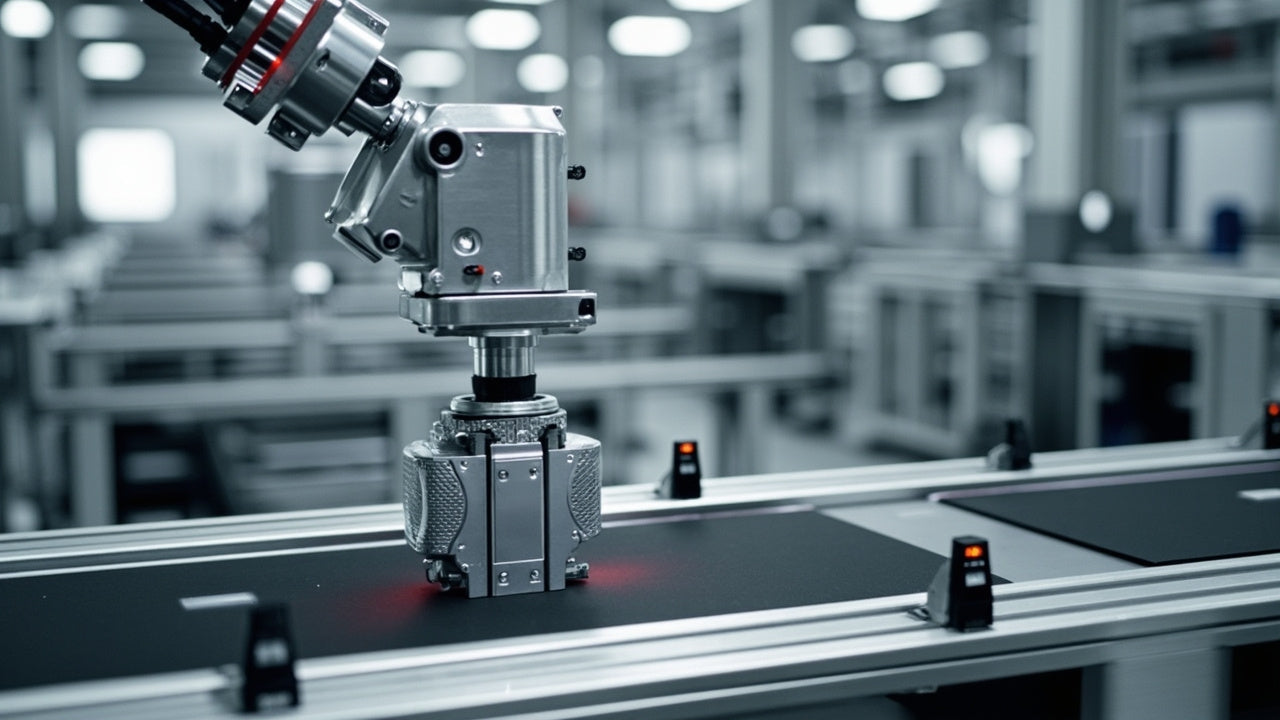
Automation engineers often rely on precise position and speed control to drive modern factory machinery. Modern industrial systems, such as Programmable Logic Controllers (PLCs) and Distributed Control Systems (DCS), depend heavily on standardized motion instructions. Mastering these commands ensures operational safety, protects mechanical components, and optimizes cycle times across production lines.

The Role of Intrinsic Safety Barriers in PLC and DCS Architectures
Implementing robust protection in hazardous industrial environments represents a fundamental safety requirement in factory automation. Process facilities often handle volatile gases, dusts, and chemical agents that pose significant combustion risks. Consequently, control system engineers must deploy energy-limiting interfaces to isolate safe-area control cabinets from hazardous-area field instrumentation. This article examines the function, selection, and electrical principles of intrinsic safety barriers within modern PLC and DCS networks.