












Product Details
Product Overview
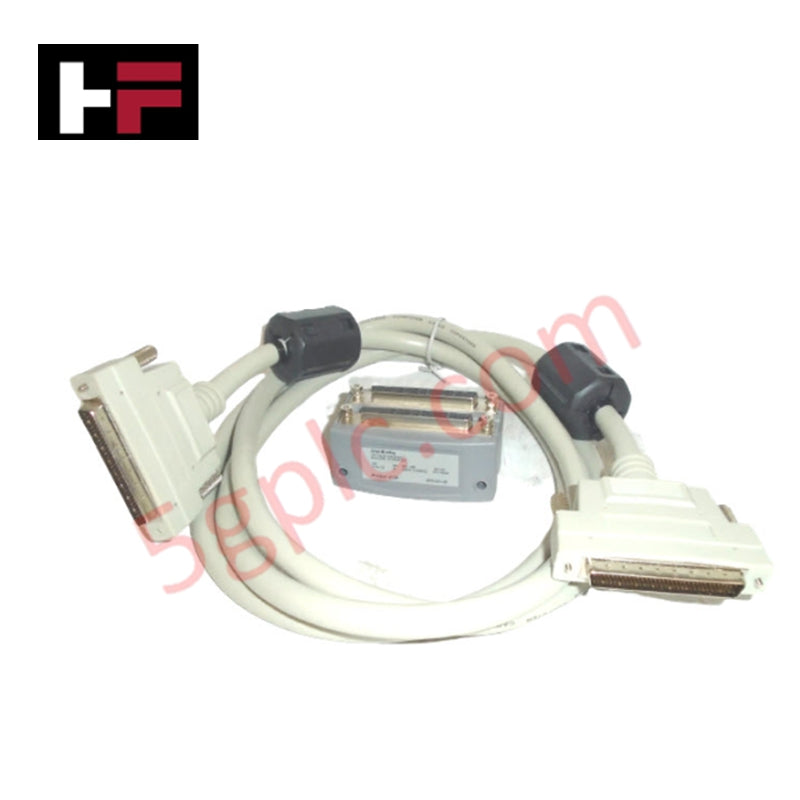
The Allen Bradley 1715-C2 functions as a high-integrity communication link within the 1715 Redundant I/O system. This 2-meter cable extends the backplane connection between redundant I/O modules and their primary communication interfaces. We supply this unit as 100% Brand New and Original, ensuring optimal signal conductivity and synchronization for mission-critical applications that demand zero downtime. It serves as the physical backbone for distributed high-availability architectures in oil and gas, power generation, and chemical processing.
Technical Specifications
The 1715-C2 provides specialized connectivity for redundant I/O configurations:
| Feature | Specification |
| Cable Type | Redundant I/O Backplane Extender |
| Length | 2 Meters (approx. 6.6 ft) |
| Compatibility | Allen Bradley 1715 Series I/O |
| Function | Communication Interface Link |
| Jacket Material | Industrial Grade Shielded |
| Connector Type | High-Density Proprietary Interface |
| Weight | 1.30 lbs (0.59 kg) |
| Application | Backplane Extension for Redundancy |
Engineering Advantages
-
High-Integrity Signal Synchronization: The 1715-C2 utilizes heavy-duty shielding to protect high-speed data transmission from electromagnetic interference (EMI). This prevents data corruption between redundant pairs, ensuring the standby module takes control instantly if the primary module fails.
-
Flexible Cabinet Layouts: The 2-meter length allows engineers to distribute redundant I/O racks across different sections of a control cabinet. This physical separation improves thermal management and facilitates easier access for maintenance without disturbing the primary communication interface.
-
Robust Mechanical Coupling: The cable features secure, industrial-grade connectors that resist vibration and accidental disconnection. This mechanical stability maintains the constant "heartbeat" signal required for fail-safe redundant systems.
-
Plug-and-Play Extension: The 1715-C2 requires no software configuration. Once connected, the 1715 backplane automatically recognizes the extended modules, streamlining the commissioning process for large-scale redundant I/O counts.
FAQs
-
Can I link multiple 1715-C2 cables to achieve a longer distance?
No. We strongly advise against daisy-chaining backplane extender cables. To maintain the signal timing required for SIL-rated redundancy, you must use a single cable of the appropriate length (2m for the 1715-C2).
-
Does this cable support standard Ethernet communication?
While it serves a "communication interface," the 1715-C2 is a proprietary backplane extender. It will not function with standard RJ45 Ethernet ports or commercial networking hardware.
-
What are the signs of a failing backplane extender cable?
Redundant systems will typically report "Loss of Synchronization" or "I/O Communication Fault" in the controller's diagnostic buffer. If you experience intermittent switching between redundant pairs, inspect the 1715-C2 for physical damage or loose connections.
-
Is this a genuine Allen Bradley product?
Absolutely. We guarantee this 1715-C2 is 100% Brand New original hardware. It arrives in its original factory-sealed packaging with all manufacturing labels and serial numbers intact.
Additional Information
- 100% Genuine Parts: All products are original and authentic, ensuring reliable industrial performance.
- 30-Day Refund Guarantee: Return any in-stock item within 30 days in original, unopened packaging for a full refund (excluding shipping and fees).
- 12-Month Warranty: Covers defects in materials or workmanship; excludes misuse, normal wear, or unauthorized modifications.
- Worldwide Shipping: We ship via USPS, UPS, FedEx, and DHL. Delivery times vary by country and may be subject to customs or import fees.
- Support & Contact: Technical and warranty assistance is available anytime. Contact us here: Contact.
- Purchase Guidance: Check product specifications and compatibility carefully before ordering to ensure proper application.
Tech & Buying Guide

Navigating Industrial Automation Failures: Types, Causes, and Mitigation Strategies
Modern manufacturing relies heavily on automated control systems to maximize throughput and maintain product quality. However, unplanned downtime in industrial automation can cost facility operators thousands of dollars per hour. Understanding how programmable logic controllers (PLCs), distributed control systems (DCS), and field instrumentation fail empowers engineering teams to implement robust preventive maintenance strategies.
Essential Motion Control Commands: A Practical Guide for Engineers
Automation engineers often rely on precise position and speed control to drive modern factory machinery. Modern industrial systems, such as Programmable Logic Controllers (PLCs) and Distributed Control Systems (DCS), depend heavily on standardized motion instructions. Mastering these commands ensures operational safety, protects mechanical components, and optimizes cycle times across production lines.

The Role of Intrinsic Safety Barriers in PLC and DCS Architectures
Implementing robust protection in hazardous industrial environments represents a fundamental safety requirement in factory automation. Process facilities often handle volatile gases, dusts, and chemical agents that pose significant combustion risks. Consequently, control system engineers must deploy energy-limiting interfaces to isolate safe-area control cabinets from hazardous-area field instrumentation. This article examines the function, selection, and electrical principles of intrinsic safety barriers within modern PLC and DCS networks.