












Product Details
Product Overview
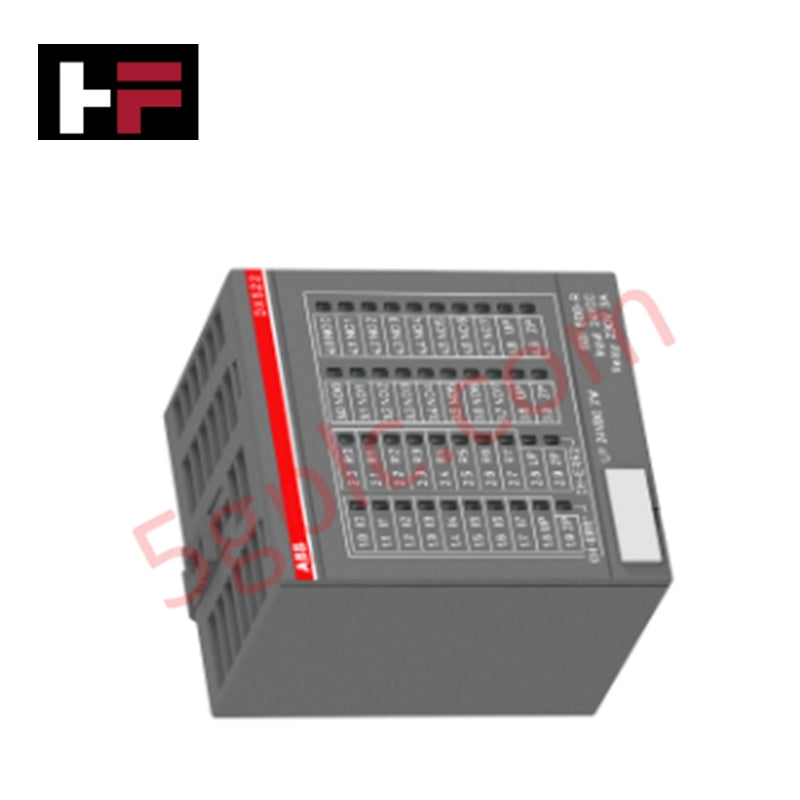
The ABB AX521 (1SAP250100R0001) functions as a high-precision analog expansion component within the S500 Distributed Automation I/O family. This versatile module integrates 4 analog inputs and 4 analog outputs into a single compact footprint, supporting a wide range of signal types including Voltage (U), Current (I), and Resistance Temperature Detectors (RTD). It provides critical interface capabilities for AC500 PLC systems to monitor and control continuous process variables with 13-bit resolution. We supply this module as 100% Brand New and Original, ensuring your industrial control loops operate with factory-certified accuracy and stability.
Technical Specifications
The AX521 handles complex analog signals through the following hardware parameters:
-
Analog Inputs: 4 Channels (Configurable for Voltage, Current, or RTD)
-
Analog Outputs: 4 Channels (Configurable for Voltage or Current)
-
Resolution: 13-bit (including sign)
-
Signal Ranges: Standard industrial signals (e.g., 0…10V, 4…20mA)
-
Wiring Configuration: 1-wire connection support
-
Protection Rating: IP20 (Housing)
-
Module Supply Voltage: 24V DC (via Terminal Base)
-
Dimensions: 67.5 mm (W) x 76 mm (H) x 62 mm (D)
-
Net Weight: 0.129 kg
Engineering Advantages
-
Universal Signal Flexibility: The 4 input channels natively support Voltage, Current, and RTD signals. This multi-mode capability allows engineers to mix different sensor types on a single module, reducing the total number of I/O cards required in the cabinet.
-
High-Resolution Process Control: 13-bit resolution ensures precise conversion of analog variables into digital data. This level of detail enables the PLC to execute highly accurate PID control for sensitive pressure, flow, and temperature applications.
-
Direct RTD Integration: The module processes RTD signals directly without requiring external transmitters. This integration simplifies the wiring architecture, reduces potential points of failure, and lowers the overall hardware cost for temperature monitoring.
-
Optimized Cabinet Density: Occupying only 67.5 mm of width, the AX521 delivers 8 total analog points (4 in / 4 out). This high density allows for significant I/O expansion in restricted enclosure spaces, making it ideal for decentralized control boxes.
-
Seamless S500 Compatibility: The module docks into a standard AC500 Terminal Base, preserving field wiring during maintenance. This modularity facilitates rapid hardware swaps while maintaining the integrity of the 1-wire configuration.
FAQs
-
Does the AX521 support 2-wire or 3-wire RTD connections?
The AX521 module itself supports 1-wire internal configuration for the logic side, but external RTD wiring depends on the specific Terminal Base used (e.g., TU515 or TU516). We recommend reviewing the wiring diagram of your Terminal Base to ensure proper compensation for lead resistance.
-
Can I configure each channel independently?
Yes. You define the signal type (Voltage, Current, or RTD) for each individual channel within the ABB Automation Builder software. This allows you to monitor a pressure sensor (4-20mA) and a temperature sensor (Pt100) on the same module simultaneously.
-
What is the benefit of the 13-bit resolution for the outputs?
The 13-bit resolution allows for very fine increments when controlling proportional valves or frequency drives. This precision prevents "stepping" in the process and ensures smooth transitions in automated control loops.
-
Does this module require an external power supply for the analog loops?
The module draws its internal operating power from the 24V DC supply on the Terminal Base. However, depending on your field sensors (e.g., 2-wire transmitters), you may need to provide external loop power according to standard industrial wiring practices.
Additional Information
- 100% Genuine Parts: All products are original and authentic, ensuring reliable industrial performance.
- 30-Day Refund Guarantee: Return any in-stock item within 30 days in original, unopened packaging for a full refund (excluding shipping and fees).
- 12-Month Warranty: Covers defects in materials or workmanship; excludes misuse, normal wear, or unauthorized modifications.
- Worldwide Shipping: We ship via USPS, UPS, FedEx, and DHL. Delivery times vary by country and may be subject to customs or import fees.
- Support & Contact: Technical and warranty assistance is available anytime. Contact us here: Contact.
- Purchase Guidance: Check product specifications and compatibility carefully before ordering to ensure proper application.






Tech & Buying Guide

Mastering Wire Identification in Industrial Automation: The Power of Ferrules and Cross-Ferruling
Proper wire labeling forms the cornerstone of reliable control system installation and long-term maintenance. In complex industrial automation environments, technicians terminate thousands of conductor ends inside control panels, marshalling racks, and field junction boxes. Ferrules serve as individual tube-shaped sleeve markers slipped onto conductors before final termination. While technicians historically relied on pre-printed individual letter rings, modern control panel builders utilize automated ferrule printing machines. These thermal-transfer printers generate durable, single-sleeve heat-shrink tags directly matching approved wiring schematics, significantly accelerating cabinet assembly workflows.

Understanding Marshalling Cabinets in Industrial Automation and Control Systems
Marshalling cabinets serve as the crucial connection hub between field instruments and centralized processing units. In large DCS and PLC control system architectures, hundreds of multipair field cables run from local junction boxes to the central instrument equipment room. The marshalling cabinet houses field terminal blocks, surge arresters, intrinsic safety isolation barriers, and interposing relays. By segregating field field-wiring terminations from sensitive processor hardware, engineers protect expensive controller backplanes from high-voltage transients. Consequently, this modular separation dramatically streamlines maintenance workflows and simplifies system expansion.

Essential Best Practices for PLC Wiring and Installation in Industrial Automation
Successful control system deployment begins with thoroughly reviewing manufacturer technical documentation. Controllers from major brands like Allen-Bradley, Siemens, and Schneider Electric feature unique terminal layouts. Engineers must verify voltage requirements before connecting power cables to prevent catastrophic equipment damage. Standard line connections require strict adherence to regional electrical codes and proper wire color coding. Furthermore, panel builders should always establish a robust low-impedance ground connection using at least 16-AWG copper conductor tied directly to the main plant grounding grid.