













Product Details
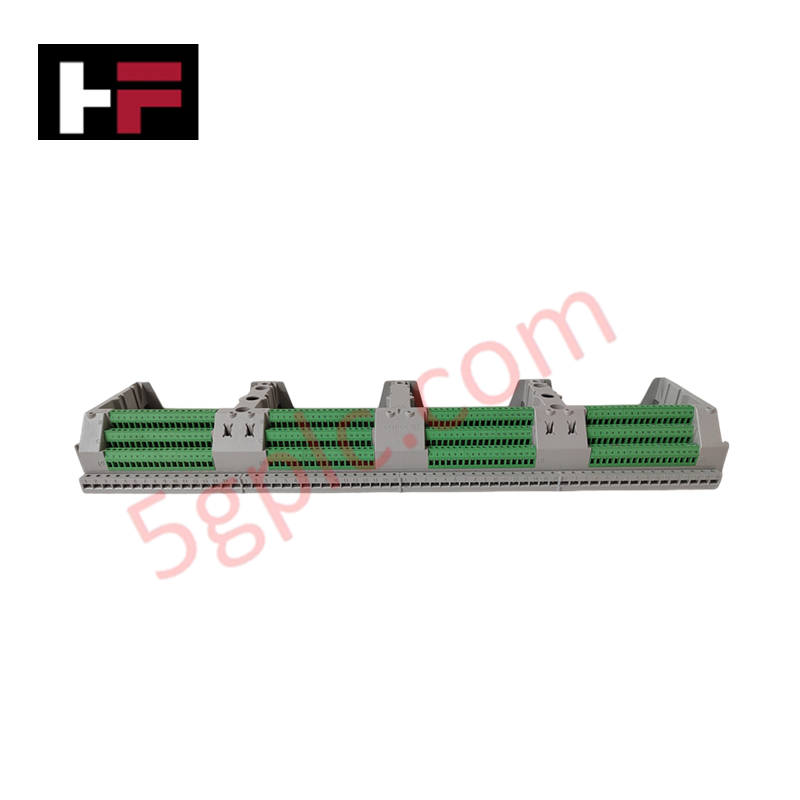
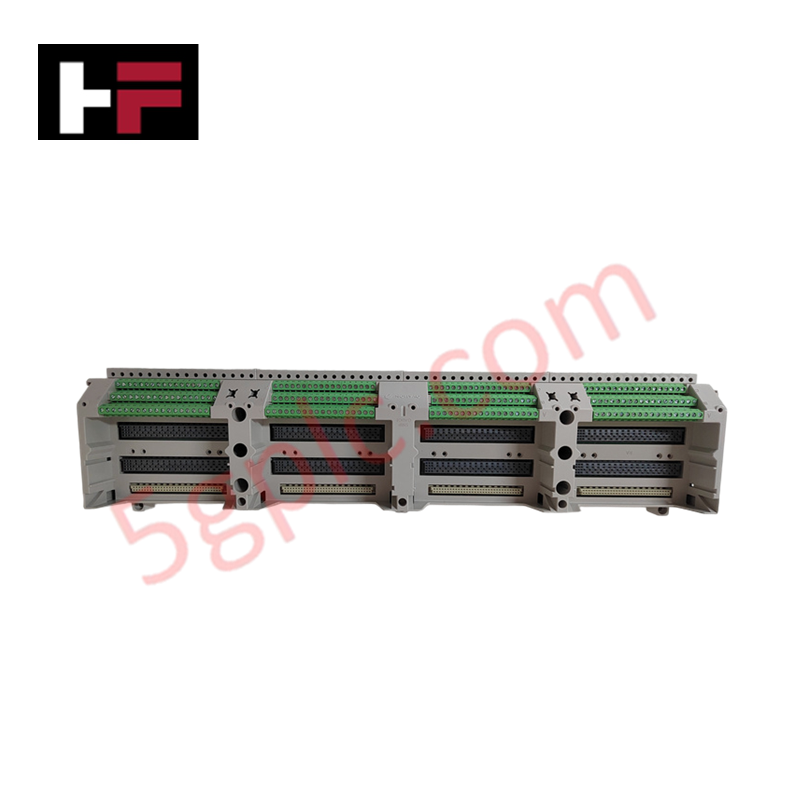
Configured for high-density signal distribution in Ovation control platforms, the Emerson 5X00497G01 (5X00497G01) I/O Substrate Unit provides direct physical backplane connectivity for up to four modules. The unit operates as a dedicated hardware component for interfacing analog, RTD, digital, and communication modules with the primary control bus, facilitating deterministic data throughput across the system rack.
Hardware Specifications
| Parameter | Specification |
|---|---|
| Model | 5X00497G01 |
| Brand | Emerson |
| Weight | 1 kg |
| Dimensions | 233 mm x 175 mm x 40 mm |
| Operating Temp | -40 deg C to +70 deg C |
| Power Consumption | < 50 W |
| Slot Capacity | 4 Slots |
| Supply Voltage | 24 VDC |
Process Control and Signal Isolation
The 5X00497G01 architecture supports channel-to-channel isolation when populated with compatible I/O cards, preventing noise propagation between mixed-signal domains. By maintaining electrical separation between individual module slots, the substrate ensures that faults occurring in a single field-side loop are contained, thereby protecting the integrity of adjacent control channels. This substrate design is optimized to maintain signal precision for sensitive 4-20 mA HART loop protocol instruments and high-speed digital communication modules.
Frequently Asked Questions
Q: Does the 4-slot substrate support hot-swapping of I/O modules?
A: The substrate is engineered to support the hot-swap of Ovation modules. It is required to follow system-specific procedures via the engineering workstation to isolate the specific slot logic before physical removal or insertion.
Q: Are there restrictions on the types of modules that can be mixed in the 4 slots?
A: The substrate supports a combination of analog, digital, RTD, and communication modules. Users must ensure the total power consumption of all four modules does not exceed the power distribution limits of the substrate's internal bus.
Field Installation Guidelines
- Mounting: Secure the substrate to the cabinet backplane using the integrated mounting points. Ensure the unit is level and grounded to the cabinet common ground bus to provide an effective path for electromagnetic interference mitigation.
- Grounding: Establish a low-impedance connection between the substrate chassis and the cabinet earth ground. Verify that the grounding path remains secure under vibration to avoid signal floating or common-mode noise.
- Wiring: Route field-side wiring through dedicated channels, maintaining strict separation from high-voltage AC lines. Shielded cables must be terminated at the cabinet's grounded entry points to preserve the integrity of the loop signals.
- Verification: Prior to system energization, perform a point-to-point continuity check for all field terminations. Confirm the 24 VDC supply voltage is stable at the input terminals before populating the substrate with I/O modules.
Additional Information
- 100% Genuine Parts: All products are original and authentic, ensuring reliable industrial performance.
- 30-Day Refund Guarantee: Return any in-stock item within 30 days in original, unopened packaging for a full refund (excluding shipping and fees).
- 12-Month Warranty: Covers defects in materials or workmanship; excludes misuse, normal wear, or unauthorized modifications.
- Worldwide Shipping: We ship via USPS, UPS, FedEx, and DHL. Delivery times vary by country and may be subject to customs or import fees.
- Support & Contact: Technical and warranty assistance is available anytime. Contact us here: Contact.
- Purchase Guidance: Check product specifications and compatibility carefully before ordering to ensure proper application.




Tech & Buying Guide

Demystifying the DDE Protocol in Legacy Industrial Automation Systems
Modern control systems rely heavily on seamless interprocess communication to exchange operational data between software programs. Microsoft first introduced the Dynamic Data Exchange (DDE) protocol in 1987 to enable real-time data sharing. In factory automation, DDE served as an early bridge between control software and Windows desktop applications. Therefore, understanding DDE mechanics provides crucial insights into how legacy industrial networks established software-level connectivity.

Demystifying CPU Communication Ports in Siemens PLC Architectures
Industrial automation relies heavily on robust data exchange between devices. Without seamless connectivity, field instruments, network switches, human-machine interfaces, and programmable logic controllers cannot coordinate effectively. Therefore, understanding the various CPU communication ports available in Siemens hardware ensures efficient factory automation design and seamless system integration.

Mastering the Siemens PLC Scan Cycle: How the CPU Executes Automation Programs
Industrial automation relies heavily on programmable logic controllers (PLCs) to manage complex manufacturing processes. Many engineers dive straight into programming without mastering the underlying architecture. However, understanding how a PLC CPU executes a program ensures reliable system design. Therefore, mastering the scan cycle optimizes both performance and troubleshooting in modern control systems.