













Product Details
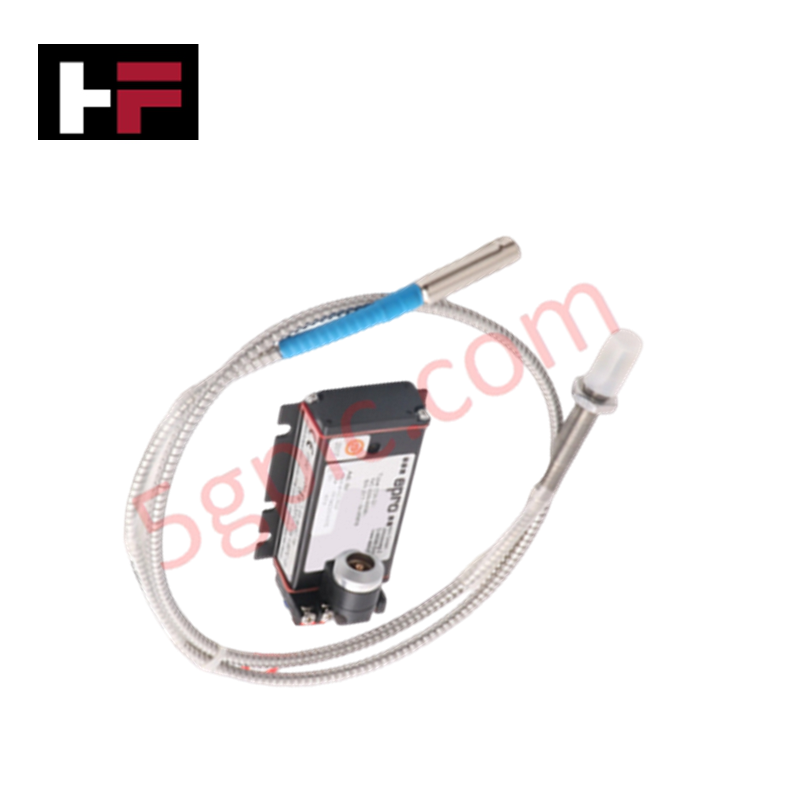
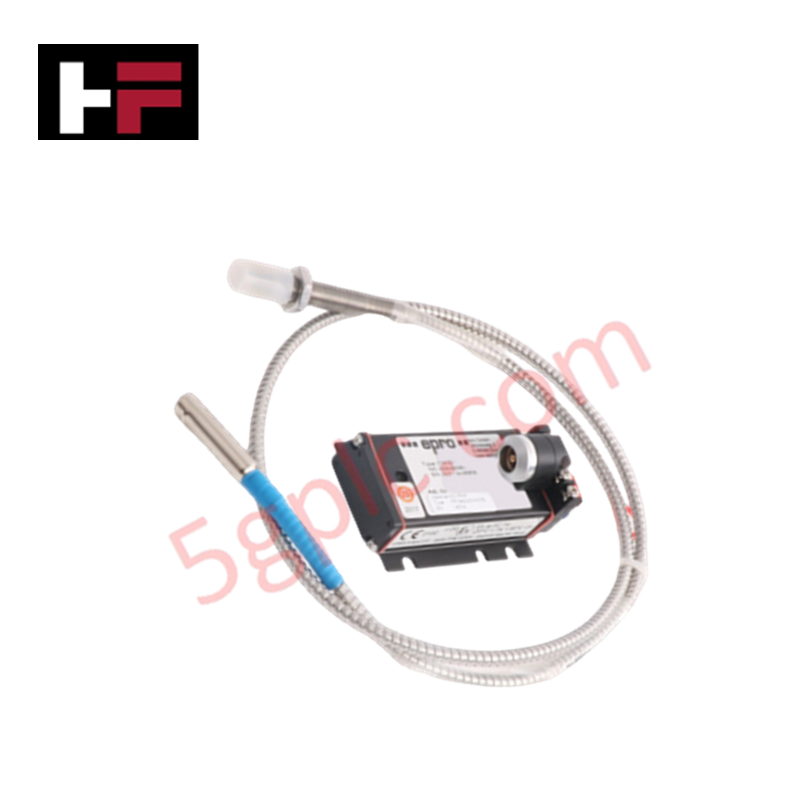
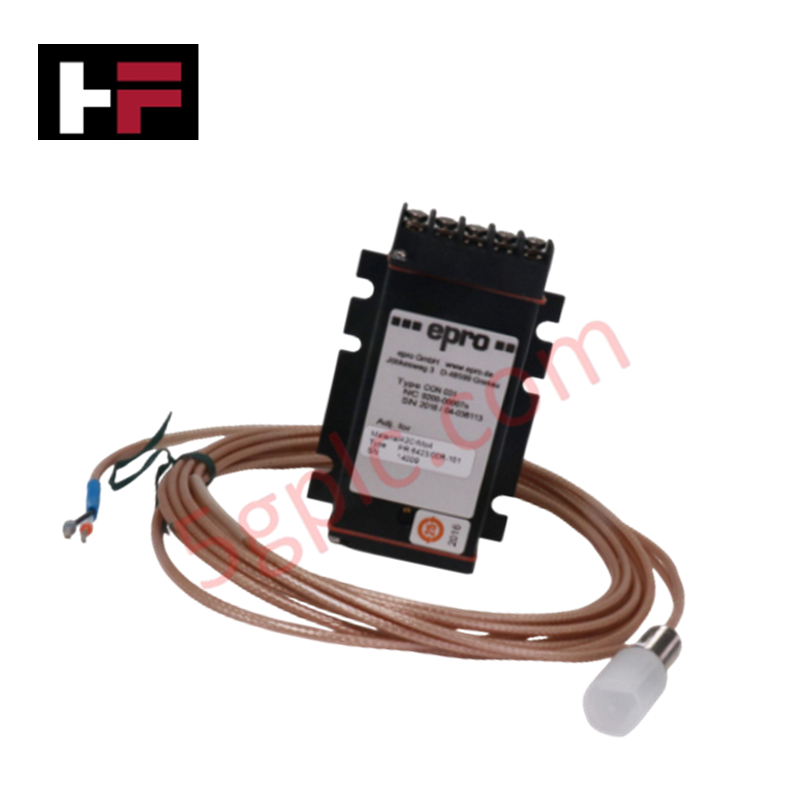
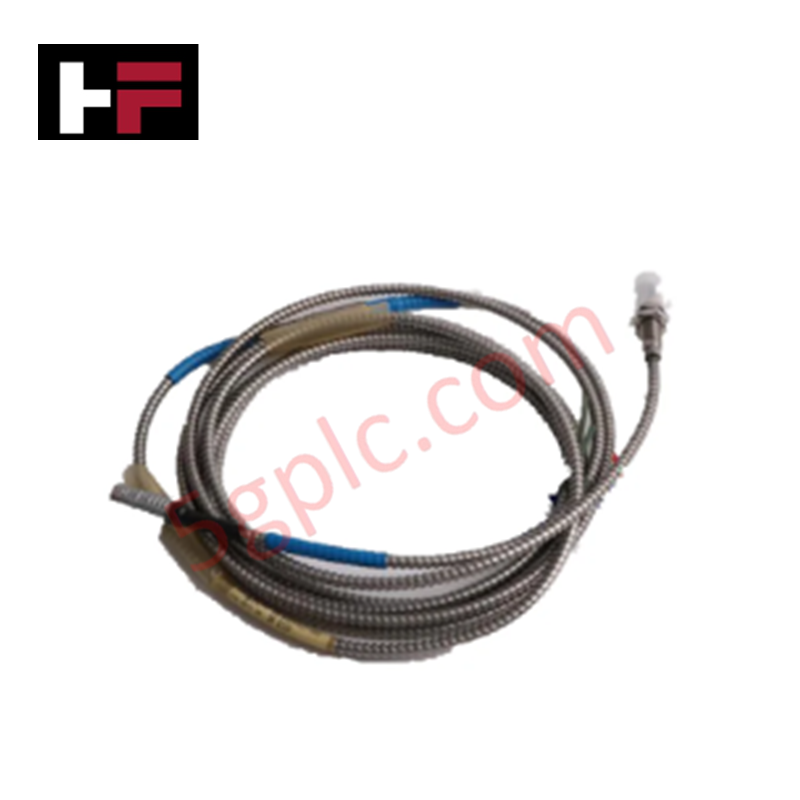
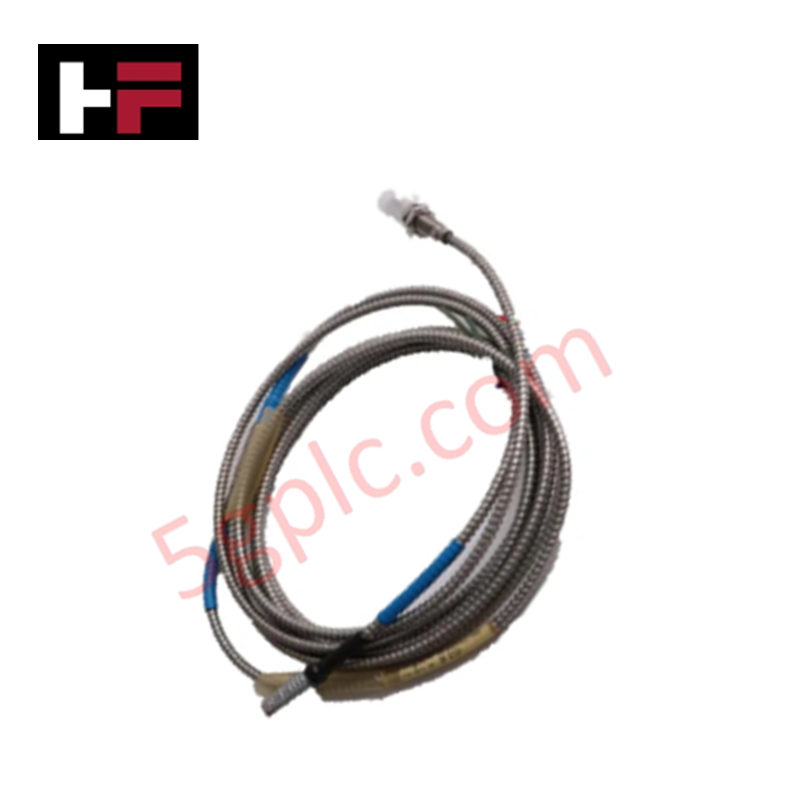
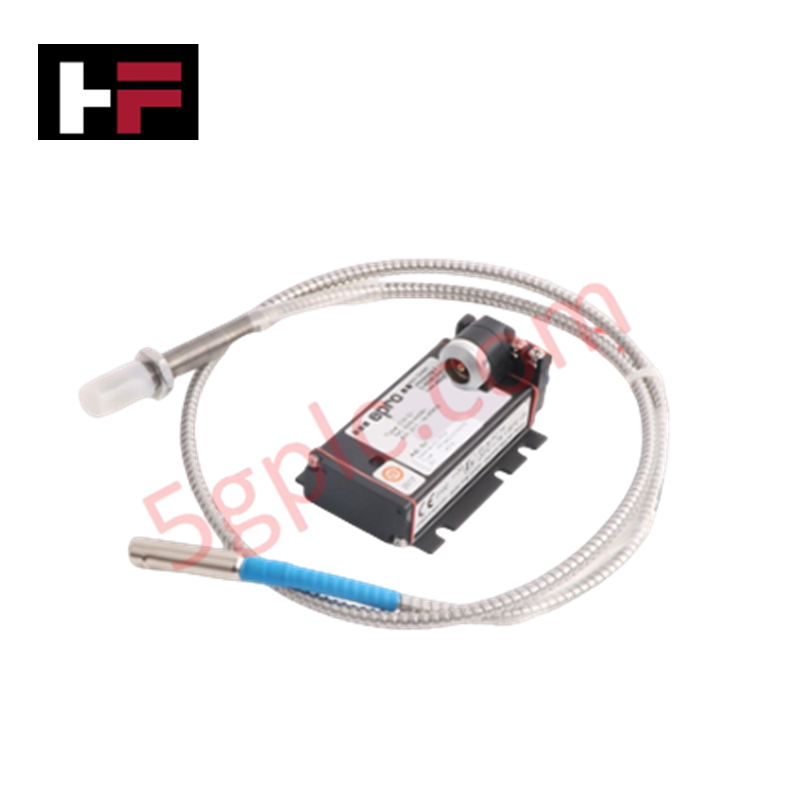
Configured for non-contact dynamic shaft displacement and vibration measurement in machinery protection networks, the Emerson PR6423/016-000 (PR6423/016-000 Eddy Current Displacement Sensors) provides direct physical signal conditioning. The probe converts high-frequency electromagnetic field variations caused by rotor shaft target displacement directly into linear electrical signals for evaluation systems.
Hardware Specifications
| Parameter | Specification |
|---|---|
| Model | PR6423/016-000 |
| Brand | Emerson |
| Origin | Germany |
| Dimensions | 160 mm case thread length |
| Operating Temp | -35 to +180 deg C (-31 to +356 deg F) |
| Power Consumption | Powered via external driver/signal converter |
| Measurement Range | +/- 2.0 mm (dynamic) |
| Sensitivity | 8 V/mm (203.2 mV/mil) |
| Target Material | Ferromagnetic steel |
| Pressure Resistance | Up to 10000 hPa (145 psi) |
| Cable Material | PTFE (optional armored cable available) |
| Protection Class | IP66 |
| Product Type | Eddy Current Displacement Sensors |
4-20 mA HART Loop Protocol and Channel Isolation
Downstream signal converters processing raw inputs from the PR6423/016-000 incorporate channel-to-channel isolation architecture to eliminate ground loops between sensor primary coils and plant telemetry buses. When deployed alongside DCS architectures utilizing 4-20 mA HART loop protocol transmitters or FOUNDATION Fieldbus signal gateways, the sensor output preserves baseline linearity across dynamic vibration spectrums. Internal temperature tracking within evaluation units provides cold junction compensation equivalent reference stability across ambient environmental operational shifts.
Frequently Asked Questions
Q: What material calibration is pre-configured for the specified 8 V/mm sensor sensitivity?
A: The sensor sensitivity of 8 V/mm is factory calibrated specifically for ferromagnetic steel target materials; non-ferrous shaft materials require specific scaling factors.
Q: What maximum pressure limit can the sensor body withstand when mounted directly into machinery housings?
A: The probe assembly features a pressure resistance rating of up to 10000 hPa (145 psi) and an IP66 ingress protection rating.
Q: How does the 016 option code alter the physical geometry of the probe assembly?
A: The 016 option code designates an extended 160 mm outer thread case length for mounting applications requiring deeper insertion into turbomachinery casings.
Field Installation Guidelines
- Inspect the shaft measurement area to confirm target surfaces are free of mechanical runout, deep scratches, and magnetic residual fields.
- Thread the 160 mm body of the PR6423 probe into the mounting bracket perpendicular to the shaft centerline.
- Adjust insertion depth to establish the specified static physical air gap using feeler gauges or output voltage verification prior to locking.
- Torque the locking jam nut securely against the mounting surface to resist rotational displacement under machine vibration.
- Route the integral PTFE coaxial cable through grounded metallic conduit, keeping lines separated from high-voltage AC cables and VFD drives.
- Connect the cable shield conductor to the cabinet single-point instrument ground bar inside the termination junction box.
Additional Information
- 100% Genuine Parts: All products are original and authentic, ensuring reliable industrial performance.
- 30-Day Refund Guarantee: Return any in-stock item within 30 days in original, unopened packaging for a full refund (excluding shipping and fees).
- 12-Month Warranty: Covers defects in materials or workmanship; excludes misuse, normal wear, or unauthorized modifications.
- Worldwide Shipping: We ship via USPS, UPS, FedEx, and DHL. Delivery times vary by country and may be subject to customs or import fees.
- Support & Contact: Technical and warranty assistance is available anytime. Contact us here: Contact.
- Purchase Guidance: Check product specifications and compatibility carefully before ordering to ensure proper application.



Tech & Buying Guide

Demystifying the DDE Protocol in Legacy Industrial Automation Systems
Modern control systems rely heavily on seamless interprocess communication to exchange operational data between software programs. Microsoft first introduced the Dynamic Data Exchange (DDE) protocol in 1987 to enable real-time data sharing. In factory automation, DDE served as an early bridge between control software and Windows desktop applications. Therefore, understanding DDE mechanics provides crucial insights into how legacy industrial networks established software-level connectivity.

Demystifying CPU Communication Ports in Siemens PLC Architectures
Industrial automation relies heavily on robust data exchange between devices. Without seamless connectivity, field instruments, network switches, human-machine interfaces, and programmable logic controllers cannot coordinate effectively. Therefore, understanding the various CPU communication ports available in Siemens hardware ensures efficient factory automation design and seamless system integration.

Mastering the Siemens PLC Scan Cycle: How the CPU Executes Automation Programs
Industrial automation relies heavily on programmable logic controllers (PLCs) to manage complex manufacturing processes. Many engineers dive straight into programming without mastering the underlying architecture. However, understanding how a PLC CPU executes a program ensures reliable system design. Therefore, mastering the scan cycle optimizes both performance and troubleshooting in modern control systems.