












Product Details
Product Overview
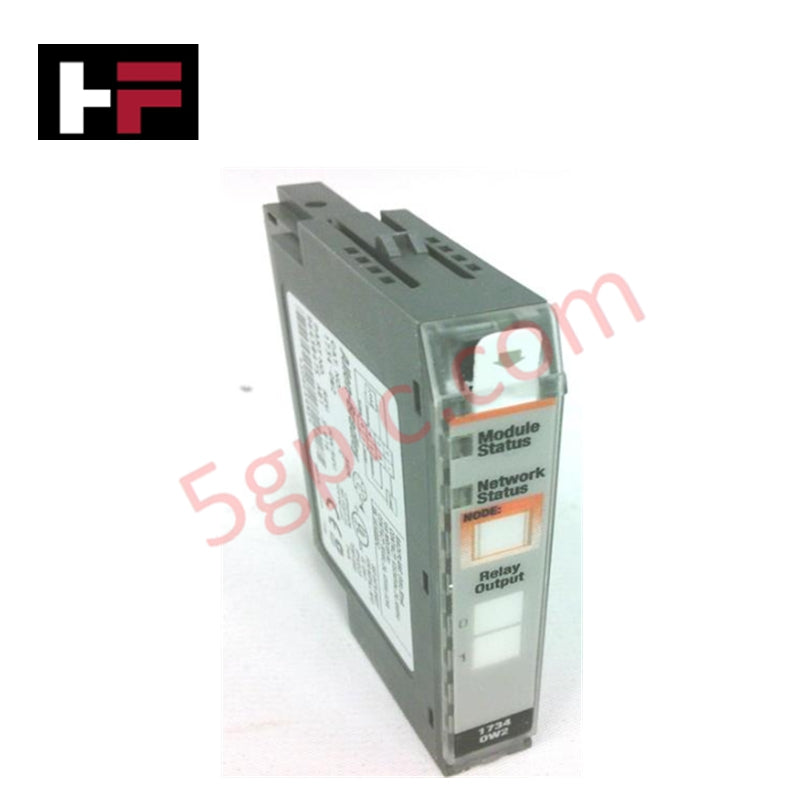
The Allen-Bradley 1734-OW2 serves as a high-density, electromechanical relay output solution within the POINT I/O 1734 family. This module integrates two independent Form A (Normally Open) relays, allowing the control of various AC and DC loads in a distributed I/O architecture. We provide this component as 100% Brand New original factory stock. It bridges the gap between low-level PLC logic and high-power field devices like motor starters, solenoid valves, and indicators while minimizing panel space.
Technical Specifications
| Feature | Specification |
| Manufacturer | Allen-Bradley / Rockwell Automation |
| Product Line | POINT I/O 1734 |
| Outputs | 2 Normally Open (Form A) Relays |
| Contact Current Rating | 2.0 A per channel (Maximum) |
| Isolation Voltage | 250V (Continuous) |
| Backplane Current | 80 mA @ 5V DC |
| Power Dissipation | 0.5 W (Maximum) |
| Contact Life | ≥ 100,000 operations @ rated load |
| Switching Frequency | 1 operation per 3 seconds (0.3 Hz max) |
| Wire Size | 22–14 AWG (0.25–2.5 mm²) Copper |
| Operating Temperature | -20°C to 55°C (-4°F to 131°F) |
Engineering Advantages
-
Optimized for Mixed Loads: The 1734-OW2 handles both AC and DC voltages up to 240V AC or 125V DC. This flexibility eliminates the need for separate interposing relays when controlling diverse field equipment, significantly reducing system complexity.
-
Granular Scalability: The "POINT" architecture allows users to add precisely two relay points per module. This prevents the "over-provisioning" of I/O commonly seen with 8 or 16-point cards, lowering the overall cost-per-point in small-scale automation skids.
-
Robust Galvanic Isolation: 250V continuous isolation protects the sensitive backplane electronics from field-side voltage spikes and electrical noise. This barrier ensures that a catastrophic failure on the load side does not propagate to the PLC processor.
-
Rapid Maintenance Architecture: The module utilizes a "T-Base" terminal system (sold separately), which allows for "Removal and Insertion Under Power" (RIUP). Maintenance teams can swap a 1734-OW2 module without disturbing the field wiring or shutting down the entire I/O rack.
-
Extreme Cold Start Capability: Unlike standard commercial electronics, the 1734-OW2 operates down to -20°C. This makes it suitable for unheated enclosures in outdoor applications or cold storage facilities.
FAQs
-
Can I use the 1734-OW2 for high-speed switching applications?
No. The electromechanical design limits the switching frequency to 0.3 Hz (one operation every three seconds) at rated load. For high-speed PWM or rapid cycling, utilize a solid-state output module like the 1734-OB8.
-
Does this module require a specific terminal base?
Yes. You must install the 1734-OW2 on a 1734-TB or 1734-TBS terminal base. The base provides the mechanical connection to the DIN rail and the electrical interface to the POINTBus.
-
How do I verify the contact health?
The module includes a status LED for each output. If the LED illuminates but the field device does not activate, check the external fuse or the continuity of the electromechanical contact using a multimeter during a maintenance cycle.
-
Is this a factory-sealed unit?
Absolutely. We ship only 100% Brand New units in original Allen-Bradley boxes with intact serial numbers and factory documentation to ensure E-E-A-T compliance for industrial procurement.
Additional Information
- 100% Genuine Parts: All products are original and authentic, ensuring reliable industrial performance.
- 30-Day Refund Guarantee: Return any in-stock item within 30 days in original, unopened packaging for a full refund (excluding shipping and fees).
- 12-Month Warranty: Covers defects in materials or workmanship; excludes misuse, normal wear, or unauthorized modifications.
- Worldwide Shipping: We ship via USPS, UPS, FedEx, and DHL. Delivery times vary by country and may be subject to customs or import fees.
- Support & Contact: Technical and warranty assistance is available anytime. Contact us here: Contact.
- Purchase Guidance: Check product specifications and compatibility carefully before ordering to ensure proper application.
Tech & Buying Guide

Navigating Industrial Automation Failures: Types, Causes, and Mitigation Strategies
Modern manufacturing relies heavily on automated control systems to maximize throughput and maintain product quality. However, unplanned downtime in industrial automation can cost facility operators thousands of dollars per hour. Understanding how programmable logic controllers (PLCs), distributed control systems (DCS), and field instrumentation fail empowers engineering teams to implement robust preventive maintenance strategies.
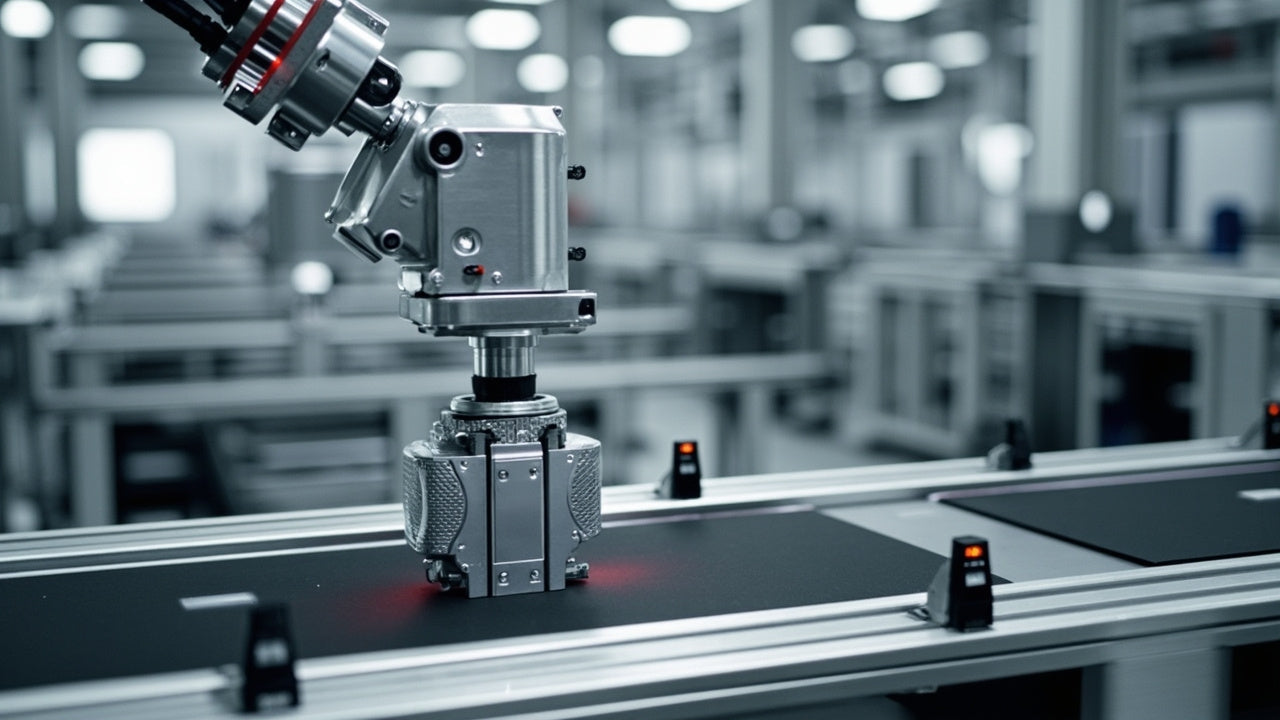
Essential Motion Control Commands: A Practical Guide for Engineers
Automation engineers often rely on precise position and speed control to drive modern factory machinery. Modern industrial systems, such as Programmable Logic Controllers (PLCs) and Distributed Control Systems (DCS), depend heavily on standardized motion instructions. Mastering these commands ensures operational safety, protects mechanical components, and optimizes cycle times across production lines.

The Role of Intrinsic Safety Barriers in PLC and DCS Architectures
Implementing robust protection in hazardous industrial environments represents a fundamental safety requirement in factory automation. Process facilities often handle volatile gases, dusts, and chemical agents that pose significant combustion risks. Consequently, control system engineers must deploy energy-limiting interfaces to isolate safe-area control cabinets from hazardous-area field instrumentation. This article examines the function, selection, and electrical principles of intrinsic safety barriers within modern PLC and DCS networks.