










Product Details
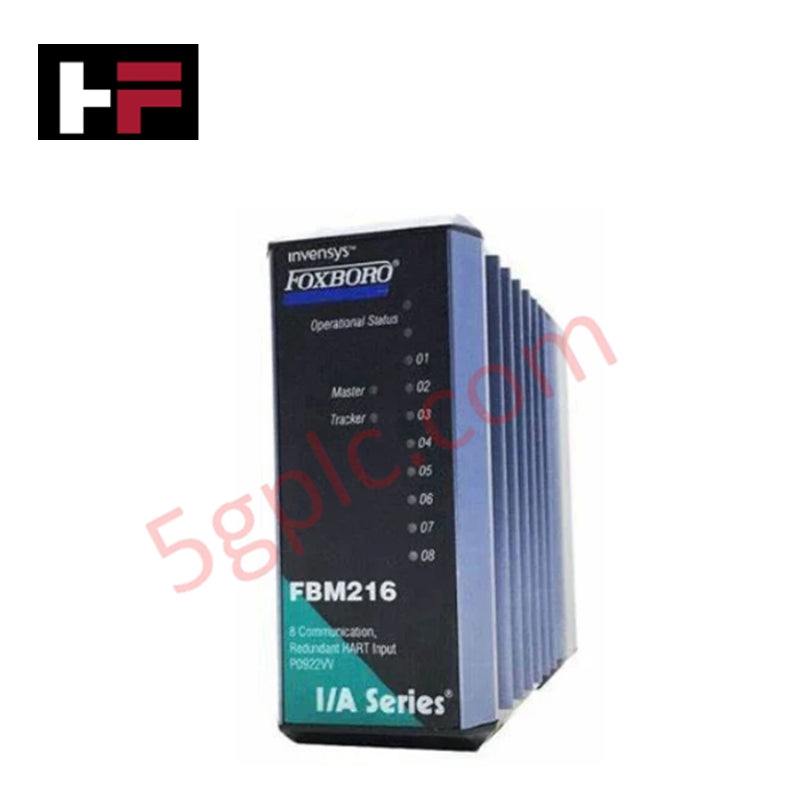
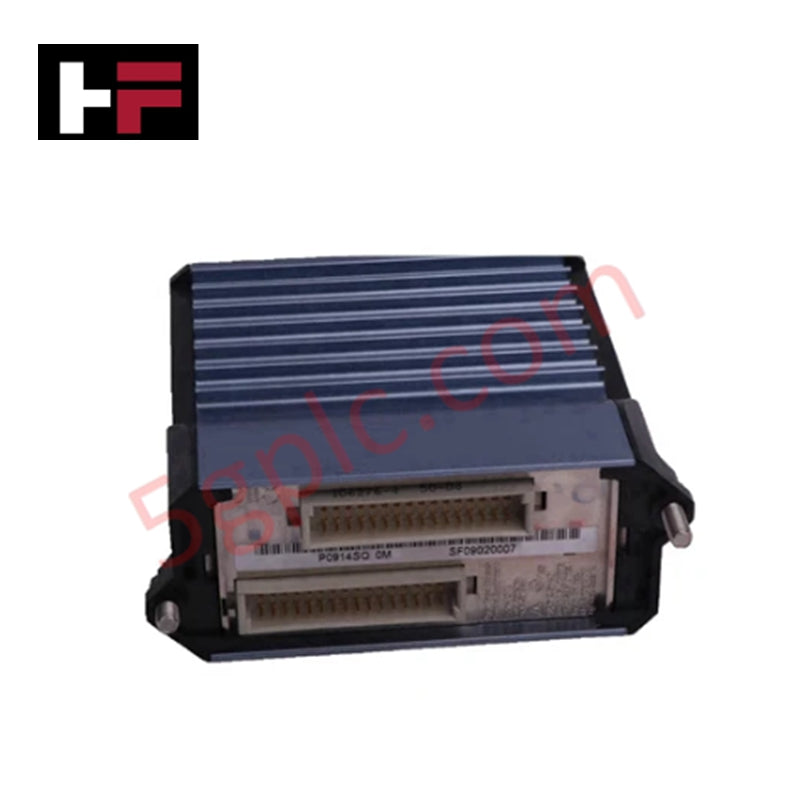
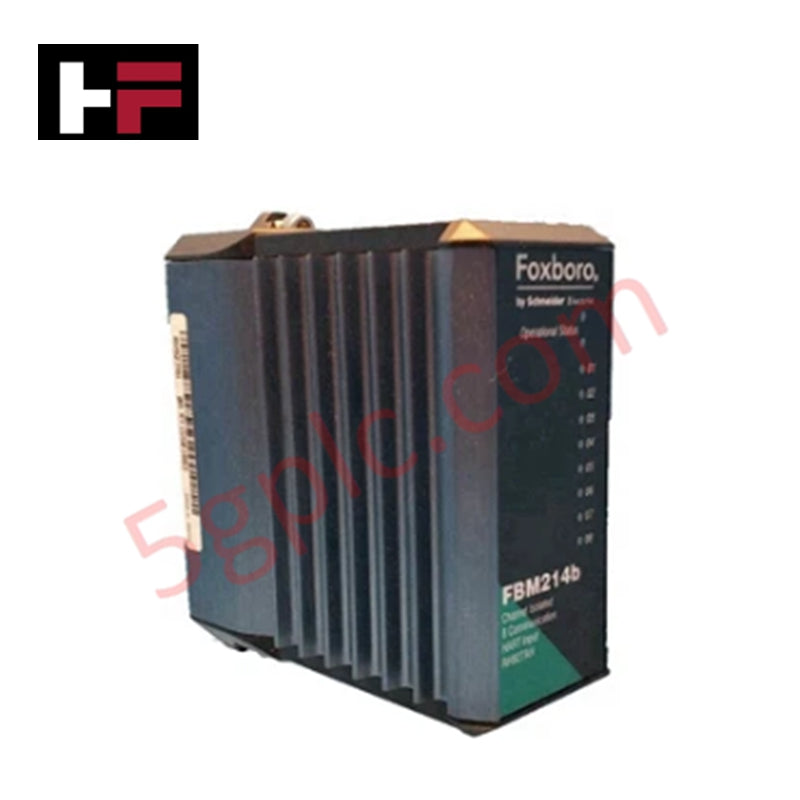
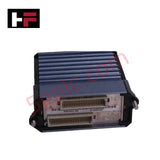
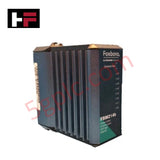
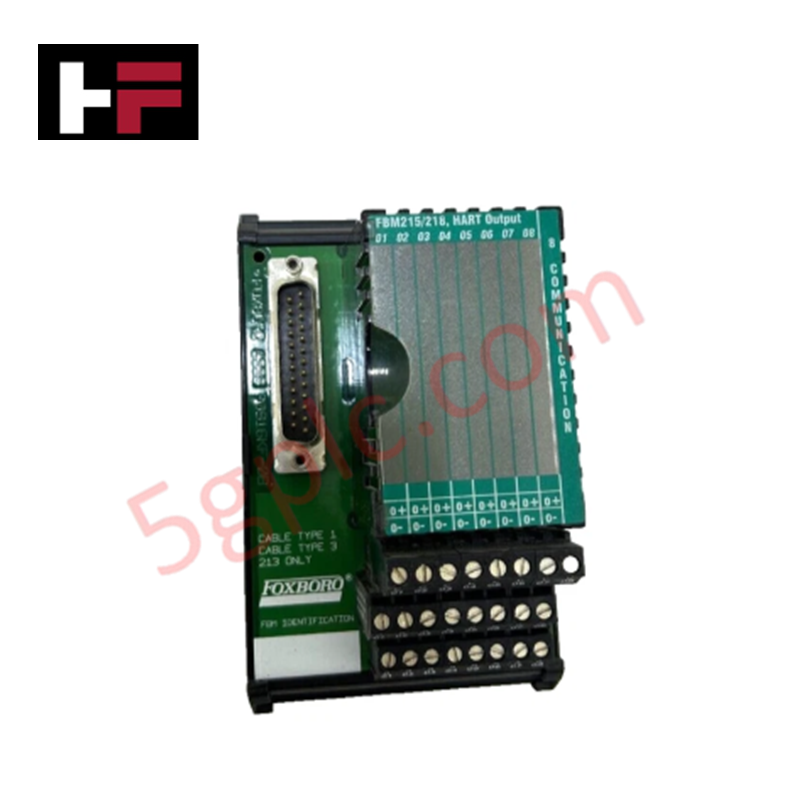
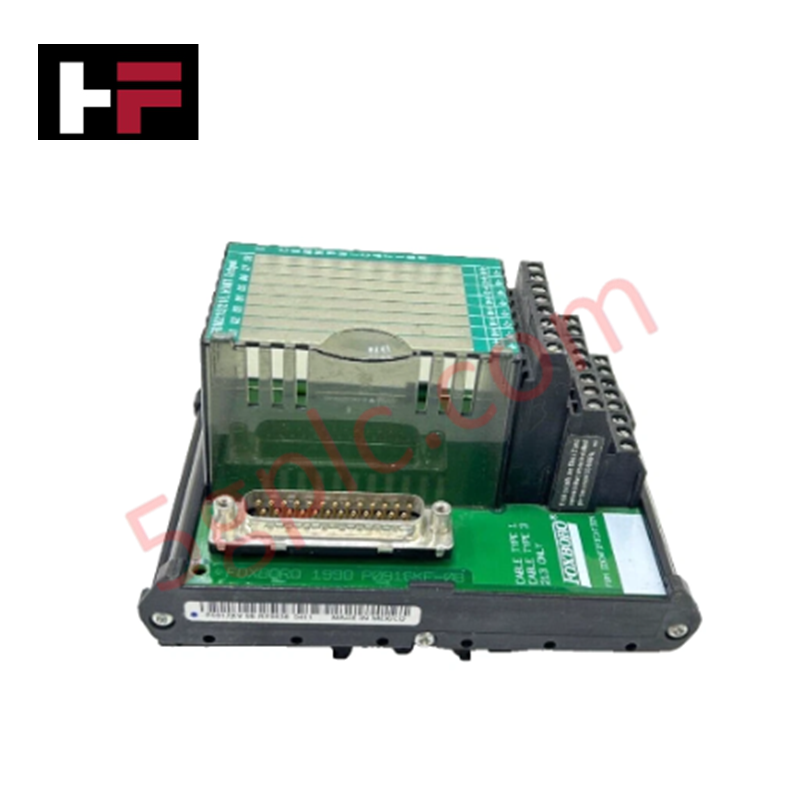
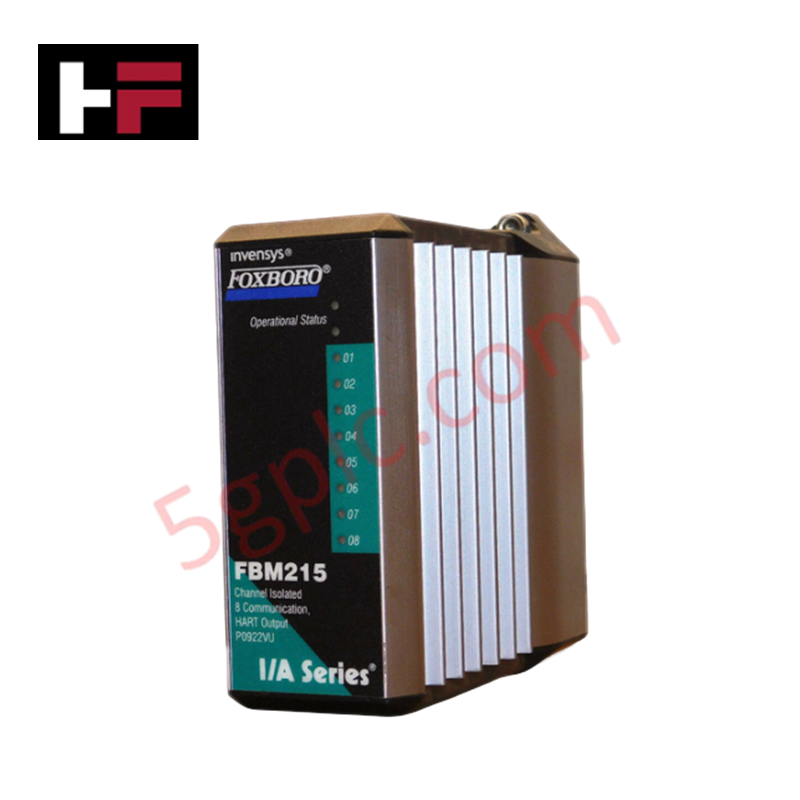
The FOXBORO FBM216 P0917XQ, also cataloged as the FBM216 Communication Redundant Input Interface Module, operates as a dedicated hardware component for managing HART protocol signal acquisition within I/A Series distributed control system platforms.
Hardware Specifications
| Parameter | Specification |
|---|---|
| Model | FBM216 (P0917XQ) |
| Brand | FOXBORO |
| Weight | 284 g (approximate) |
| Dimensions | 102 mm x 45 mm x 104 mm |
| Channel Count | 8 group-isolated channels |
| Communication | HART Protocol v6 (1200 baud) |
| Analog Accuracy | ± 0.075% of full scale |
| Resolution | 15 bits |
Process Control: HART Loop Protocol and Isolation
The FBM216 module facilitates bi-directional communication with intelligent field devices via the 4-20 mA HART loop protocol. Each of the eight group-isolated channels is engineered to support master/slave, asynchronous, half-duplex data transmission. To ensure measurement precision, the module incorporates a 61.9 Ohm nominal sense resistor, resulting in a total minimum input resistance of 280 Ohm. Signal integrity is maintained through a combination of parity checks and cyclic redundancy check (CRC) bytes for every data frame, while providing a common-mode rejection ratio exceeding 100 dB at 50/60 Hz to minimize the impact of industrial electrical noise.
Frequently Asked Questions
Q: What is the maximum permissible distance between the FBM216 and a connected field device?
A: The FBM216 adheres to the HART FSK physical layer specification HCF_SPEC-54 (Revision 8.1), supporting a maximum cable run of up to 3030 m (10000 ft), provided the loop impedance constraints are maintained.
Q: How does the module handle signal updates in the control database?
A: The module executes signal acquisition at a rate of 2 messages per second with a 100 ms update rate and a 500 ms integration time. The fastest allowed execution control block (ECB) period is 500 ms.
Field Installation Guidelines
- Mounting: Ensure the FBM216 is inserted into a compatible 200 Series baseplate. Secure the module using the integrated mounting lugs to maintain a height clearance of 114 mm within the cabinet.
- Termination: Use the appropriate termination assembly (TA) based on the site-specific cabling requirements. The compression style TA weighs 181 g, while the ring lug style TA weighs 249 g.
- Grounding: Verify that all cable shields for HART-enabled loops are terminated to a clean instrument ground at the TA to prevent noise injection. Ensure the compliance voltage of 18 VDC minimum at 20.5 mA is verified at the device terminals to guarantee successful digital-to-analog communication.
Additional Information
- 100% Genuine Parts: All products are original and authentic, ensuring reliable industrial performance.
- 30-Day Refund Guarantee: Return any in-stock item within 30 days in original, unopened packaging for a full refund (excluding shipping and fees).
- 12-Month Warranty: Covers defects in materials or workmanship; excludes misuse, normal wear, or unauthorized modifications.
- Worldwide Shipping: We ship via USPS, UPS, FedEx, and DHL. Delivery times vary by country and may be subject to customs or import fees.
- Support & Contact: Technical and warranty assistance is available anytime. Contact us here: Contact.
- Purchase Guidance: Check product specifications and compatibility carefully before ordering to ensure proper application.


Tech & Buying Guide

Demystifying CPU Communication Ports in Siemens PLC Architectures
Industrial automation relies heavily on robust data exchange between devices. Without seamless connectivity, field instruments, network switches, human-machine interfaces, and programmable logic controllers cannot coordinate effectively. Therefore, understanding the various CPU communication ports available in Siemens hardware ensures efficient factory automation design and seamless system integration.

Mastering the Siemens PLC Scan Cycle: How the CPU Executes Automation Programs
Industrial automation relies heavily on programmable logic controllers (PLCs) to manage complex manufacturing processes. Many engineers dive straight into programming without mastering the underlying architecture. However, understanding how a PLC CPU executes a program ensures reliable system design. Therefore, mastering the scan cycle optimizes both performance and troubleshooting in modern control systems.

How to Connect to Siemens S7 PLCs: 5 Essential Communication Methods
Establishing a reliable hardware link between a programming terminal and a Siemens SIMATIC controller is essential for engineering workflows. Field engineers rely on distinct physical layers, ranging from legacy serial connections to high-speed Industrial Ethernet protocols. Modern factory automation environments prioritize fast data transfer and seamless driver integration. Selecting the correct connection method simplifies program downloads, online monitoring, and system troubleshooting in complex control systems.