













Product Details
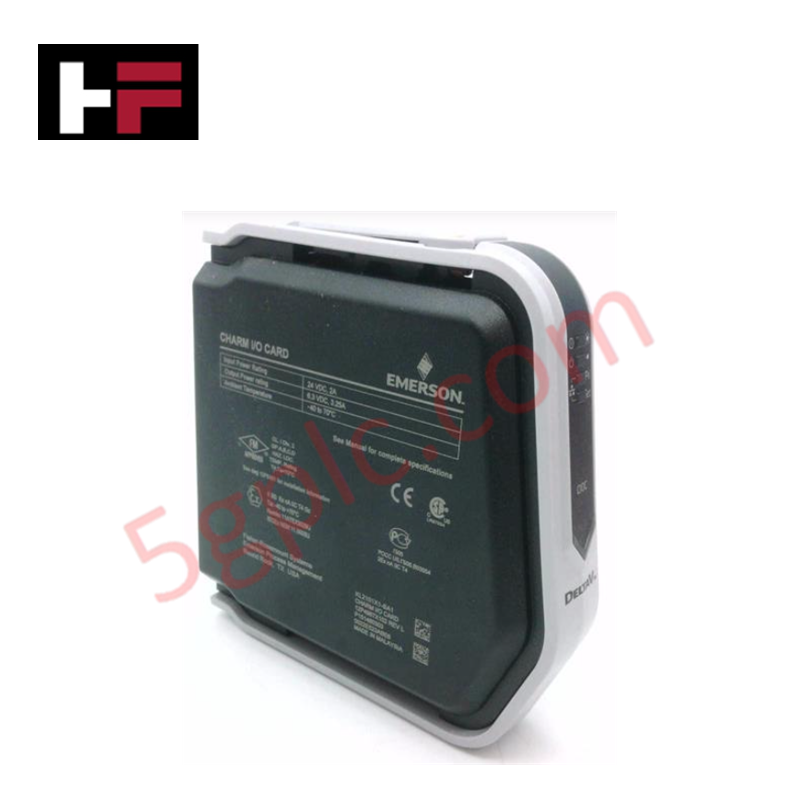
The Emerson KL2001X1-BD1, also cataloged as the KL2001X1-BD1 Ethernet I/O Card, operates as a dedicated hardware component for high-speed Ethernet communication and I/O bus interface processing within DeltaV control system architectures. The module establishes direct network telemetry and physical layer interface control, powered by an internal 24 VDC bus draw at 325 mA under ISA-S71.04-1985 Class G3 environmental rating standards.
Hardware Specifications
| Parameter | Specification |
|---|---|
| Model | KL2001X1-BD1 |
| Brand | Emerson |
| Origin | USA |
| Operating Temp | -40 to +70 deg C |
| Power Consumption | 24 VDC at 325 mA |
| Mechanical Shock | 10 g half-sine wave for 11 ms |
| Mechanical Vibration | 1 mm peak-to-peak from 2 to 13.2 Hz, 0.7 g from 13.2 to 150 Hz |
| Airborne Contaminants | ISA-S71.04-1985 Class G3 harsh environment |
| Relative Humidity | 5 to 95% non-condensing |
| System Platform | DeltaV DCS |
| Product Type | Ethernet I/O Cards |
4-20 mA HART Loop Protocol and Channel Isolation
The Ethernet I/O module integrates channel-to-channel isolation architecture across the field interface side to shield host network processors from field-induced surge voltages and ground loops. Designed for seamless integration into 4-20 mA HART loop protocol networks and FOUNDATION Fieldbus segments, the module maintains signal pass-through fidelity without introducing frame conversion latency. Onboard hardware design accounts for cold junction compensation thermal references, guaranteeing precise signal evaluation and timing synchronization during ambient panel temperature transitions.
Frequently Asked Questions
Q: Does the KL2001X1-BD1 Ethernet I/O Card support online insertion and removal (hot-swapping)?
A: Yes, the module is designed for hot-swapping on an active DeltaV I/O carrier, provided host system redundancy rules are observed to prevent active network dropping.
Q: What is the primary power supply requirement for operating the KL2001X1-BD1?
A: The card requires a continuous 24 VDC supply voltage draw of 325 mA sourced directly through the carrier backplane interface.
Q: What environmental protection rating does the card circuitry feature for corrosive atmospheres?
A: The assembly is rated to ISA-S71.04-1985 Class G3 for airborne contaminants, allowing deployment in harsh chemical environments.
Field Installation Guidelines
- Confirm carrier slot assignment within the DeltaV node before inserting the card module.
- Align the module card edges with the carrier guide rails and push firmly until top and bottom retention latches snap securely into place.
- Verify that the 24 VDC power supply to the carrier bus is within specified operating limits prior to system commissioning.
- Route industrial Ethernet cables through designated cable management channels, maintaining separation from high-voltage power wiring.
- Connect network cables to the RJ-45 interface ports until retaining clips lock in position.
- Ensure the enclosure cabinet frame ground is bonded to the main station earth ground grid to preserve G3 compliance and surge isolation circuits.
Additional Information
- 100% Genuine Parts: All products are original and authentic, ensuring reliable industrial performance.
- 30-Day Refund Guarantee: Return any in-stock item within 30 days in original, unopened packaging for a full refund (excluding shipping and fees).
- 12-Month Warranty: Covers defects in materials or workmanship; excludes misuse, normal wear, or unauthorized modifications.
- Worldwide Shipping: We ship via USPS, UPS, FedEx, and DHL. Delivery times vary by country and may be subject to customs or import fees.
- Support & Contact: Technical and warranty assistance is available anytime. Contact us here: Contact.
- Purchase Guidance: Check product specifications and compatibility carefully before ordering to ensure proper application.


Tech & Buying Guide

Demystifying the DDE Protocol in Legacy Industrial Automation Systems
Modern control systems rely heavily on seamless interprocess communication to exchange operational data between software programs. Microsoft first introduced the Dynamic Data Exchange (DDE) protocol in 1987 to enable real-time data sharing. In factory automation, DDE served as an early bridge between control software and Windows desktop applications. Therefore, understanding DDE mechanics provides crucial insights into how legacy industrial networks established software-level connectivity.

Demystifying CPU Communication Ports in Siemens PLC Architectures
Industrial automation relies heavily on robust data exchange between devices. Without seamless connectivity, field instruments, network switches, human-machine interfaces, and programmable logic controllers cannot coordinate effectively. Therefore, understanding the various CPU communication ports available in Siemens hardware ensures efficient factory automation design and seamless system integration.

Mastering the Siemens PLC Scan Cycle: How the CPU Executes Automation Programs
Industrial automation relies heavily on programmable logic controllers (PLCs) to manage complex manufacturing processes. Many engineers dive straight into programming without mastering the underlying architecture. However, understanding how a PLC CPU executes a program ensures reliable system design. Therefore, mastering the scan cycle optimizes both performance and troubleshooting in modern control systems.