










Product Details
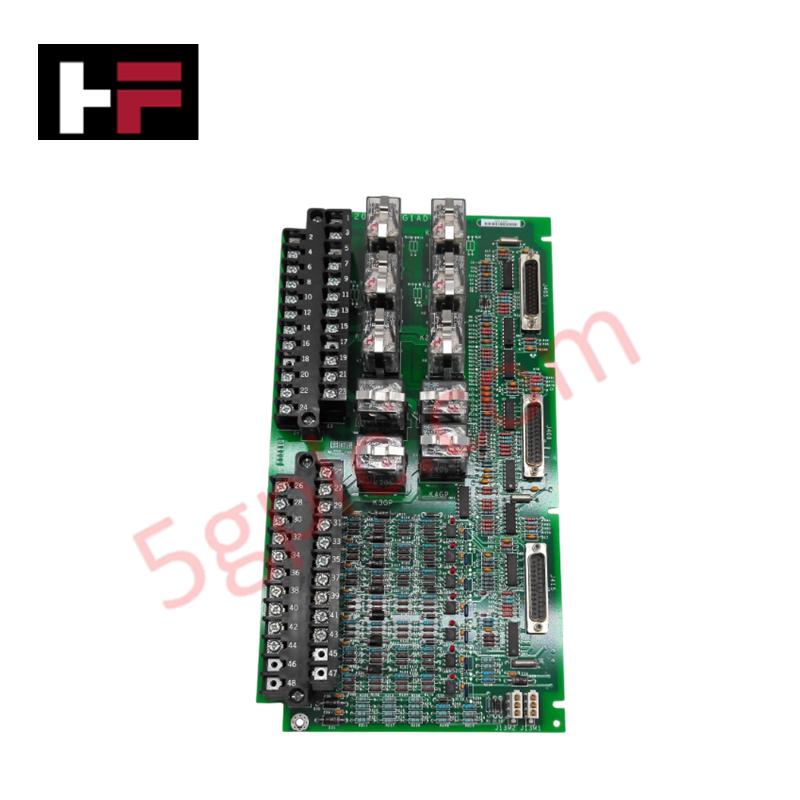
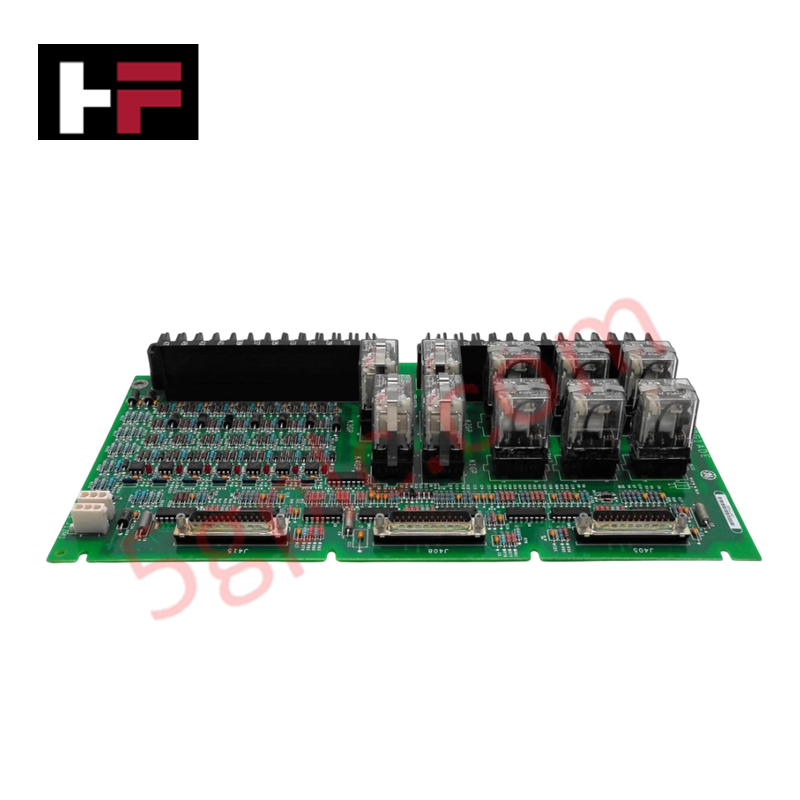
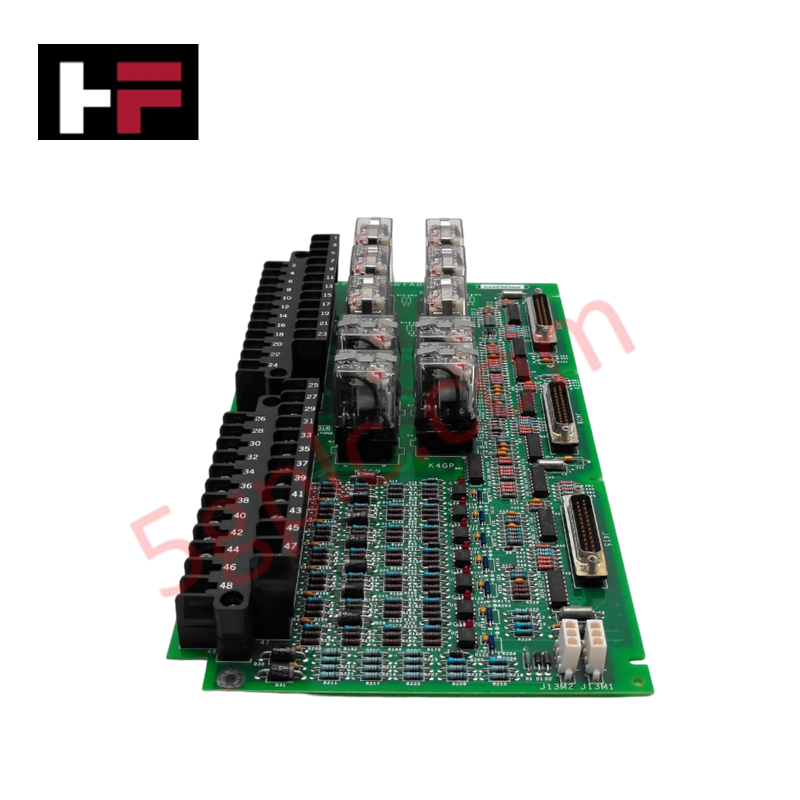
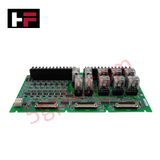
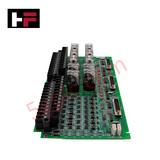
Configured for excitation contact management in EX2100 systems, the General Electric IS200ECTBG1ADE (IS200ECTBG1ADE Exciter Contact Terminal Board) provides direct physical/electrical execution of contact input sensing and relay output drive functions.
Suffix Breakdown & Model Matrix
| Model | Application | Configuration |
|---|---|---|
| ECTBG1 | Redundant Control | Dual/TMR systems |
| ECTBG2 | Simplex Control | Single controller systems |
Hardware Specifications
| Parameter | Specification |
|---|---|
| Model | IS200ECTBG1ADE |
| Brand | General Electric |
| Origin | United States of America (USA) |
| Operating Temp | -30 deg C to +65 deg C |
| Trip Outputs | 2 (EMIO managed) |
| Form-C Outputs | 4 (General purpose) |
| Aux Contact Inputs | 6 (70 V DC wetted) |
Industrial Control and Firmware Integration
The IS200ECTBG1ADE serves as the primary interface between external contact-based peripherals and the Exciter Module Input/Output (EMIO) board. The board architecture utilizes backplane bus communication velocity to relay status signals from 52G and 86G contacts directly to the EMIO, ensuring deterministic fault monitoring. The module supports firmware flash compatibility via the EMIO board, facilitating status signal conditioning and logic updates. Its I/O density scaling allows for dedicated 70 V DC excitation of auxiliary inputs, providing a stable monitoring environment for field-side lockout mechanisms and de-excitation sequence feedback.
Frequently Asked Questions (FAQ)
Q: Can the IS200ECTBG1ADE be used interchangeably between simplex and redundant systems?
A: No. The ECTB board series is segregated by application; the G1 variant is specific to redundant control architectures, whereas the G2 variant is restricted to simplex control configurations.
Q: How are the trip outputs and general-purpose outputs managed?
A: Both the two trip outputs and four Form-C general-purpose contact outputs are physically driven by the terminal board but are logically managed by the EMIO board to ensure high-speed response times during system fault conditions.
Field Installation Guidelines
- Mechanical Seating: Mount the board securely within the EX2100 control cabinet. Ensure the EMIO board interface connectors are fully seated to prevent signal degradation in the contact sensing circuits.
- Wetting Voltage: The six auxiliary contact inputs require a 70 V DC wetting voltage. Verify the output of the exciter power supply at the terminal points prior to connecting external dry contact devices.
- Shielding: Route all signal and contact feedback wiring away from high-current AC lines or power bridge cabling. Use shielded twisted-pair cabling for 52G and 86G signal paths to mitigate common-mode interference.
- Termination: Utilize the provided terminal blocks for all field connections. Verify that wire ferrules are properly crimped for stranded conductors to ensure gas-tight connections at the screw terminals.
Additional Information
- 100% Genuine Parts: All products are original and authentic, ensuring reliable industrial performance.
- 30-Day Refund Guarantee: Return any in-stock item within 30 days in original, unopened packaging for a full refund (excluding shipping and fees).
- 12-Month Warranty: Covers defects in materials or workmanship; excludes misuse, normal wear, or unauthorized modifications.
- Worldwide Shipping: We ship via USPS, UPS, FedEx, and DHL. Delivery times vary by country and may be subject to customs or import fees.
- Support & Contact: Technical and warranty assistance is available anytime. Contact us here: Contact.
- Purchase Guidance: Check product specifications and compatibility carefully before ordering to ensure proper application.


Tech & Buying Guide

Marshalling Cabinet Preventive Maintenance: Essential Healthiness Checks for PLC, DCS, and ESD Systems
Marshalling cabinets serve as the vital interface between field instrumentation and control room electronics in modern process facilities. Regular preventive maintenance of these cabinets ensures signal integrity across programmable logic controllers (PLCs), distributed control systems (DCS), and emergency shutdown (ESD) networks. System technicians must execute structured inspection protocols to mitigate environmental risks, identify loose wiring, and maintain continuous operational readiness.

Spatial Computing in Industrial Automation: Elevating PLC and DCS Operations with AR and VR
Industry 4.0 integrates digital intelligence into field operations, transforming factory automation landscapes worldwide. Spatial technologies—specifically Augmented Reality (AR) and Virtual Reality (VR)—redefine how engineers interact with industrial control systems. By bridging computer-generated CAD models with real-time operational technology (OT) data, immersive displays enable intuitive monitoring, rapid diagnostics, and safer maintenance across complex processing facilities.

Master Acceptance Testing: Understanding FAT and SAT in Industrial Control Systems
Factory Acceptance Testing (FAT) and Site Acceptance Testing (SAT) serve as critical quality assurance gateways in complex industrial control systems. Both procedures verify that programmable logic controllers (PLCs), distributed control systems (DCS), and associated field devices meet strict functional specifications. However, executing these tests effectively requires clear delineation between off-site staging and final field commissioning.