










Product Details
Product Overview
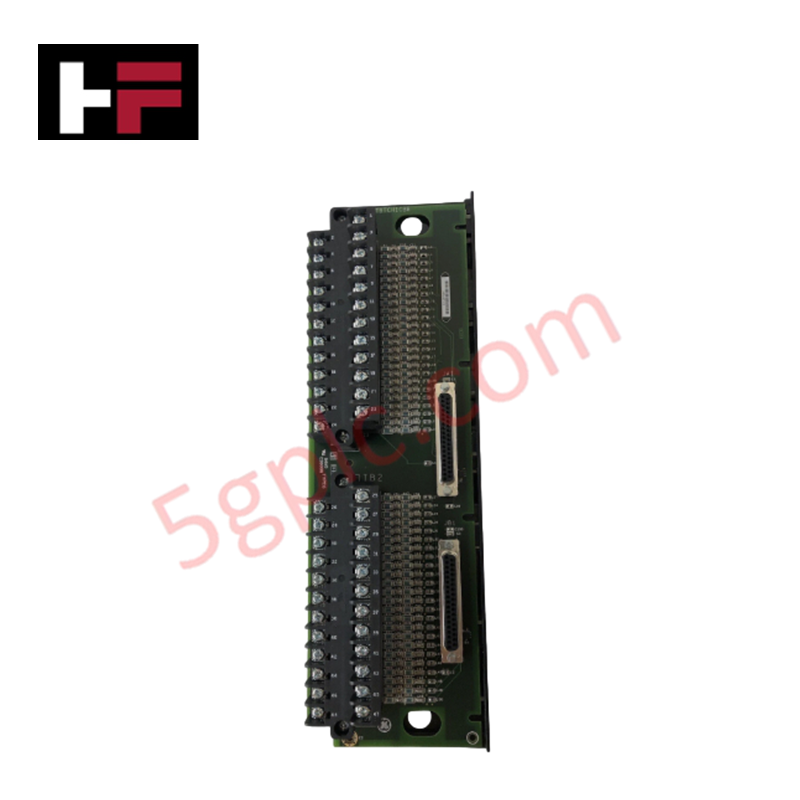
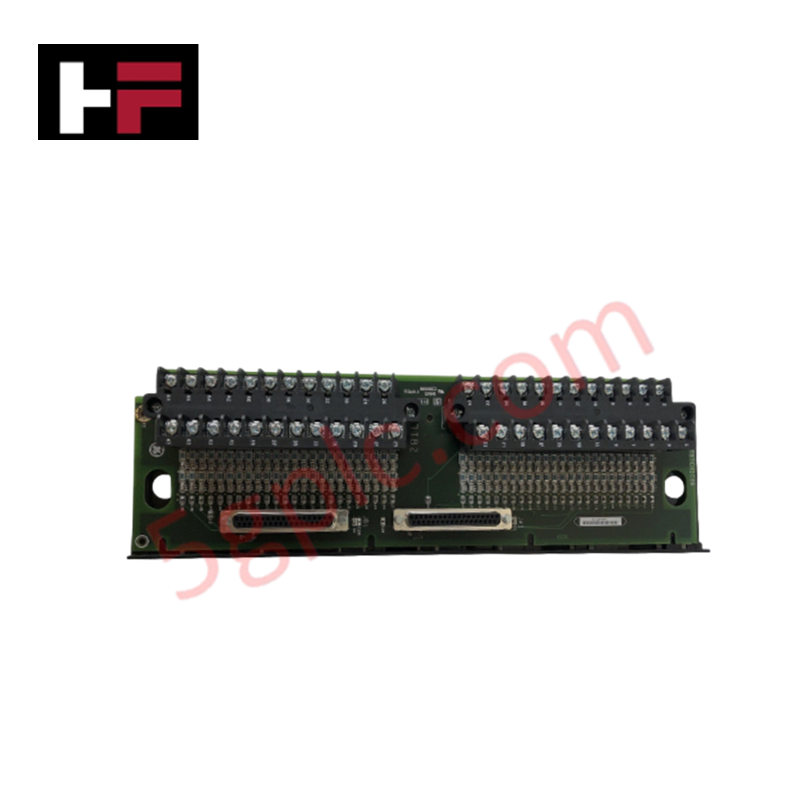
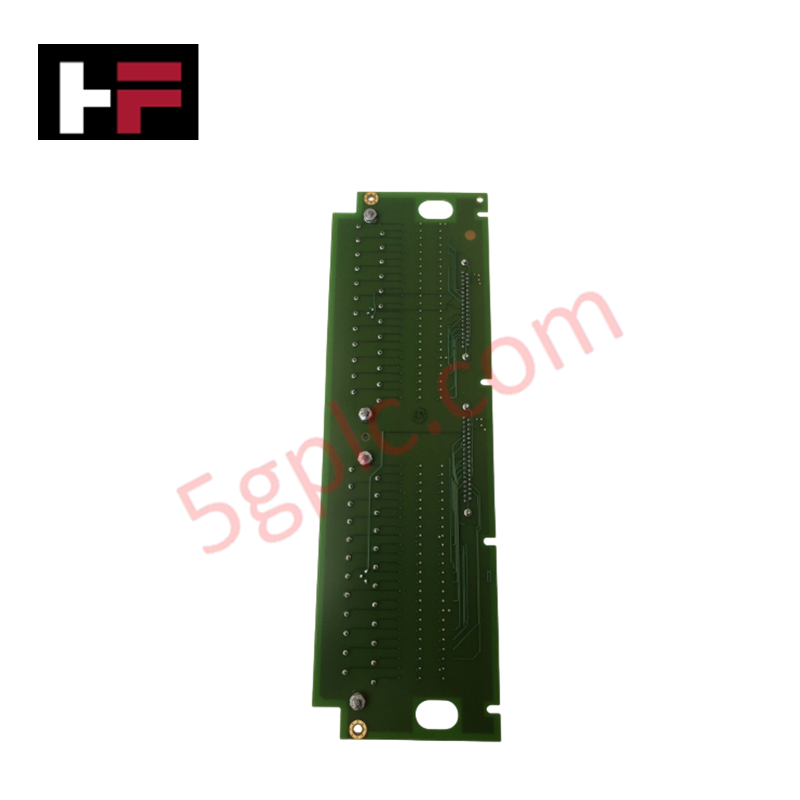
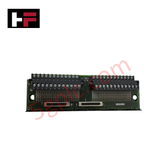
The GE IS200TBTCH1CBB functions as a high-density Thermocouple Input Terminal Board within the General Electric Mark VIe control platform. This board serves as the primary interface for temperature sensing across industrial turbine sets, facilitating the connection of up to 24 thermocouple inputs. We supply this component as 100% Brand New and Original, ensuring your control system utilizes factory-certified hardware for critical thermal regulation. By integrating seamlessly with PTCC I/O packs, the IS200TBTCH1CBB provides the precision data acquisition necessary for turbine protection and efficiency optimization.
Technical Specifications
The IS200TBTCH1CBB utilizes a robust Simplex architecture to manage high-volume sensor data from extensive distances.
| Attribute | Technical Specification |
| Manufacturer | General Electric (USA) |
| Series | Mark VIe |
| Model Type | Thermocouple Input (TBTCH) |
| Input Channels | 24 Thermocouple Inputs |
| Thermocouple Compatibility | Types T, S, K, J, and E (R, B, N with PTCCH2) |
| Input Voltage Range | -8 Volts to +45 Volts |
| Cold Junction Range | -30°C to +65°C (-22°F to 149°F) |
| Maximum Distance | 300 Meters (984 Feet) |
| Connectors | Two DC-Type Connectors |
| System Configuration | Simplex |
| Weight | 340 grams (12 ounces) |
| Condition | 100% Brand New Original |
Engineering Advantages
-
Extensive Input Density: The board accepts 24 main thermocouple inputs, allowing engineers to consolidate temperature monitoring for an entire turbine section onto a single terminal block. This high density reduces the physical footprint within the control cabinet.
-
Long-Distance Signal Integrity: The hardware supports cable runs up to 984 feet (300 meters) from the turbine control panel. This capability allows for flexible panel placement and eliminates the need for remote junction boxes or intermediate signal amplifiers in large-scale plant layouts.
-
Comprehensive Sensor Support: The IS200TBTCH1CBB handles standard T, S, K, J, and E types natively. When paired with a PTCCH2 board, it expands compatibility to include R, B, and N types, providing a universal solution for diverse industrial heating and cooling monitoring requirements.
-
Real-Time Cold Junction Monitoring: The board provides Cold Junction (CJ) signals directly for system monitoring. Dedicated sensors on the board track the terminal temperature across a wide -22°F to 149°F range, ensuring the I/O processor applies accurate compensation for thermocouple non-linearity.
-
Direct I/O Pack Coupling: Two DC-type connectors facilitate a direct, secure mate with the PTCC I/O pack. This physical architecture eliminates traditional ribbon cables, reducing signal noise and simplifying the replacement of the I/O processor during maintenance intervals.
FAQs
-
Can the IS200TBTCH1CBB operate in redundant (TMR) systems?
This specific "H1C" revision and assembly configuration targets Simplex application types. For Triple Modular Redundant (TMR) requirements, you must select the corresponding TMR-compatible terminal board variant to ensure proper signal voting.
-
How does the board handle Analog-to-Digital conversion?
The terminal board itself provides the physical connection and CJ compensation. The attached I/O processor (PTCC Pack) performs the actual Analog-to-Digital conversion, digitizing the millivolt signals before transmitting them to the controller via IONet.
-
What are the limits for the Cold Junction Operating Range?
The board maintains accuracy as long as the ambient temperature at the terminal board remains between -22°F and 149°F. If the control cabinet environment exceeds these limits, the CJ compensation may drift, affecting the overall temperature reading accuracy.
-
How do I confirm the "Brand New" status of this module?
Every IS200TBTCH1CBB unit arrives in its original factory packaging from GE Industrial Systems. The board features an authentic serial number, the "H1CBB" revision code, and the "Made in USA" designation, guaranteeing a genuine part with zero field service history.
Additional Information
- 100% Genuine Parts: All products are original and authentic, ensuring reliable industrial performance.
- 30-Day Refund Guarantee: Return any in-stock item within 30 days in original, unopened packaging for a full refund (excluding shipping and fees).
- 12-Month Warranty: Covers defects in materials or workmanship; excludes misuse, normal wear, or unauthorized modifications.
- Worldwide Shipping: We ship via USPS, UPS, FedEx, and DHL. Delivery times vary by country and may be subject to customs or import fees.
- Support & Contact: Technical and warranty assistance is available anytime. Contact us here: Contact.
- Purchase Guidance: Check product specifications and compatibility carefully before ordering to ensure proper application.


Tech & Buying Guide

Demystifying the DDE Protocol in Legacy Industrial Automation Systems
Modern control systems rely heavily on seamless interprocess communication to exchange operational data between software programs. Microsoft first introduced the Dynamic Data Exchange (DDE) protocol in 1987 to enable real-time data sharing. In factory automation, DDE served as an early bridge between control software and Windows desktop applications. Therefore, understanding DDE mechanics provides crucial insights into how legacy industrial networks established software-level connectivity.

Demystifying CPU Communication Ports in Siemens PLC Architectures
Industrial automation relies heavily on robust data exchange between devices. Without seamless connectivity, field instruments, network switches, human-machine interfaces, and programmable logic controllers cannot coordinate effectively. Therefore, understanding the various CPU communication ports available in Siemens hardware ensures efficient factory automation design and seamless system integration.

Mastering the Siemens PLC Scan Cycle: How the CPU Executes Automation Programs
Industrial automation relies heavily on programmable logic controllers (PLCs) to manage complex manufacturing processes. Many engineers dive straight into programming without mastering the underlying architecture. However, understanding how a PLC CPU executes a program ensures reliable system design. Therefore, mastering the scan cycle optimizes both performance and troubleshooting in modern control systems.