












Product Details
Module Overview
The 1766-L32AWAA is a premium, all-in-one programmable logic controller within the MicroLogix 1400 family. Designed for sophisticated small-scale automation, this "AWAA" variant distinguishes itself by combining high-voltage AC discrete I/O with embedded 12-bit analog capabilities. It features a built-in LCD for real-time diagnostics and data manipulation, along with extensive communication options including EtherNet/IP. The 1766-L32AWAA is particularly effective for HVAC, water treatment, and standalone machine control where a mix of digital sensors, relay actuators, and analog process variables (like temperature or pressure) must be managed by a single, compact device.
Detailed Engineering Specifications
The 1766-L32AWAA serves as the central intelligence of the system, offering a rich set of embedded I/O that can be further expanded via 1762 series modules.
-
Controller Type: MicroLogix 1400 (Base Unit)
-
Power Supply: 110V to 240V AC (Operating range 100–240V AC @ 47–63 Hz)
-
Digital Inputs: 20 Points (120V AC)
-
Digital Outputs: 12 Points (Relay, Normally Open)
-
Analog Inputs: 4 Channels (12-bit Voltage, 0–10V DC)
-
Analog Outputs: 2 Channels (12-bit Voltage, 0–10V DC)
-
User Memory: 20 KB (10 KB for user program / 10 KB for data)
-
Data Logging/Recipe Storage: 128 KB for logging / 64 KB for recipes
-
Communication Ports: * Port 0: 8-pin Mini DIN (RS-232/RS-485)
-
Port 1: RJ45 (EtherNet/IP, DNP3 over IP, Modbus TCP/IP)
-
Port 2: 9-pin D-Shell (Isolated RS-232)
-
Expansion Capacity: Supports up to seven (7) 1762 MicroLogix expansion modules
-
Operating Temperature: -20°C to 60°C (-4°F to 140°F)
-
Physical Weight: 2.45 lbs (1.11 kg)
Advanced Interface and Connectivity
One of the defining features of the 1766-L32AWAA is the integrated backlit LCD. This interface allows maintenance personnel to monitor I/O status, change network configurations (such as IP addresses), and modify integer values without a laptop. For networked environments, its dual serial ports and dedicated Ethernet port support multi-protocol communication, enabling the controller to act as a bridge between legacy Modbus devices and modern SCADA systems via EtherNet/IP.
Integrated Analog Capabilities
Unlike the standard AWA model, the 1766-L32AWAA includes 4 voltage inputs and 2 voltage outputs directly on the base unit. These 12-bit channels provide sufficient resolution for typical industrial feedback loops, such as regulating the speed of a Variable Frequency Drive (VFD) via the 0–10V analog output or monitoring a level sensor on the input. Because these are built-in, they do not occupy expansion slots, leaving all seven expansion positions available for additional digital, specialty, or temperature modules.
Technical FAQ
Can the analog inputs on the 1766-L32AWAA be used for 4-20mA signals?
Natively, the embedded analog ports are designed for 0–10V DC. To use a 4-20mA sensor, you must place a high-precision 500-ohm resistor across the input terminals to convert the current to a 2–10V signal, or add a dedicated 1762-IF4 analog expansion module.
Does this AC-powered model support High-Speed Counters (HSC)?
No. High-speed counting (up to 100 kHz) is only available on MicroLogix 1400 models with 24V DC inputs. The 120V AC inputs on this model are intended for standard discrete logic and do not support high-frequency pulse detection.
How is the real-time clock (RTC) maintained during power loss?
The 1766-L32AWAA includes a replaceable lithium battery (1747-BA) that maintains the RTC and the volatile RAM memory for several years under normal conditions.
Additional Information
- 100% Genuine Parts: All products are original and authentic, ensuring reliable industrial performance.
- 30-Day Refund Guarantee: Return any in-stock item within 30 days in original, unopened packaging for a full refund (excluding shipping and fees).
- 12-Month Warranty: Covers defects in materials or workmanship; excludes misuse, normal wear, or unauthorized modifications.
- Worldwide Shipping: We ship via USPS, UPS, FedEx, and DHL. Delivery times vary by country and may be subject to customs or import fees.
- Support & Contact: Technical and warranty assistance is available anytime. Contact us here: Contact.
- Purchase Guidance: Check product specifications and compatibility carefully before ordering to ensure proper application.
Tech & Buying Guide

The Shift to Flexible IO Modules in Modern Industrial Automation
Traditional control systems rely on dedicated Input Output (IO) cards for industrial automation. Each conventional module processes a single signal type, such as Digital Input (DI), Digital Output (DO), Analog Input (AI), or Analog Output (AO). A standard 16-channel card accepts only one specific channel type across all ports. This inflexible hardware design often creates severe engineering bottlenecks during project execution. Engineers frequently must install entirely new cards to accommodate a single extra sensor. Consequently, late design changes increase control cabinet space requirements and drive up project costs.

DCS Commissioning Steps in Industrial Automation Projects
Commissioning a Distributed Control System (DCS) represents a crucial milestone when deploying modern process automation infrastructure. Field engineers must execute systematic verification steps to transition complex control hardware from static installation to dynamic plant control. Proper commissioning ensures that controllers, I/O modules, network switches, and HMI software operate in strict compliance with engineering design specifications before introducing live process fluids.
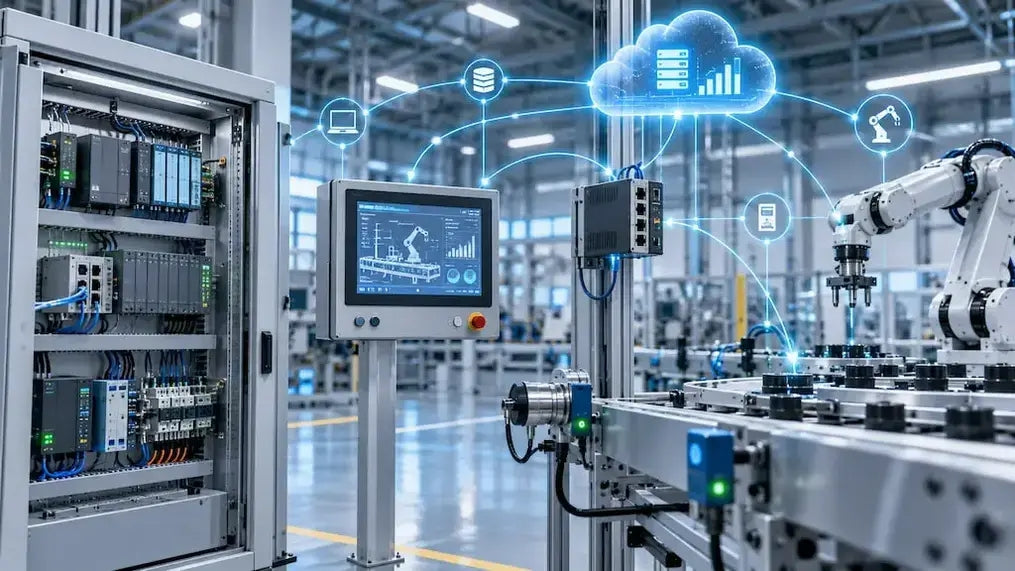
PLC and DCS Control System Spares Strategy: Engineering Guidelines
Modern factory automation relies on high-speed fiber optic backbones to link distributed control systems across noise-intensive industrial environments. Unlike copper wiring, optical fibers transmit data via light pulses, making them completely immune to electromagnetic interference (EMI). Field engineers must master optical cable joining and fusion splicing techniques to guarantee low-loss data transmission across critical Programmable Logic Controller (PLC) and Distributed Control System (DCS) nodes.