












Product Details
Product Overview
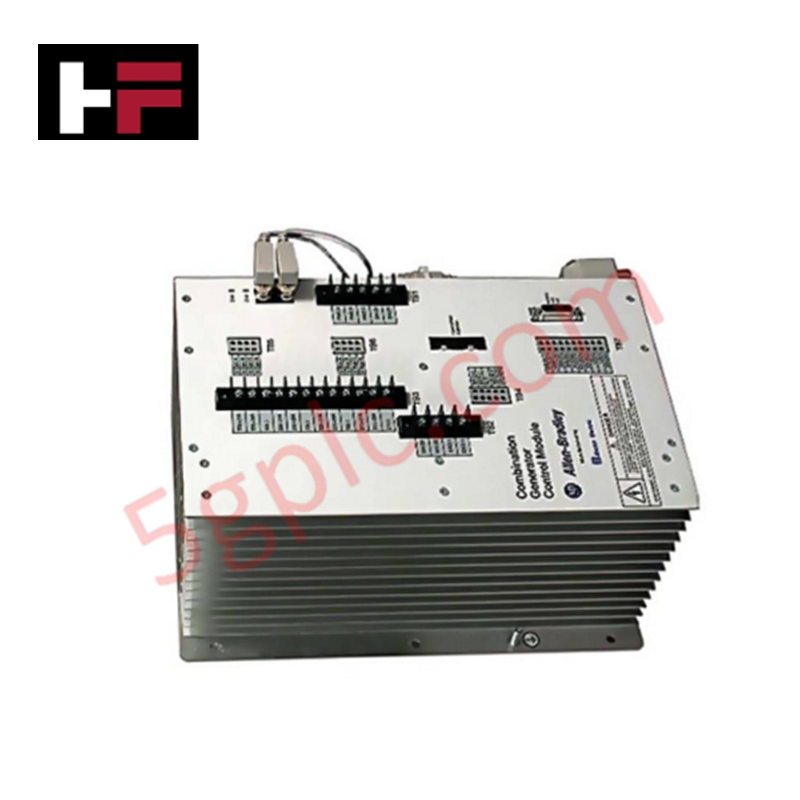
The 1407-CGCM functions as a high-precision Combination Generator Control Module designed by Allen-Bradley for integrated power management and synchronization. This module centralizes complex generator functions, including 3-phase voltage sensing, frequency monitoring, and cross-current compensation. It provides the critical interface between the generator set and the distribution bus, ensuring seamless load sharing and excitation control. We offer this unit as 100% Brand New original hardware, guaranteeing optimal accuracy for mission-critical power generation environments.
Technical Specifications
The 1407-CGCM features laboratory-grade metering precision and rugged industrial environmental ratings:
| Parameter | Specification |
| Input Power | 18…32V DC (24V DC nominal) |
| Burden | 30W |
| Generator Sensing | 3-phase plus cross current compensation |
| Voltage Range (Gen/Bus) | 57…208V AC |
| Frequency Range | 10…90 Hz |
| Metering Accuracy | 0.2% for Voltage and Current |
| Phase Angle Range | ±180° (Accuracy: ±1.0°) |
| Field Voltage/Current | 0…200V DC / 0…30 A AC |
| Operating Temp | -20°C to 70 °C (-4…158 °F) |
| Weight | 7.7 kg |
| Dimensions (W x H x D) | 24.77 cm x 35.56 cm x 20.96 cm |
Engineering Advantages
-
Advanced Load Sharing Logic: The module manages real and reactive power sharing with a resolution of 0.1% of full-scale voltage. This ensures balanced distribution across multiple generator sets, preventing circulating currents and engine strain.
-
Superior Metering Precision: With a 0.2% accuracy rating for generator voltage and current, the 1407-CGCM eliminates the need for external high-precision transducers. This precision extends to frequency monitoring with a tolerance of just ±0.05 Hz.
-
Integrated Cross-Current Compensation: The hardware includes dedicated inputs for cross-current compensation ($I_D+$, $I_D-$), enabling stable reactive power control during parallel operation with varied excitation characteristics.
-
Rugged Environmental Hardening: The unit withstands 30 g of operating shock and continuous vibration up to 5.0 g. Furthermore, it undergoes salt fog testing per MIL-STD-810E, making it ideal for offshore or coastal power plants.
-
High-Capacity Field Monitoring: The module tracks field voltages up to 200V DC and field currents up to 30 A. This wide range accommodates large-scale industrial alternators and specialized excitation systems.
Installation & Wiring Requirements
-
Power Source Selection: Supply the device using a 24V nominal battery or a 24V DC power supply. For hazardous area deployments, ensure the power source carries ATEX certification.
-
Current Sensing Connectivity: Connect the 3-phase generator current sensing leads to the designated CT inputs. Ensure the burden remains below 0.1 VA per phase for metering CTs to maintain accuracy.
-
Thermal Management: The module dissipates up to 3.1 kW of heat under maximum load. Ensure the control cabinet provides sufficient forced-air cooling or ventilation to prevent internal heat buildup.
-
Dielectric Integrity: This module meets IEEE 421.3 dielectric strength standards. Always verify ground bonding to protect the sensitive internal Intel-based processing architecture from common-mode noise.
FAQs
Q: Can the 1407-CGCM operate on both 50 Hz and 60 Hz systems?
A: Yes. The module natively supports both 50 Hz and 60 Hz frequencies. Its wide sensing range (10…90 Hz) allows for monitoring during engine startup and overspeed conditions.
Q: What is the benefit of the Cross-Current Compensation feature?
A: Cross-current compensation allows the 1407-CGCM to adjust the excitation of parallel generators to minimize the flow of reactive current between them. This prevents one generator from "motoring" another and ensures system stability.
Q: Does this unit require external transducers for bus voltage monitoring?
A: No. The 1407-CGCM includes direct bus voltage sensing inputs (57…208V AC) with an accuracy better than 0.2%, simplifying cabinet wiring and reducing component costs.
Q: Is this module suitable for marine environments?
A: Yes. Because GE/Allen-Bradley tested this hardware against MIL-STD-810E Method 509.3 (Salt Fog), it resists the corrosive effects of salt-laden air in marine and coastal installations.
Additional Information
- 100% Genuine Parts: All products are original and authentic, ensuring reliable industrial performance.
- 30-Day Refund Guarantee: Return any in-stock item within 30 days in original, unopened packaging for a full refund (excluding shipping and fees).
- 12-Month Warranty: Covers defects in materials or workmanship; excludes misuse, normal wear, or unauthorized modifications.
- Worldwide Shipping: We ship via USPS, UPS, FedEx, and DHL. Delivery times vary by country and may be subject to customs or import fees.
- Support & Contact: Technical and warranty assistance is available anytime. Contact us here: Contact.
- Purchase Guidance: Check product specifications and compatibility carefully before ordering to ensure proper application.
Tech & Buying Guide

Understanding Marshalling Cabinets in Industrial Control Systems Architecture
Industrial control system deployments rely on structured signal distribution to bridge field instrumentation with central processing hardware. A marshalling cabinet serves as the vital intermediate connection point between heavy field home-run multi-pair cables and delicate input/output (I/O) modules housed inside Programmable Logic Controller (PLC) or Distributed Control System (DCS) enclosures. By segregating field cable terminations from control hardware, engineers maintain system flexibility, safeguard controller components, and streamline commissioning workflows.

FAT vs SAT in Industrial Control Systems: Key Differences and Execution Guide
Industrial control system deployment relies on strict verification protocols to guarantee operational safety, system stability, and regulatory compliance. Commissioning complex Programmable Logic Controller (PLC) racks, Distributed Control Systems (DCS), and Safety Instrumented Systems (SIS) requires two critical milestones: the Factory Acceptance Test (FAT) and the Site Acceptance Test (SAT). Both procedures validate that system automation meets design specifications, but they occur at different stages of project execution and target distinct operational risks.

Hub vs Switch vs Router in Industrial Automation Architecture
Modern factory automation relies on reliable industrial networking infrastructure to exchange real-time field data across operational technology systems. Engineers often encounter networking hardware like hubs, switches, and routers when integrating Programmable Logic Controllers, Distributed Control Systems, and SCADA monitoring nodes. Although these devices share physical ports, they operate at different layers of the Open Systems Interconnection reference model and deliver distinct traffic management capabilities.