










Product Details
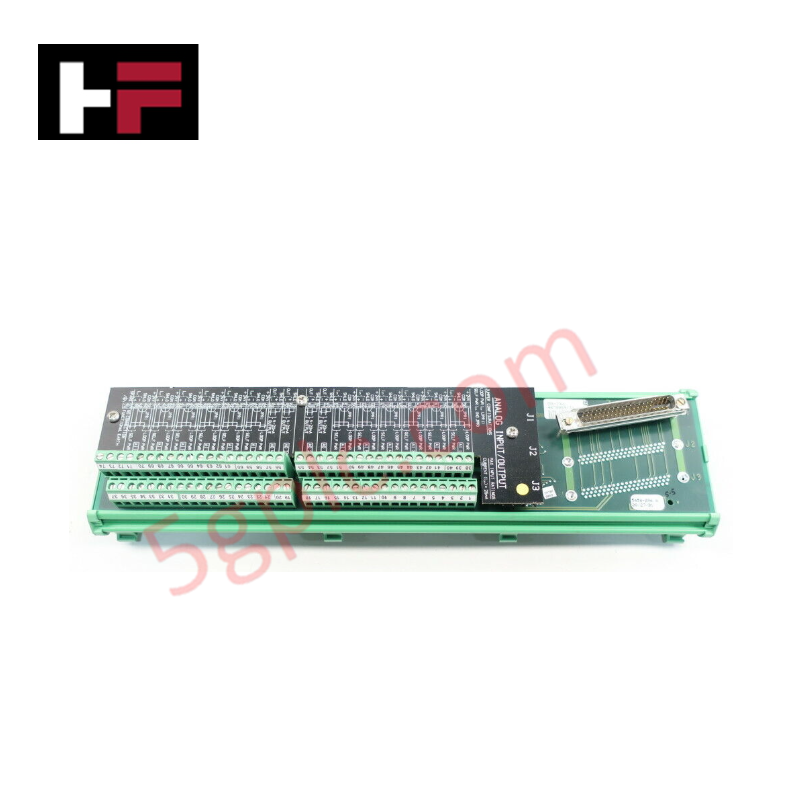
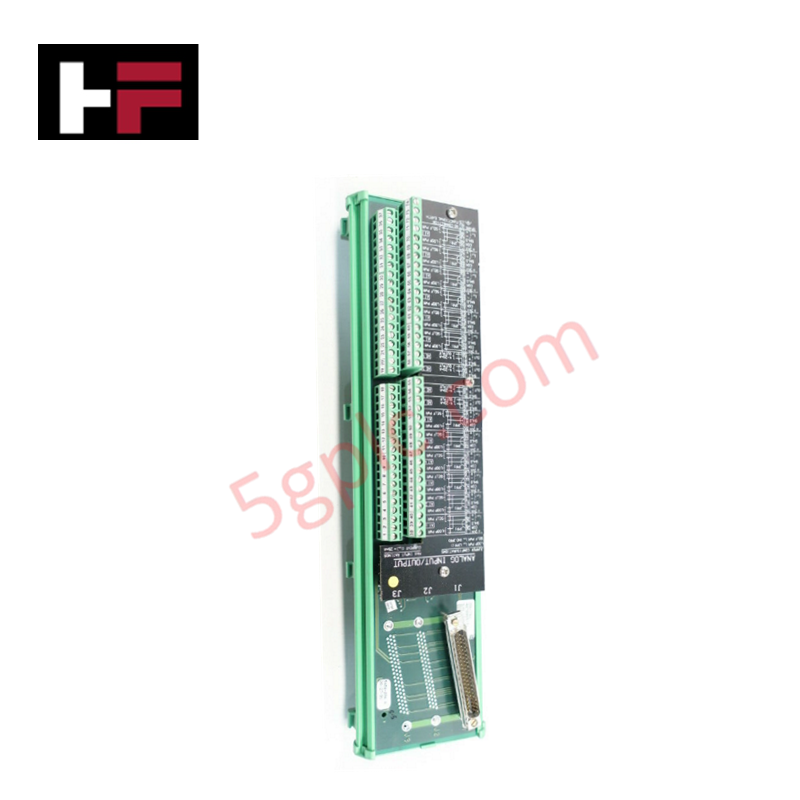
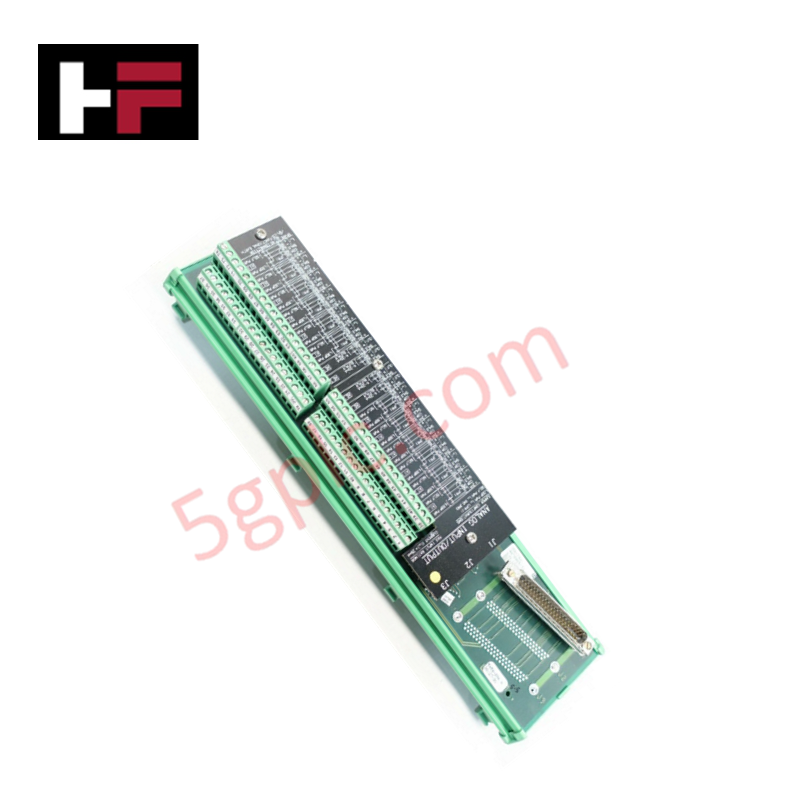
The Woodward 5501-376, also cataloged as the 5501-376 Analog I/O Module, operates as a dedicated hardware component for high-density signal acquisition and proportional actuator control within Woodward processing platforms. Operating with a continuous 5 ms update time, the module interfaces directly with four speed sensors, eight analog inputs, four analog outputs, and two proportional actuator drivers. Software-calibrated circuitry maintains 0.03% full-scale accuracy without requiring physical potentiometers, enabling direct field replacement and deterministic execution of control variables.
Hardware Specifications
| Parameter | Specification |
|---|---|
| Model | 5501-376 |
| Brand | Woodward |
| Origin | United States (USA) |
| Power Consumption | Backplane Powered |
| Update Time | 5 ms |
| Speed Sensor Inputs | 4 Channels (Magnetic or Proximity Probe) |
| Input Frequency | 100-25000 Hz |
| Input Amplitude | 1-25 Vrms |
| Input Impedance | 2000 Ohms |
| Analog Inputs | 8 Channels (4-20 mA or 0-5 V) |
| Analog Outputs | 4 Channels |
| Actuator Driver Outputs | 2 Channels (4-20 mA or 20-160 mA configurable) |
| Isolation Voltage | 500 Vrms |
| Resolution | 12 bits min |
| Accuracy | 0.03% full scale, minimum (Software Calibrated) |
Actuator Loop Feedback Response
The Woodward 5501-376 Analog I/O Module incorporates high-speed processing logic designed to optimize actuator loop feedback response within critical governing systems. Executing at a strict 5 ms update rate, the module continuously calculates 100-25000 Hz speed sensor frequency signals against internal setpoints. This low-latency architecture directly commands the two proportional actuator driver outputs (configurable up to 20-160 mA drive strength), minimizing position phase lag and preventing mechanical overshoot during severe transient load corrections on electro-hydraulic fuel valves or steam racks.
Frequently Asked Questions
Q: Does the 5501-376 module require manual hardware calibration via potentiometers before operation?
A: No. The 5501-376 contains no physical potentiometers. All channel offset, span, and 0.03% full-scale accuracy adjustments are handled strictly via application software, allowing a failed unit to be hot-swapped or replaced with another module of the exact same part number without manual hardware tuning.
Q: What specific field signals are accepted by the four dedicated speed sensor input channels?
A: The four speed inputs accommodate either passive magnetic pickups (variable reluctance) or active proximity probes. The channels process input amplitudes ranging from 1-25 Vrms and frequencies between 100-25000 Hz, with a constant input impedance of 2000 Ohms.
Field Installation Guidelines
Seat the module firmly into the designated control chassis slot, ensuring the backplane connector pins mate completely before engaging the retention levers. Secure the panel mounting screws to establish chassis ground continuity and resist mechanical machine vibration. When terminating field wiring for the speed sensor inputs and analog loops, use shielded twisted-pair cabling exclusively. Connect all signal cable drain shields to the primary cabinet earth ground bus at one end only to prevent ground loop currents from degrading the 12-bit analog input resolution. Route the high-current actuator driver output lines (driving up to 160 mA) in separate wireways away from low-voltage speed inputs to maintain the 500 Vrms isolation rating and suppress electromagnetic cross-talk.
Additional Information
- 100% Genuine Parts: All products are original and authentic, ensuring reliable industrial performance.
- 30-Day Refund Guarantee: Return any in-stock item within 30 days in original, unopened packaging for a full refund (excluding shipping and fees).
- 12-Month Warranty: Covers defects in materials or workmanship; excludes misuse, normal wear, or unauthorized modifications.
- Worldwide Shipping: We ship via USPS, UPS, FedEx, and DHL. Delivery times vary by country and may be subject to customs or import fees.
- Support & Contact: Technical and warranty assistance is available anytime. Contact us here: Contact.
- Purchase Guidance: Check product specifications and compatibility carefully before ordering to ensure proper application.




Tech & Buying Guide

Demystifying Open Platform Communication (OPC): The Backbone of Industrial Interoperability
Interoperability remains a cornerstone requirement for modern smart factories and process automation. Open Platform Communication (OPC) bridges the gap between disparate hardware platforms, control systems, and visualization software. By establishing a universal communication standard, OPC allows field controllers, SCADA platforms, and enterprise software from different vendors to exchange real-time data seamlessly.

Understanding Siemens PLC Memory Cards: MMC, SMC, and SD Solutions in Industrial Automation
Memory management plays a pivotal role in maintaining control system reliability across modern manufacturing plants. Industrial control systems rely on specialized memory cards to store project logic, firmware updates, and retentive system data. Siemens uses several memory architectures, including Micro Memory Cards (MMC) and SIMATIC Memory Cards (SMC). Engineers must understand these hardware variations to ensure zero data loss and minimize downtime during maintenance routines.

Redefining Control Systems: The Rise of Flexible I/O Modules in Industrial Automation
Conventional input-output architectures often limit engineering agility and inflate long-term inventory costs. Today, Flexible Input/Output Modules (FIOM) are transforming how control system engineers design, commission, and maintain automation infrastructure. By allowing individual channel software configuration, FIOM technology bridges the gap between rigid hardware design and dynamic plant requirements.