










Product Details
Product Overview
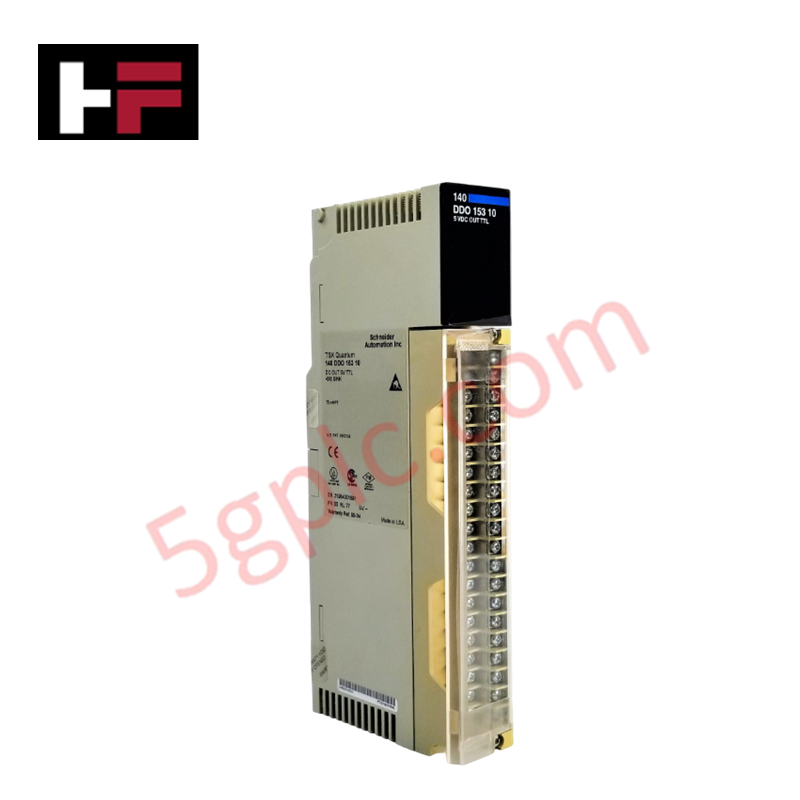
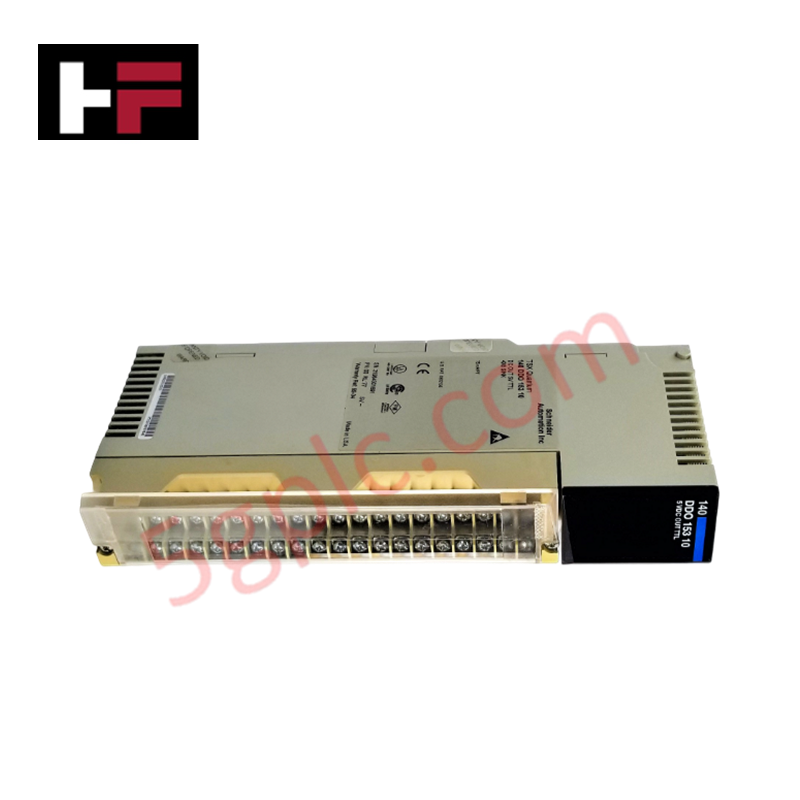
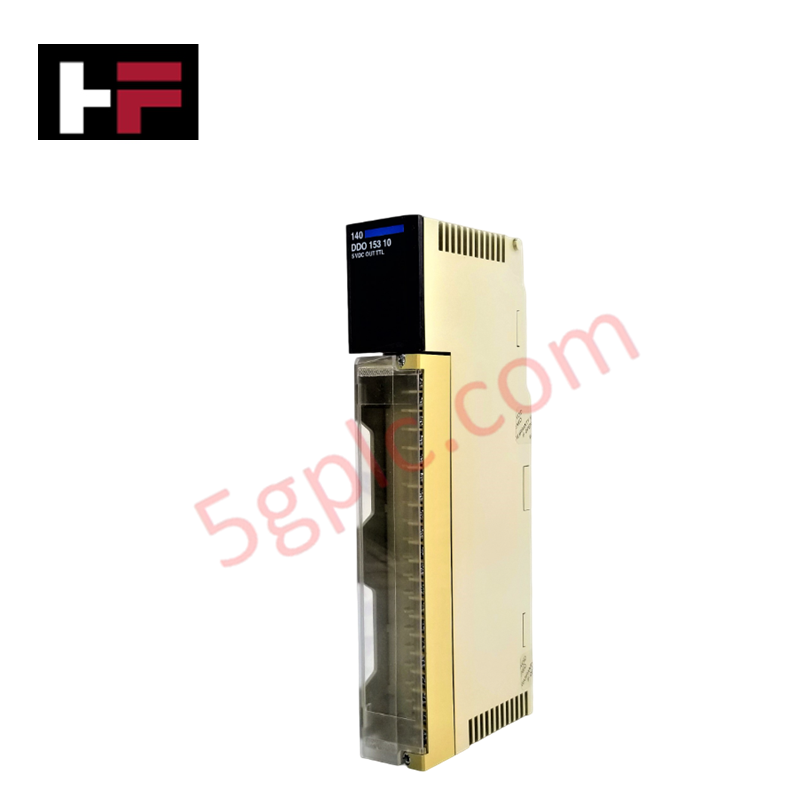
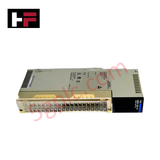
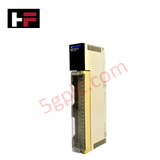
The 140DDO15310 acts as a high-density TTL (Transistor-Transistor Logic) interface for the Schneider Electric Modicon Quantum platform. This module manages 32 discrete outputs, organized into four isolated groups of eight, providing high-speed switching for logic-level field devices. We supply this unit as 100% Brand New and Original factory stock, ensuring the timing precision and voltage stability required for advanced industrial computing and automation architectures.
Technical Specifications
The 140DDO15310 utilizes sink logic and high-speed circuitry to deliver ultra-fast response times:
-
Discrete Output Number: 32 (4 groups of 8 channels)
-
Discrete Output Type: TTL Positive (Sink)
-
Discrete Output Voltage: 5 V DC
-
Rated Supply Voltage [Us]: 4...5.5 V DC
-
Response Time: $\leq$ 250 µs (State 0 to 1 and State 1 to 0 resistive)
-
Maximum Load Current: 75 mA per point / 2.4 A per module
-
Internal Pullup Resistor: 440 Ohm
-
Isolation Between Groups: 500 Vrms for 1 minute
-
Bus Current Requirement: 350 mA
-
Addressing Requirement: 2 output words
Engineering Advantages
-
Ultra-Low Latency Switching: With a response time of $\leq$ 250 µs, this module facilitates near-instantaneous control. Engineers deploy the 140DDO15310 in applications requiring rapid signal synchronization, such as high-speed testing rigs and specialized logic gate interfacing.
-
High-Density TTL Integration: The 32-point architecture maximizes backplane efficiency. By housing 32 TTL channels in a standard Quantum slot, users significantly reduce cabinet space requirements while maintaining extensive control over logic-level peripherals.
-
Multi-Tiered Protection: Integrated transient voltage suppression shields every channel from damaging spikes. Additionally, internal fuses protect the module from overcurrent conditions, while the system provides immediate fault indication for blown fuses or loss of field power.
-
Advanced Diagnostics: A 34-LED array provides comprehensive visual feedback. This includes one green LED for active bus communication, one red LED for external faults, and 32 individual green LEDs to track the status of every output point.
-
Robust Signal Separation: The 500 Vrms isolation between channel groups prevents electrical noise in one group from propagating to another. This design ensures that field-side disturbances do not compromise the integrity of the TTL logic levels.
FAQs
-
Does the 140DDO15310 support source logic?
No. This module utilizes Positive (Sink) TTL logic. Verify your field device wiring requirements to ensure compatibility with sink-style outputs.
-
How does the module signal a field-side power failure?
The module features built-in fault detection. If it detects a loss of field power or a blown internal fuse, the red "F" LED on the front panel illuminates, and the module transmits a fault status to the Quantum processor.
-
Can I use this module for high-voltage AC switching?
Absolutely not. This is a low-voltage TTL module designed specifically for 5 V DC logic signals. For AC switching, you must utilize a relay output module like the 140DRC83000 or an AC output module like the 140DAO85300.
-
What is the addressing requirement in the controller software?
The 140DDO15310 requires 2 output words in your configuration software (such as Concept or Unity Pro) to address all 32 channels correctly.
Additional Information
- 100% Genuine Parts: All products are original and authentic, ensuring reliable industrial performance.
- 30-Day Refund Guarantee: Return any in-stock item within 30 days in original, unopened packaging for a full refund (excluding shipping and fees).
- 12-Month Warranty: Covers defects in materials or workmanship; excludes misuse, normal wear, or unauthorized modifications.
- Worldwide Shipping: We ship via USPS, UPS, FedEx, and DHL. Delivery times vary by country and may be subject to customs or import fees.
- Support & Contact: Technical and warranty assistance is available anytime. Contact us here: Contact.
- Purchase Guidance: Check product specifications and compatibility carefully before ordering to ensure proper application.


Tech & Buying Guide

Why 24V DC Power Supplies Standardize Modern Industrial Automation
Industrial control cabinets worldwide rely on 24V DC as the universal power standard for field instrumentation, sensors, and controllers. Walk into any manufacturing plant, and you will find PLCs, human-machine interfaces (HMIs), and smart actuators running on extra-low voltage DC. Standardizing on 24V DC enhances operational safety, lowers cabinet footprint, and maintains steady control performance across factory networks.

Essential Motion Control Commands: A Practical Guide for Engineers
Automation engineers often rely on precise position and speed control to drive modern factory machinery. Modern industrial systems, such as Programmable Logic Controllers (PLCs) and Distributed Control Systems (DCS), depend heavily on standardized motion instructions. Mastering these commands ensures operational safety, protects mechanical components, and optimizes cycle times across production lines.
Mastering Modern Industrial Joystick Controls in Heavy Automation
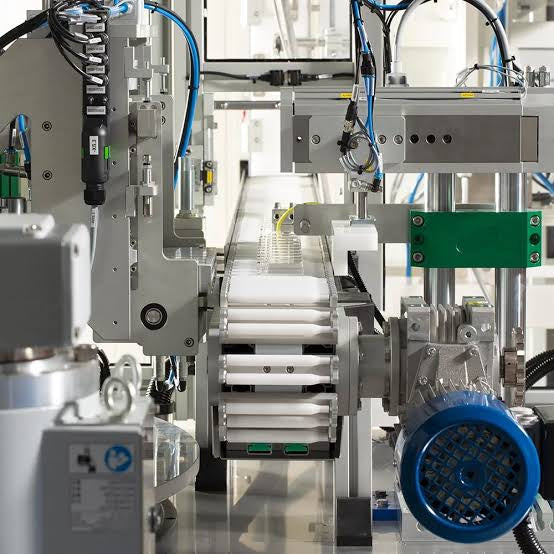
Industrial joysticks play a pivotal role in human-machine interaction across heavy material handling and mobile hydraulics. These tactile controllers translate complex operator movements into precise electrical signals for PLCs, motion controllers, and DCS networks. Consequently, selecting and installing the right joystick architecture ensures operator safety, reduces fatigue, and optimizes equipment performance.