















Product Details
Product Overview
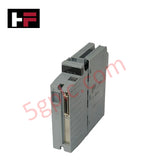
The Yokogawa SB401-50 S1 functions as a high-speed ESB Bus Interface Module within the CENTUM CS 3000 Distributed Control System (DCS) architecture. This module facilitates the communication link between the Field Control Unit (FCU) and remote I/O nodes via the Extended Serial Backplane (ESB). By managing deterministic data packets, the SB401-50 S1 ensures that real-time process data from field instrumentation reaches the central processor with minimal latency.
Part Number Breakdown
The SB401 series utilizes specific codes to define its functional style and protection rating:
| Code | Type | Description |
| SB401 | Model | ESB Bus Interface Module |
| -5 | Standard | Standard type with no explosion protection |
| 0 | Basic | Basic functional type for standard I/O nodes |
| S1 | Style | Style S1 hardware revision for optimized signal integrity |
Technical Specifications
The SB401-50 S1 adheres to the following high-performance standards for industrial data transport:
-
Manufacturer: Yokogawa
-
Module Type: ESB Bus Interface (Slave)
-
System Compatibility: CENTUM CS 3000, CS 1000
-
Transmission Speed: 128 Mbps
-
Bus Interface: Dual-connector support for redundant path communication
-
Configuration: Standard Basic Type
-
Condition: 100% Brand New and Original
Engineering Advantages
-
Deterministic Throughput: The SB401-50 S1 utilizes a fixed 128 Mbps bandwidth to eliminate the data collisions common in standard Ethernet architectures. This ensures that the control system executes safety interlocks and process loops within fixed, predictable scan times.
-
Redundant Path Switching: This module supports dual ESB bus cabling. In the event of a cable break or master-side failure, the SB401-50 S1 switches to the secondary communication path instantaneously, preventing system trips and maintaining process visibility.
-
Signal Conditioning via Style S1: The S1 hardware revision incorporates updated electronic components that enhance signal filtering. This design minimizes the impact of electromagnetic interference (EMI) within the marshalling cabinet, protecting the integrity of process data in noisy industrial environments.
-
Simplified Hardware Layout: The "Basic Type" architecture provides a plug-and-play interface for standard I/O nodes. This simplifies the expansion of the DCS, allowing engineers to add remote racks without requiring complex gateway configurations or software re-mapping.
FAQs
-
Is this Yokogawa SB401-50 S1 unit provided as new or used?
We supply this module exclusively as 100% Brand New and Original equipment. Every unit arrives in its original factory-sealed Yokogawa packaging, ensuring zero previous runtime and maximum reliability.
-
Can I use the SB401-50 in hazardous areas?
No. The "-5" suffix indicates the Standard Type with no explosion protection. You must install this module in a non-hazardous area or within a suitably rated, purged enclosure according to your plant's safety guidelines.
-
Does the SB401-50 S1 support both CENTUM CS 3000 and CENTUM VP?
The SB401-50 S1 primarily serves the CENTUM CS 3000 and CS 1000 systems. While some backward compatibility exists, we generally recommend the SSB401 series for modern CENTUM VP architectures. Please verify your specific controller firmware before installation.
-
How do I verify the communication status of this module?
The module front panel features diagnostic LEDs. A steady green "ACT" light indicates the module is actively communicating on the ESB bus. If the "ERR" light activates, consult the system's HIS (Human Interface Station) for detailed error codes regarding bus synchronization or hardware failure.
Additional Information
- 100% Genuine Parts: All products are original and authentic, ensuring reliable industrial performance.
- 30-Day Refund Guarantee: Return any in-stock item within 30 days in original, unopened packaging for a full refund (excluding shipping and fees).
- 12-Month Warranty: Covers defects in materials or workmanship; excludes misuse, normal wear, or unauthorized modifications.
- Worldwide Shipping: We ship via USPS, UPS, FedEx, and DHL. Delivery times vary by country and may be subject to customs or import fees.
- Support & Contact: Technical and warranty assistance is available anytime. Contact us here: Contact.
- Purchase Guidance: Check product specifications and compatibility carefully before ordering to ensure proper application.


Tech & Buying Guide

Designing Robust SCADA Systems for Electrical Substation Automation
Electrical substation automation requires rigorous engineering standards to guarantee uninterrupted power distribution and grid stability. Therefore, control engineers must design supervisory control and data acquisition (SCADA) architectures with absolute precision. In my 15 years of commissioning power protection and substation automation systems, I have witnessed how meticulous SCADA design prevents catastrophic grid failures. Below, I outline the critical engineering practices required to build reliable substation SCADA solutions.

Demystifying Earthing, Grounding, and Bonding in Industrial Process Plants
Industrial automation networks, power distribution systems, and complex control loops rely heavily on proper grounding to maintain operational integrity. Therefore, control engineers and electrical specialists must thoroughly understand the distinctions between earthing, grounding, and bonding. In my 15 years of commissioning distributed control systems (DCS) and factory automation architectures, I have encountered numerous mysterious equipment failures caused by improper grounding practices. Below, I clarify these essential concepts and outline the industry standards governing industrial electrical safety.

Empowering Predictive Maintenance in PLC and SCADA Systems Through Maintenance Management
Industrial automation networks constantly generate vast streams of diagnostic data before major equipment failures occur. Therefore, integrating control systems with maintenance management platforms is essential for maximizing plant uptime. In my 15 years of commissioning programmable logic controllers (PLCs) and supervisory control and data acquisition (SCADA) networks, I have witnessed how raw alarms sit unnoticed in controller buffers. Bridging the gap between automation software and computerized maintenance management systems (CMMS) transforms early warning signals into actionable work orders. Below, I examine how this integration drives predictive maintenance across modern industrial facilities.