












Product Details
The Yokogawa NFCP502-W15, also cataloged as the NFCP502 CPU Module, operates as a dedicated hardware component for real-time control execution and industrial network routing within FCN autonomous controllers.
Suffix Breakdown & Model Matrix
- NFCP502: Base CPU module hardware platform for FCN control systems featuring 4 Ethernet ports.
- -W: Integrated extended functions code supporting serial communication (RS-232-C port).
- 1: Dual-redundancy execution capability code.
- 5: Basic type model designation with no explosion protection.
Hardware Specifications
| Parameter | Specification |
|---|---|
| Model | NFCP502-W15 |
| Brand | Yokogawa |
| Origin | Japan |
| Weight | 2.0 kg (Standard shipping weight) |
| Dimensions | Unspecified |
| Operating Temp | -20 to +70 deg C (Extended operating limit) |
| Power Consumption | Max. 1700 mA at 5 VDC system backplane (8.5 W) |
| Processor Architecture | Intel Atom E3815 1.46 GHz |
| Memory Capacity | 256 MB ECC RAM, 2 MB ECC SRAM (Battery-backed), 1 GB Flash |
| External Storage | 1x SDHC slot (4 to 32 GB, Class 10) |
| Communication Ports | 4x Ethernet (10/100/1000 Mbps, RJ45), 1x RS-232-C (D-sub 9-pin male) |
| Internal System Bus | Dual SB bus backplane connectivity |
Process Control & Communication Characteristics
Engineered for dual-redundant DCS architecture, the NFCP502-W15 maintains uninterrupted control execution via high-speed backplane synchronization over its dual SB bus interface. Built-in serial communication pathways accommodate 4-20 mA HART loop protocol gateway routing and Modbus fieldbus devices, while 4 Gigabit Ethernet interfaces permit segregated system and field network topologies. Internal channel-to-channel isolation safeguards central logic execution blocks from field noise, ground potential loops, and common-mode voltage transients.
Frequently Asked Questions
Q: What redundancy feature is designated by the option code '1' in the NFCP502-W15 suffix?
A: The digit '1' in the suffix designates dual-redundant controller CPU capability, permitting synchronized hot-standby operation across twin module pairs.
Q: How is volatile runtime data maintained during a main system power supply loss?
A: Non-volatile retention for system variables and log data in the 2 MB ECC Static RAM is powered by an onboard 1000 mAh graphite fluoride lithium battery.
Q: What serial baud rate parameters are supported by the integrated RS-232-C port?
A: The D-sub 9-pin serial interface supports asynchronous communication at configurable speeds ranging from 0.3 kbps up to 115.2 kbps in full or half duplex modes.
Field Installation Guidelines
- Redundant Rack Seating: Switch off subsystem rack power or follow node-specific live insertion procedures before slotting the module into the FCN base chassis. Ensure side lock levers click firmly into position to maintain backplane pin connection alignment.
- Network Cable Routing: Connect category-rated shielded twisted-pair cables to the RJ45 Ethernet ports. Route communication wiring in dedicated wireways separate from high-voltage motor or AC supply cables to prevent electromagnetic coupling.
- Shielding & Functional Earth: Secure the overall cabinet cable shield to the protective earth busbar. Verify low-impedance earthing between the base rack frame and the cabinet ground line prior to applying 5 VDC system power.
Additional Information
- 100% Genuine Parts: All products are original and authentic, ensuring reliable industrial performance.
- 30-Day Refund Guarantee: Return any in-stock item within 30 days in original, unopened packaging for a full refund (excluding shipping and fees).
- 12-Month Warranty: Covers defects in materials or workmanship; excludes misuse, normal wear, or unauthorized modifications.
- Worldwide Shipping: We ship via USPS, UPS, FedEx, and DHL. Delivery times vary by country and may be subject to customs or import fees.
- Support & Contact: Technical and warranty assistance is available anytime. Contact us here: Contact.
- Purchase Guidance: Check product specifications and compatibility carefully before ordering to ensure proper application.


Tech & Buying Guide

Safety Relays in Industrial Automation: Fundamentals, Design Standards, and Fail-Safe Architecture
Safety relays form the bedrock of functional safety in modern factory automation, preventing catastrophic equipment failure and protecting plant personnel. While standard electromechanical relays handle basic load switching, they lack the redundant diagnostics required for high-risk industrial environments. Modern industrial automation platforms—including programmable logic controllers (PLCs) and distributed control systems (DCS)—rely on specialized safety relays to monitor field devices and isolate hazards instantly.

Voice-Activated Industrial Automation: Integrating Speech Control into PLC and DCS Architectures
Industrial automation integrates speech recognition, IIoT protocols, and NLP with PLCs and DCS to streamline operations. By leveraging advanced edge computing, engineers enable real-time, hands-free control—allowing personnel to manage smart factory processes safely away from hazardous equipment.
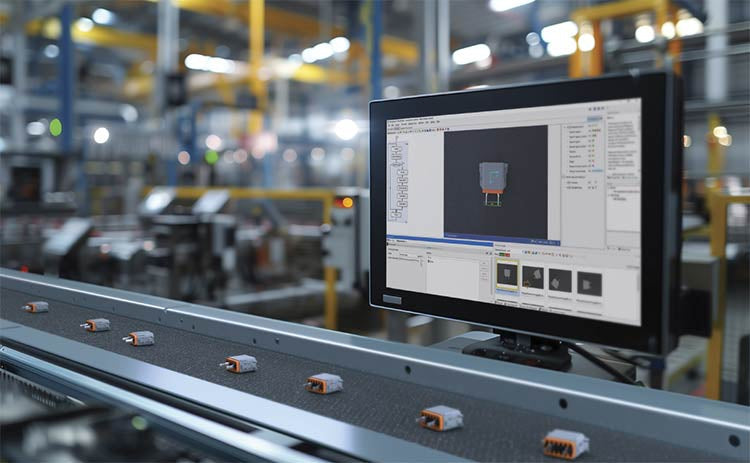
Modern Industrial Automation: Transforming Safety and Efficiency in Mining Operations
Industrial automation has evolved from a simple manufacturing tool into the operational backbone of high-risk sectors. Modern mining operations increasingly rely on advanced control systems, programmable logic controllers (PLCs), distributed control systems (DCS), and artificial intelligence to address deep-underground hazards. By replacing manual labor in high-risk zones, factory automation technologies protect personnel while significantly boosting operational throughput.