










Product Details
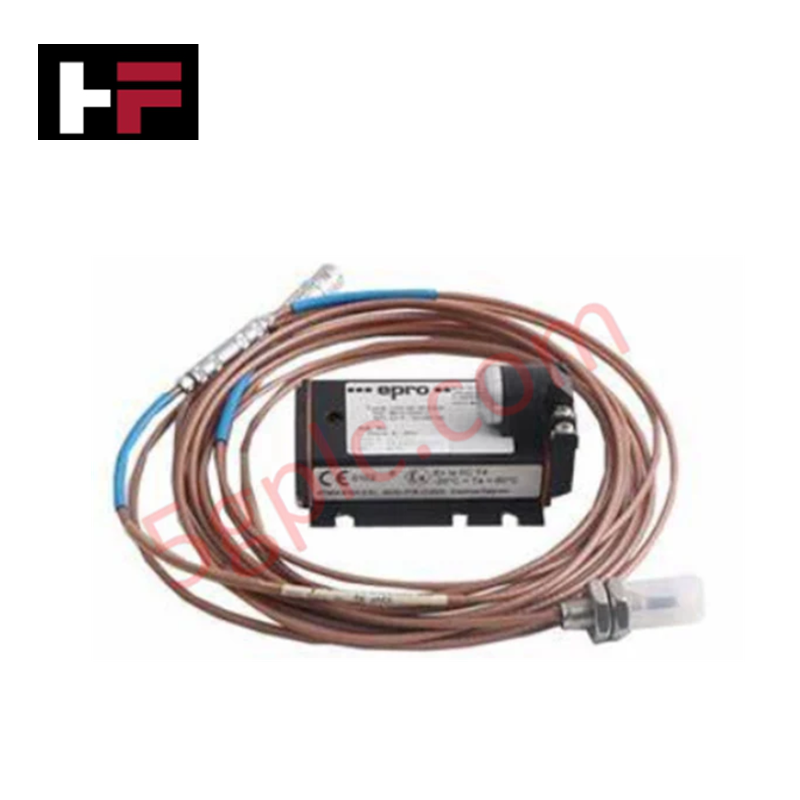
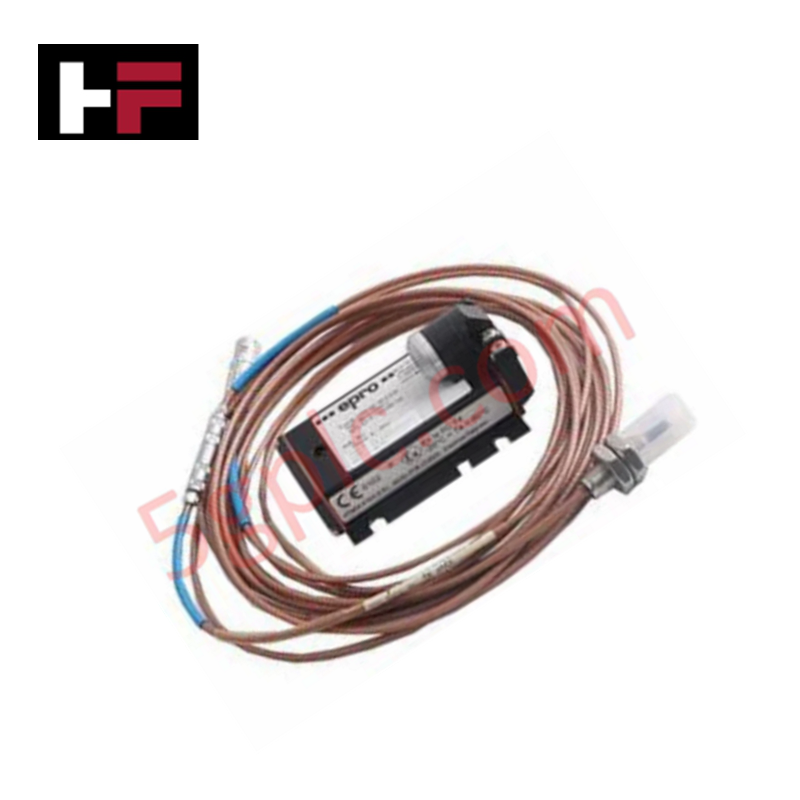
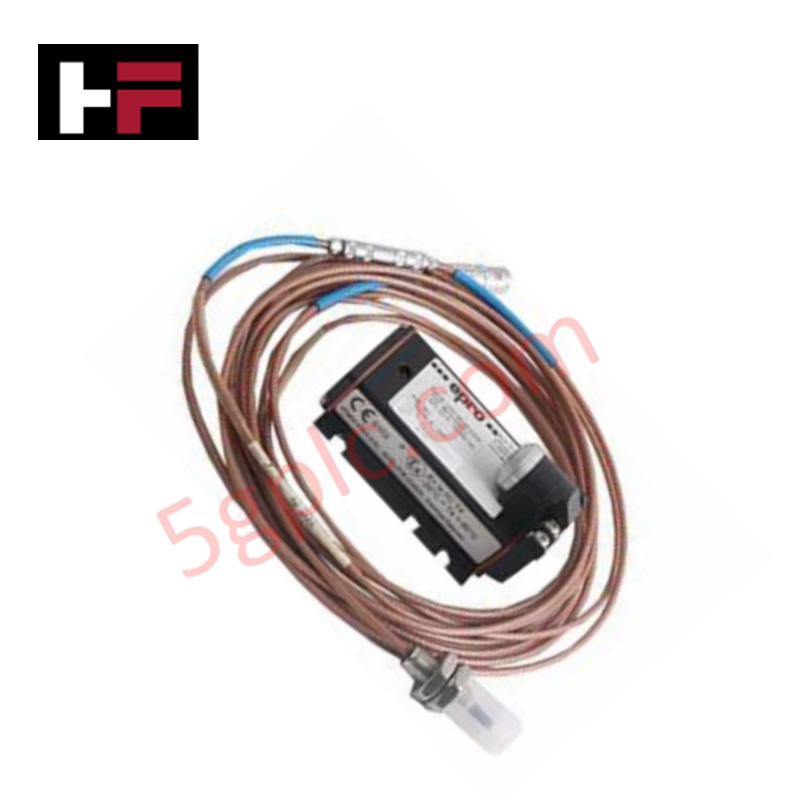
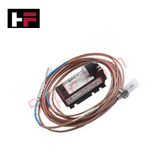
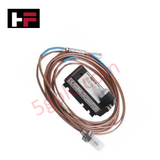
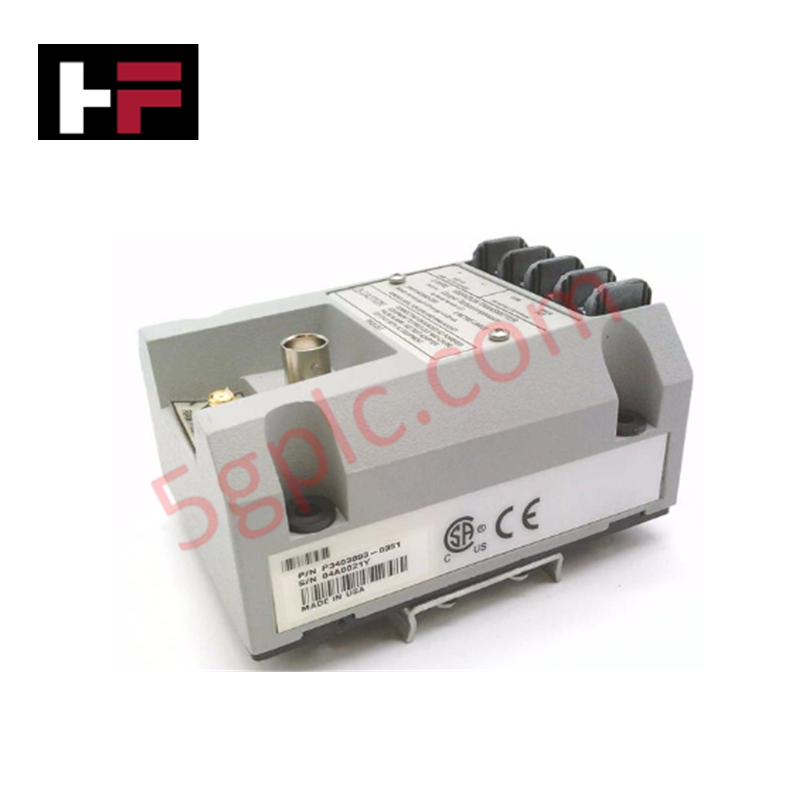
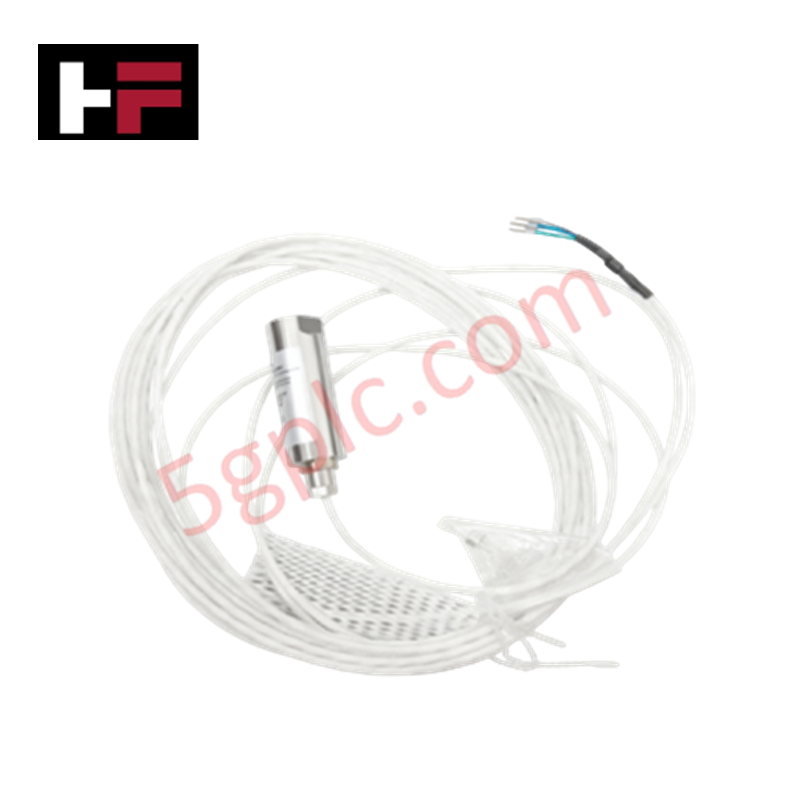
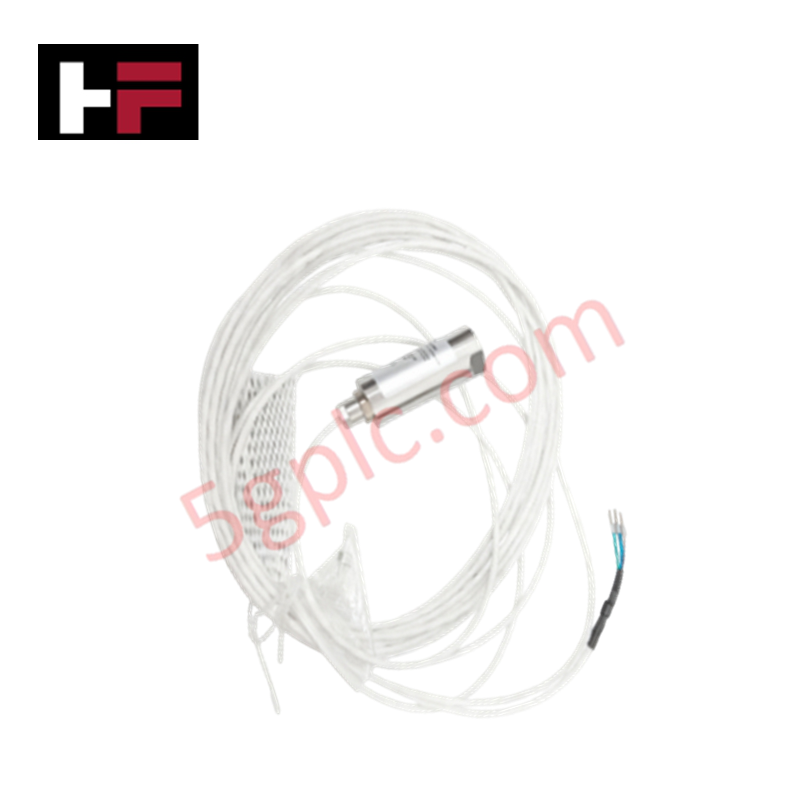
Configured for high-frequency displacement measurement in turbomachinery monitoring systems, the EMERSON EPRO PR6423/10R-030-CN (PR6423/10R-030-CN) transducer paired with the CON021 signal converter provides direct physical/electrical execution.
Hardware Specifications
| Parameter | Specification |
|---|---|
| Model | PR6423/10R-030-CN + CON021 |
| Brand | EMERSON EPRO |
| Origin | Germany |
| Weight | Approx. 0.22 kg (Combined) |
| Dimensions | Probe: 8 mm diameter; Converter: LMgSi 0.5 F22 housing |
| Operating Temp | -30 deg C to +100 deg C (Converter); -35 deg C to +200 deg C (Sensor) |
| Power Consumption | -23 VDC to -32 VDC |
| Measurement Range | 2 mm |
Gap Voltage Validation (-10 VDC targets)
The system utilizes an oscillator circuit to drive the transducer probe, creating an electromagnetic field for displacement detection. To ensure accurate linearization, the system necessitates precise gap voltage validation during commissioning. The converter centers its output characteristic around a nominal target of -10 VDC, representing the mid-point of the physical measurement gap. Maintenance of this -10 VDC baseline is mandatory for accurate signal tracking; significant deviations indicate mechanical misalignment, transducer saturation, or degradation of the conductive target surface.
Frequently Asked Questions
Q: What is the mechanical significance of the 0.5 mm initial air gap?
A: The 0.5 mm initial air gap establishes the reference standoff distance for the probe tip relative to the target shaft. This positioning ensures the output signal remains within the calibrated linear region of the CON021 converter, providing optimal sensitivity for both static and dynamic displacement measurements.
Q: Can the CON021 converter be mounted directly to the machine casing?
A: The CON021 has an IP20 protection rating and is designed for panel mounting. It must be installed within a protective enclosure or junction box to prevent exposure to environmental contaminants, moisture, or metallic debris.
Field Installation Guidelines
- Mount the transducer probe in a rigid, vibration-isolated bracket to minimize extraneous mechanical noise and prevent housing fatigue during machine operation.
- Ensure the measurement target surface is composed of ferromagnetic steel (e.g., 42CrMo4) and is free of non-conductive coatings to maintain electrical conductivity.
- Establish the nominal 0.5 mm air gap using a non-metallic feeler gauge to prevent physical contact damage to the sensor tip.
- Route signal cabling through grounded metallic conduit, keeping lines physically separated from high-current AC motor supply lines to mitigate external electromagnetic interference.
- Terminate the signal shield exclusively at the monitoring system (DCS/TSI) rack to prevent the injection of ground-loop currents into the CON021 converter circuit.
Additional Information
- 100% Genuine Parts: All products are original and authentic, ensuring reliable industrial performance.
- 30-Day Refund Guarantee: Return any in-stock item within 30 days in original, unopened packaging for a full refund (excluding shipping and fees).
- 12-Month Warranty: Covers defects in materials or workmanship; excludes misuse, normal wear, or unauthorized modifications.
- Worldwide Shipping: We ship via USPS, UPS, FedEx, and DHL. Delivery times vary by country and may be subject to customs or import fees.
- Support & Contact: Technical and warranty assistance is available anytime. Contact us here: Contact.
- Purchase Guidance: Check product specifications and compatibility carefully before ordering to ensure proper application.

Tech & Buying Guide

Comprehensive Guide to Noise Types in Industrial Automation and Electronics

Mitigating Emergency Stop Spurious Trips in Industrial Control Systems
Emergency stop (E-Stop) pushbuttons serve as vital safety devices in factory automation and process control plants. Functional safety standards mandate normally-closed (NC) contact blocks to ensure fail-safe operation during wiring breaks or power outages. However, mechanical degradation over time can trigger unexpected spurious trips, halting production lines without an actual emergency. Understanding the underlying causes of mechanical contact failure allows automation engineers to implement robust, fault-tolerant safety circuits.

Redundant Automation Systems: Maximizing Uptime in Critical Control Applications
Industrial automation relies on continuous operational stability to prevent catastrophic downtime and financial loss. While standard dictionary definitions treat redundancy as superfluous, industrial engineers consider redundant control architectures indispensable for high-availability systems. Implementing backup hardware ensures seamless takeover during primary equipment failures, protecting critical infrastructure across manufacturing and process industries.