












Product Details
Module Functional Overview
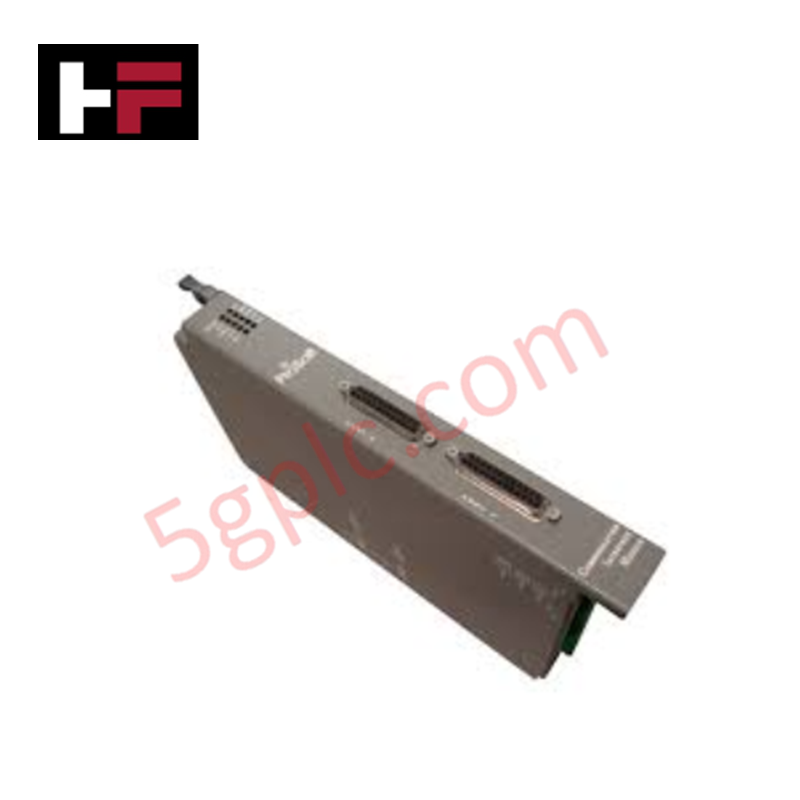
The ILX34-MBS485 (Part Number: ILX34-MBS485) is a high-performance serial communication adapter designed to integrate Modbus RTU/ASCII connectivity into Allen-Bradley Point I/O and 1769-L1x CompactLogix systems. This module functions as a versatile gateway, allowing Master or Slave communication via RS-485. Its ultra-compact 12mm form factor makes it an ideal solution for high-density distributed I/O architectures where cabinet space is at a premium.
Mechanical and Environmental Specifications
Engineered for industrial resilience, the ILX34-MBS485 provides stable performance in high-vibration environments.
| Specification Category | Value / Rating |
| Operational Shock Resistance | 30 g |
| Vibration Acceleration | 5 m/s² (continuous) |
| Vibration Frequency Range | 10 to 500 Hz |
| Module Width | 12 mm (0.47 inches) |
| Module Height | 56 mm (2.20 inches) |
| Module Depth | 75.5 mm (2.97 inches) |
| Operating Temperature | -20°C to 55°C (-4°F to 131°F) |
| Storage/Transport Temp | -40°C to 85°C (-40°F to 185°F) |
| Atmospheric Humidity | 95% (Non-condensing) |
Operational Integration and Use Cases
The ILX34-MBS485 allows engineers to interface with a wide range of field devices including power meters, variable frequency drives (VFDs), and environmental sensors. Because it mounts directly onto the Point I/O backplane, it reduces the need for complex external gateways.
-
Application Scenario: Remote monitoring of solar inverters via RS-485 Modbus where the controller is an Allen-Bradley 1769-L18ER.
-
System Compatibility: Designed for use with 1734-TB and 1734-TBS mounting bases.
Technical Implementation FAQ
Is external power required for the RS-485 port?
No, the module draws its operational power directly from the Point I/O backplane. However, proper termination resistors should be applied at both ends of the RS-485 daisy chain for signal integrity.
How is the module configured within Studio 5000?
Integration is achieved through an Add-On Profile (AOP) or a generic module profile. ProSoft provides specific configuration tools to define Modbus commands, slave IDs, and register mapping without complex ladder programming.
Additional Information
- 100% Genuine Parts: All products are original and authentic, ensuring reliable industrial performance.
- 30-Day Refund Guarantee: Return any in-stock item within 30 days in original, unopened packaging for a full refund (excluding shipping and fees).
- 12-Month Warranty: Covers defects in materials or workmanship; excludes misuse, normal wear, or unauthorized modifications.
- Worldwide Shipping: We ship via USPS, UPS, FedEx, and DHL. Delivery times vary by country and may be subject to customs or import fees.
- Support & Contact: Technical and warranty assistance is available anytime. Contact us here: Contact.
- Purchase Guidance: Check product specifications and compatibility carefully before ordering to ensure proper application.


Tech & Buying Guide

Why 24V DC Power Supplies Standardize Modern Industrial Automation
Industrial control cabinets worldwide rely on 24V DC as the universal power standard for field instrumentation, sensors, and controllers. Walk into any manufacturing plant, and you will find PLCs, human-machine interfaces (HMIs), and smart actuators running on extra-low voltage DC. Standardizing on 24V DC enhances operational safety, lowers cabinet footprint, and maintains steady control performance across factory networks.

Essential Motion Control Commands: A Practical Guide for Engineers
Automation engineers often rely on precise position and speed control to drive modern factory machinery. Modern industrial systems, such as Programmable Logic Controllers (PLCs) and Distributed Control Systems (DCS), depend heavily on standardized motion instructions. Mastering these commands ensures operational safety, protects mechanical components, and optimizes cycle times across production lines.
Mastering Modern Industrial Joystick Controls in Heavy Automation
Industrial joysticks play a pivotal role in human-machine interaction across heavy material handling and mobile hydraulics. These tactile controllers translate complex operator movements into precise electrical signals for PLCs, motion controllers, and DCS networks. Consequently, selecting and installing the right joystick architecture ensures operator safety, reduces fatigue, and optimizes equipment performance.