










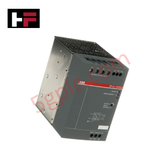
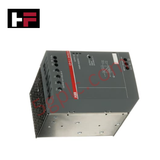
Product Details
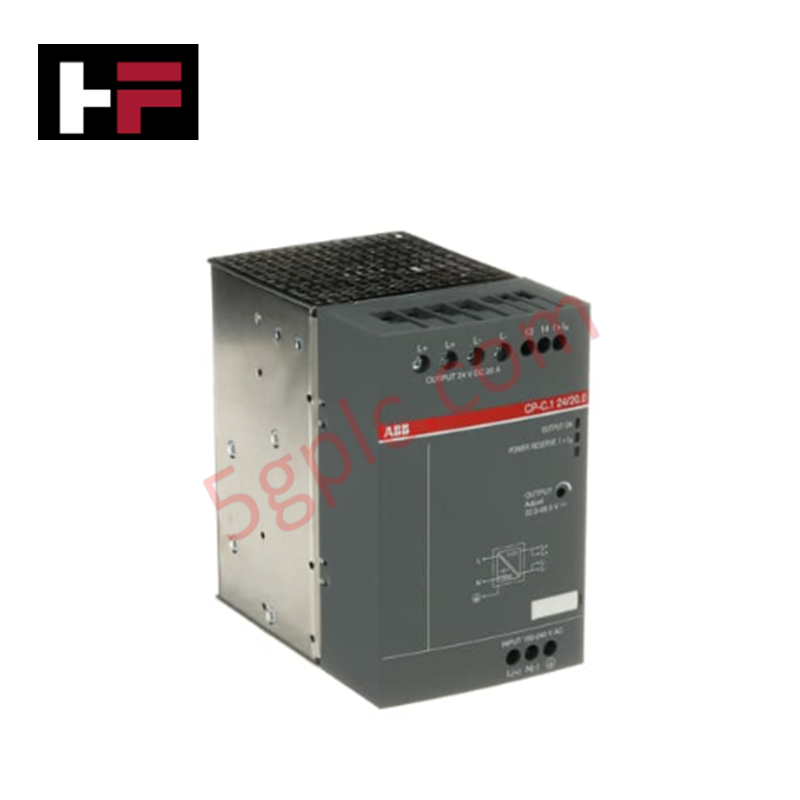
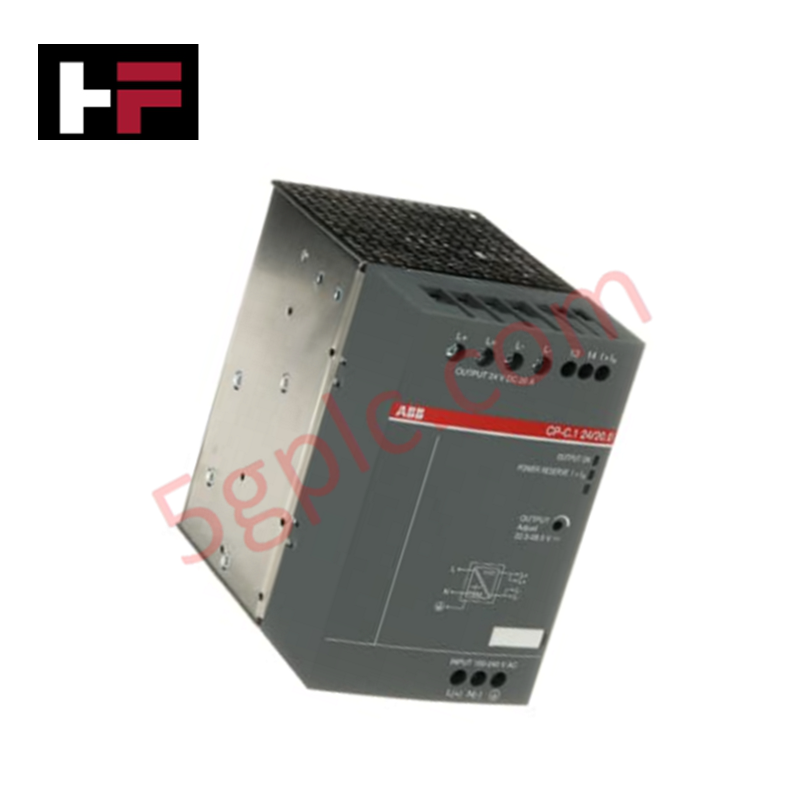
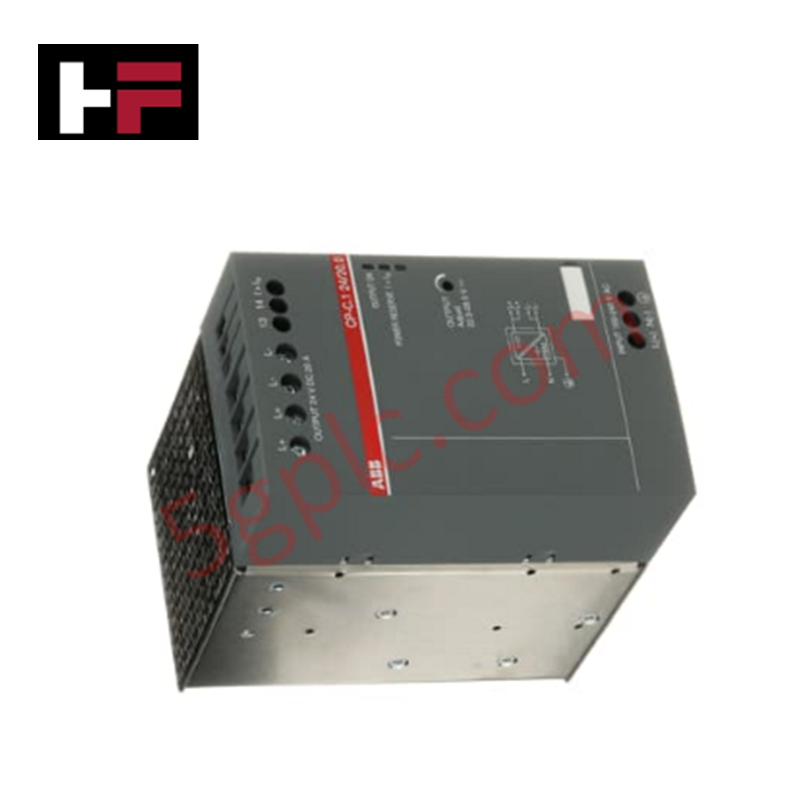
The ABB CP-C.1 24/20.0 1SVR360763R1001, also cataloged as the CP-C.1 24/20.0 Switch Mode Power Supply, operates as a dedicated hardware component for direct current voltage conversion and power delivery within industrial automation cabinets. The module transforms wide-range AC or DC input voltages into a regulated 24 VDC bus supply, providing power reserves for control electronics, PLC racks, and field instrumentation.
Hardware Specifications
| Parameter | Specification |
|---|---|
| Model | CP-C.1 24/20.0 1SVR360763R1001 |
| Brand | ABB |
| Origin | Germany |
| Weight | Standard DIN-rail module weight |
| Dimensions | Enclosure for TH35 DIN-rail mounting |
| Operating Temp | -25 to +70 deg C (Storage: -40 to +85 deg C) |
| Power Consumption | Input Current: 4.6 A at 115 VAC / 2.3 A at 230 VAC |
| Input Voltage | 85 ... 264 VAC / 90 ... 300 VDC |
| Output Voltage | 24 VDC adjustable (22.5 ... 28.5 VDC) |
| Output Current | 20 A continuous (26 A reserve at -25 to +40 deg C) |
| Rated Output Power | 480 W |
| Protection Rating | IP20 (Housing and Terminals) |
Backplane Bus Communication Velocity and Firmware Flash Compatibility
Although operating primarily as an independent power supply unit, the CP-C.1 series provides integrated signaling outputs and voltage monitoring interfaces for diagnostic backplane integration. The unit features built-in power reserve characteristics following a U/I output curve, allowing reliable starting of heavy inductive or capacitive loads across deterministic control networks. Internal solid-state electronics maintain low harmonic distortion and high efficiency across extended operational temperature ranges without requiring firmware flash interaction.
Frequently Asked Questions
Q: What are the minimum clearance distances required around the unit for adequate thermal dissipation?
A: Maintain a minimum mounting distance of 25 mm horizontally and vertically between the power supply and adjacent electrical conductive boards or neighboring devices of the same type.
Q: Can this unit operate directly from a high-voltage DC supply rail?
A: Yes. The input stage accepts a continuous operating voltage range of 90 ... 300 VDC as well as 85 ... 264 VAC, permitting operation from DC station battery banks.
Q: What are the specified wire stripping lengths and terminal tightening torques for wiring installation?
A: For the input circuit, strip wires to 8 mm and tighten to 0.5 Nm using a PH1 screwdriver. For the output circuit, strip wires to 10 mm and tighten to 1.2 Nm.
Field Installation Guidelines
- Mount the unit on a standard TH35-7.5 or TH35-15 (35 mm) DIN rail according to IEC 60715 in vertical orientation (Position 1).
- De-energize all primary input AC/DC power lines before connecting wiring to prevent electrical shock or terminal damage.
- Connect input lines using rigid conductors (0.5 ... 4 mm2) or flexible wires with ferrules (0.5 ... 2.5 mm2). Ensure proper connection of the protective earth (PE) terminal.
- Wire the 24 VDC output using heavy-gauge conductors (rigid 2.5 ... 16 mm2 or flexible 2.5 ... 10 mm2) to handle continuous load currents up to 26 A without excessive voltage drop.
- Verify that ambient panel temperature around the unit remains within -25 to +70 deg C during operation and maintain the 25 mm horizontal and vertical clearance spaces.
Additional Information
- 100% Genuine Parts: All products are original and authentic, ensuring reliable industrial performance.
- 30-Day Refund Guarantee: Return any in-stock item within 30 days in original, unopened packaging for a full refund (excluding shipping and fees).
- 12-Month Warranty: Covers defects in materials or workmanship; excludes misuse, normal wear, or unauthorized modifications.
- Worldwide Shipping: We ship via USPS, UPS, FedEx, and DHL. Delivery times vary by country and may be subject to customs or import fees.
- Support & Contact: Technical and warranty assistance is available anytime. Contact us here: Contact.
- Purchase Guidance: Check product specifications and compatibility carefully before ordering to ensure proper application.



Tech & Buying Guide

Spatial Computing in Industrial Automation: Elevating PLC and DCS Operations with AR and VR
Industry 4.0 integrates digital intelligence into field operations, transforming factory automation landscapes worldwide. Spatial technologies—specifically Augmented Reality (AR) and Virtual Reality (VR)—redefine how engineers interact with industrial control systems. By bridging computer-generated CAD models with real-time operational technology (OT) data, immersive displays enable intuitive monitoring, rapid diagnostics, and safer maintenance across complex processing facilities.

Master Acceptance Testing: Understanding FAT and SAT in Industrial Control Systems
Factory Acceptance Testing (FAT) and Site Acceptance Testing (SAT) serve as critical quality assurance gateways in complex industrial control systems. Both procedures verify that programmable logic controllers (PLCs), distributed control systems (DCS), and associated field devices meet strict functional specifications. However, executing these tests effectively requires clear delineation between off-site staging and final field commissioning.

Industrial Networking Essentials: Demystifying Hubs, Switches, and Routers in Control Systems
Industrial automation relies heavily on robust networking infrastructure to connect programmable logic controllers (PLCs), distributed control systems (DCS), and human-machine interfaces (HMIs). Modern factory automation environments generate vast amounts of real-time operational data across deterministic networks. Understanding the structural differences between hubs, switches, and routers ensures optimal traffic segmentation, minimizes latency, and maintains high network availability.