










Product Details
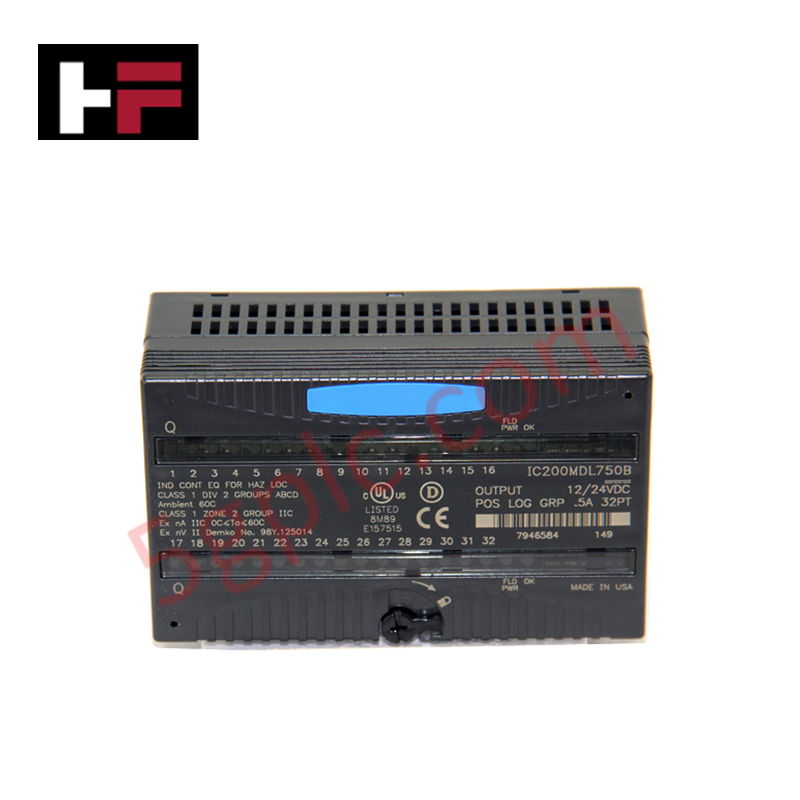
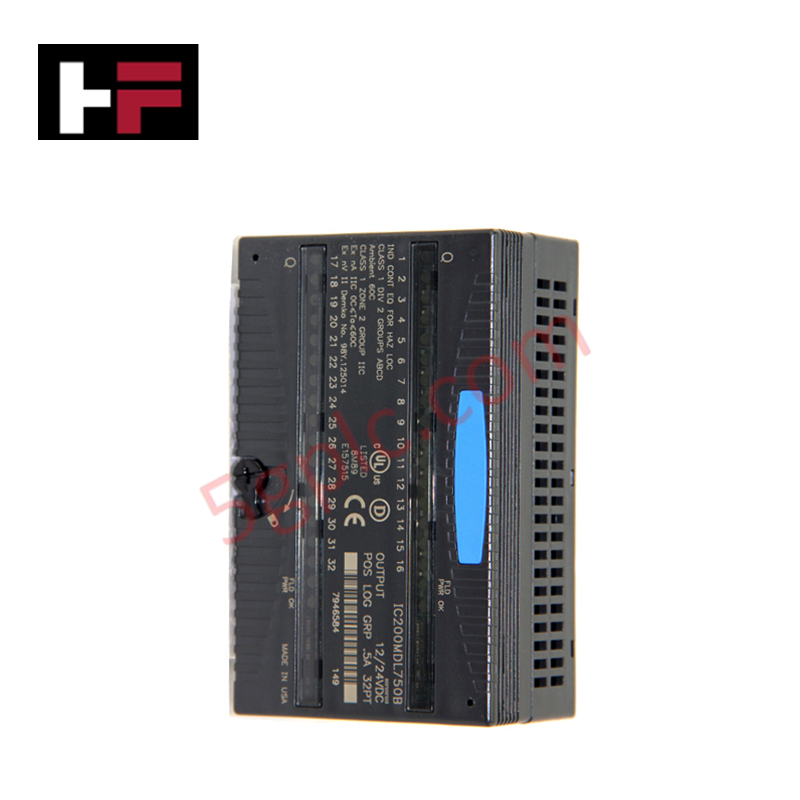
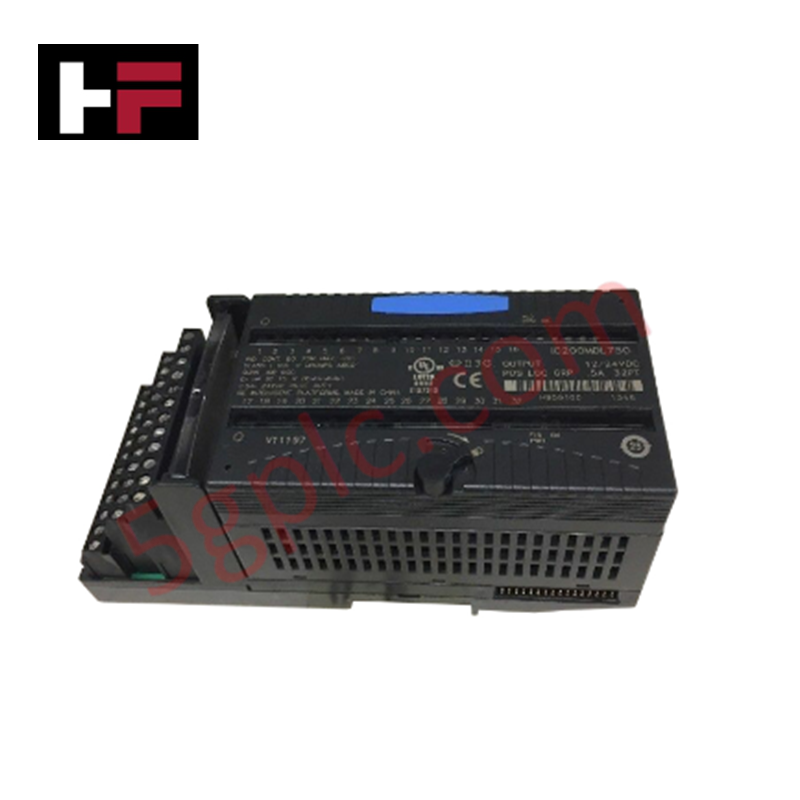
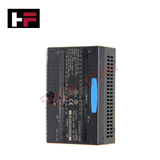
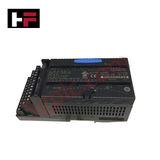
The GE IC200MDL750H, also cataloged as the IC200MDL750 Discrete Output Module, operates as a dedicated hardware component for 12/24 VDC solid-state switching and direct actuator load drive within GE VersaMax control platforms.
Hardware Specifications
| Parameter | Specification |
|---|---|
| Model | IC200MDL750H |
| Brand | GE (GE Fanuc / Emerson) |
| Origin | USA |
| Weight | 0.90 kg (1.98 lbs) |
| Operating Temp | 0 to 30 deg C |
| Power Consumption | 90 mA max backplane current draw; external 10.2 to 30 VDC field supply |
| Output Channels | 32 sourcing-type channels (2 groups of 16 channels) |
| Nominal Output Voltage | 12/24 VDC |
| Output Voltage Range | 10.2 to 30 VDC |
| Output Current Rating | 0.5 A per channel |
| Inrush Current | 2.0 A max per point for 100 ms |
| Response Time | ON: 0.2 ms; OFF: 1.0 ms |
| Status Indicators | Individual channel status LEDs, OK LED, FLD PWR LED |
| Internal Protection | No internal fuses |
| Hazardous Location | Class I Division 2 certified |
Deterministic Network Execution & Backplane Velocity
The IC200MDL750H transfers digital logic states across the VersaMax backplane bus, drawing up to 90 mA from the backplane power supply rail. Internal driver circuits process 32 sourcing-type outputs organized into two isolated groups of 16 channels, providing fast response times of 0.2 ms ON and 1.0 ms OFF.
Integration into Profinet / EtherNet/IP deterministic networks via primary communication interfaces guarantees low network latency and rapid update rates across local and expanded racks. System-wide firmware flash compatibility maintains consistent cycle timing during real-time scan execution, enabling seamless I/O density scaling across complex multi-chassis architectures.
Frequently Asked Questions
Q: Does the IC200MDL750H module feature internal overcurrent fusing on the output channels?
A: No. The IC200MDL750H contains no internal output fuses. External fuse protection must be provided on field wiring lines to prevent circuit damage from short circuit conditions.
Q: What are the backplane current draw and external field power requirements for this module?
A: The logic interface draws a maximum of 90 mA from the rack backplane power supply, while output loads require an external nominal 12/24 VDC (10.2 to 30 VDC) field power source.
Q: What inrush current capacity can an individual output point tolerate?
A: Each individual output point can handle a maximum surge inrush current of 2.0 A for up to 100 ms during inductive or lamp load switching.
Field Installation Guidelines
- Power Shutdown: De-energize all primary rack backplane power supplies and external 12/24 VDC field power sources prior to module mounting or terminal carrier handling.
- DIN-Rail Mounting: Mount the module carrier onto a standard 35 mm DIN rail, securing all panel grounding clips to maintain proper cabinet chassis earth connection.
- Field Wiring Procedure: Connect external 10.2 to 30 VDC positive logic supplies to the field power input terminals. Route individual channel conductors to loads using appropriate wire gauges.
- Inductive Suppression: Install external flyback diodes or RC suppression networks directly across inductive field loads (such as DC solenoids or contactor coils) to suppress voltage transients.
- ESD Safeguards: Wear a grounded anti-static wrist strap connected to a clean cabinet metallic earth during installation to prevent static damage to logic components.
Additional Information
- 100% Genuine Parts: All products are original and authentic, ensuring reliable industrial performance.
- 30-Day Refund Guarantee: Return any in-stock item within 30 days in original, unopened packaging for a full refund (excluding shipping and fees).
- 12-Month Warranty: Covers defects in materials or workmanship; excludes misuse, normal wear, or unauthorized modifications.
- Worldwide Shipping: We ship via USPS, UPS, FedEx, and DHL. Delivery times vary by country and may be subject to customs or import fees.
- Support & Contact: Technical and warranty assistance is available anytime. Contact us here: Contact.
- Purchase Guidance: Check product specifications and compatibility carefully before ordering to ensure proper application.




Tech & Buying Guide

Understanding Marshalling Cabinets in Industrial Control Systems Architecture
Industrial control system deployments rely on structured signal distribution to bridge field instrumentation with central processing hardware. A marshalling cabinet serves as the vital intermediate connection point between heavy field home-run multi-pair cables and delicate input/output (I/O) modules housed inside Programmable Logic Controller (PLC) or Distributed Control System (DCS) enclosures. By segregating field cable terminations from control hardware, engineers maintain system flexibility, safeguard controller components, and streamline commissioning workflows.

FAT vs SAT in Industrial Control Systems: Key Differences and Execution Guide
Industrial control system deployment relies on strict verification protocols to guarantee operational safety, system stability, and regulatory compliance. Commissioning complex Programmable Logic Controller (PLC) racks, Distributed Control Systems (DCS), and Safety Instrumented Systems (SIS) requires two critical milestones: the Factory Acceptance Test (FAT) and the Site Acceptance Test (SAT). Both procedures validate that system automation meets design specifications, but they occur at different stages of project execution and target distinct operational risks.

Hub vs Switch vs Router in Industrial Automation Architecture
Modern factory automation relies on reliable industrial networking infrastructure to exchange real-time field data across operational technology systems. Engineers often encounter networking hardware like hubs, switches, and routers when integrating Programmable Logic Controllers, Distributed Control Systems, and SCADA monitoring nodes. Although these devices share physical ports, they operate at different layers of the Open Systems Interconnection reference model and deliver distinct traffic management capabilities.