










Product Details
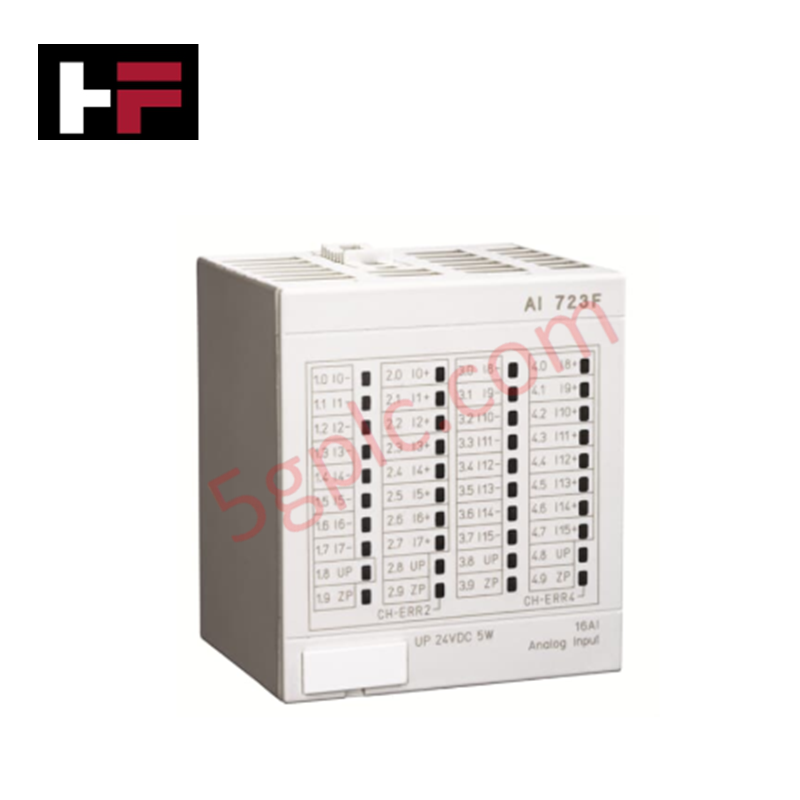
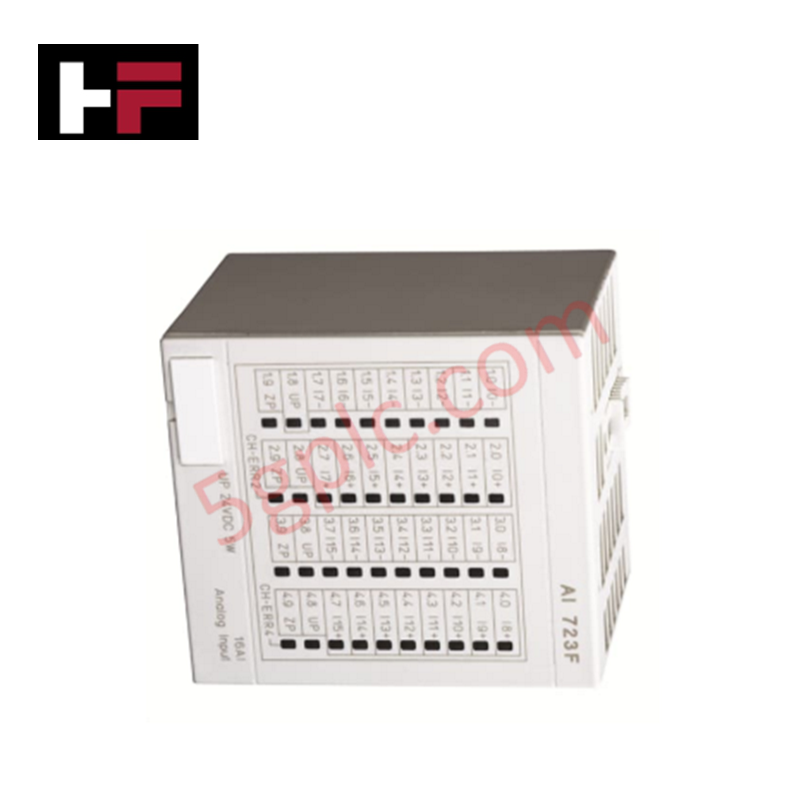
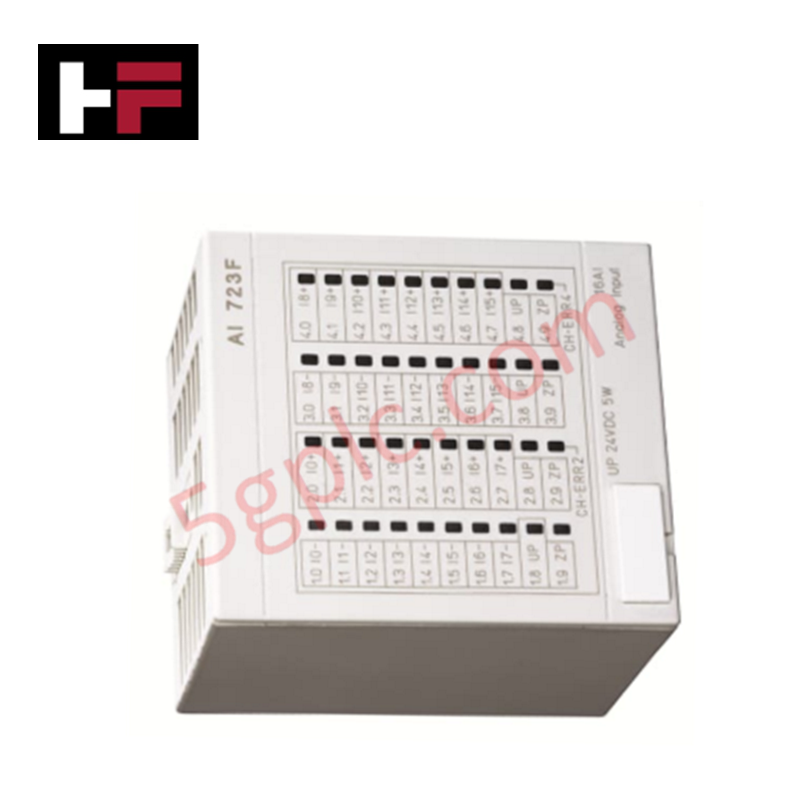
The ABB AI 723F 3BDH000376R0005, also cataloged as the AI 723F Analog Input Module, operates as a dedicated hardware component for multi-channel analog signal acquisition within Freelance S700 I/O system platforms. Configured with 16 non-redundant analog input channels utilizing 12 bits plus sign resolution, the unit conditions voltage and current signals across field wiring runs up to 100 m. Operating on an external 24 VDC supply drawing 0.15 A with a maximum power dissipation of 6 W, the compact 300 g module provides real-time channel status and system error monitoring through a front-panel array of 40 LEDs.
Hardware Specifications
| Parameter | Specification |
|---|---|
| Model | AI7 23F (3BDH000376R0005) |
| Base Model | AI723F |
| Brand | ABB |
| Origin | Sweden |
| Weight | 300 g |
| Dimensions | 67.5 mm x 54 mm x 76 mm (W x H x D) |
| Operating Temp | -20 deg C to +60 deg C |
| Power Consumption | 6 W max power dissipation (0.15 A at 24 VDC external) |
| Number of Channels | 16 channels |
| Resolution | 12 bits (+ sign) |
| Input Impedance | Voltage: > 100 kOhm, Current: ca. 330 Ohm |
| Input Voltage Range "0" | -30 V to +5 V |
| Input Voltage Range "1" | +13 V to +30 V |
| Common Mode Voltage | 24 VDC |
| Max Field Cable Length | 100 m |
| Mechanical Form Factor | S700 module housing |
| Status Diagnostics | 40 front LEDs for channel state and system error indication |
Backplane Bus Communication Velocity and Firmware Flash Compatibility
The module interfaced with the S700 backplane bus maintains deterministic cyclic data exchange, matching controller communication velocity across distributed I/O racks. Multi-channel input processing provides high I/O density scaling within compact cabinet layouts without compromising data conversion cycles. Controller firmware flash compatibility allows online parameterization of channel input filtering and gain factors directly from the engineering workstation, preserving execution timing during dynamic system updates.
Frequently Asked Questions
Q: Does the module support hot-swapping under powered rack conditions?
A: Module removal or insertion requires powering down the local terminal base unit to prevent backplane bus transients or disruption to adjacent I/O modules on the segment.
Q: What are the input impedance values for voltage and current signal configurations?
A: The channel input impedance measures greater than 100 kOhm for voltage signals and approximately 330 Ohm for current measurement loops.
Field Installation Guidelines
- Snap the module securely onto the designated S700 terminal base unit until the mechanical locking latches fully engage.
- Ensure all field wiring runs do not exceed the 100 m maximum distance threshold to prevent signal degradation and excessive loop resistance.
- Ground all shielded cable braids to the system earth bar at the enclosure entry point using continuous ground clamps.
- Route analog field signal lines separately from high-voltage AC power and motor drive cabling to minimize electromagnetic coupling.
Additional Information
- 100% Genuine Parts: All products are original and authentic, ensuring reliable industrial performance.
- 30-Day Refund Guarantee: Return any in-stock item within 30 days in original, unopened packaging for a full refund (excluding shipping and fees).
- 12-Month Warranty: Covers defects in materials or workmanship; excludes misuse, normal wear, or unauthorized modifications.
- Worldwide Shipping: We ship via USPS, UPS, FedEx, and DHL. Delivery times vary by country and may be subject to customs or import fees.
- Support & Contact: Technical and warranty assistance is available anytime. Contact us here: Contact.
- Purchase Guidance: Check product specifications and compatibility carefully before ordering to ensure proper application.




Tech & Buying Guide

Understanding Marshalling Cabinets in Industrial Control Systems Architecture
Industrial control system deployments rely on structured signal distribution to bridge field instrumentation with central processing hardware. A marshalling cabinet serves as the vital intermediate connection point between heavy field home-run multi-pair cables and delicate input/output (I/O) modules housed inside Programmable Logic Controller (PLC) or Distributed Control System (DCS) enclosures. By segregating field cable terminations from control hardware, engineers maintain system flexibility, safeguard controller components, and streamline commissioning workflows.

FAT vs SAT in Industrial Control Systems: Key Differences and Execution Guide
Industrial control system deployment relies on strict verification protocols to guarantee operational safety, system stability, and regulatory compliance. Commissioning complex Programmable Logic Controller (PLC) racks, Distributed Control Systems (DCS), and Safety Instrumented Systems (SIS) requires two critical milestones: the Factory Acceptance Test (FAT) and the Site Acceptance Test (SAT). Both procedures validate that system automation meets design specifications, but they occur at different stages of project execution and target distinct operational risks.

Hub vs Switch vs Router in Industrial Automation Architecture
Modern factory automation relies on reliable industrial networking infrastructure to exchange real-time field data across operational technology systems. Engineers often encounter networking hardware like hubs, switches, and routers when integrating Programmable Logic Controllers, Distributed Control Systems, and SCADA monitoring nodes. Although these devices share physical ports, they operate at different layers of the Open Systems Interconnection reference model and deliver distinct traffic management capabilities.