












Product Details
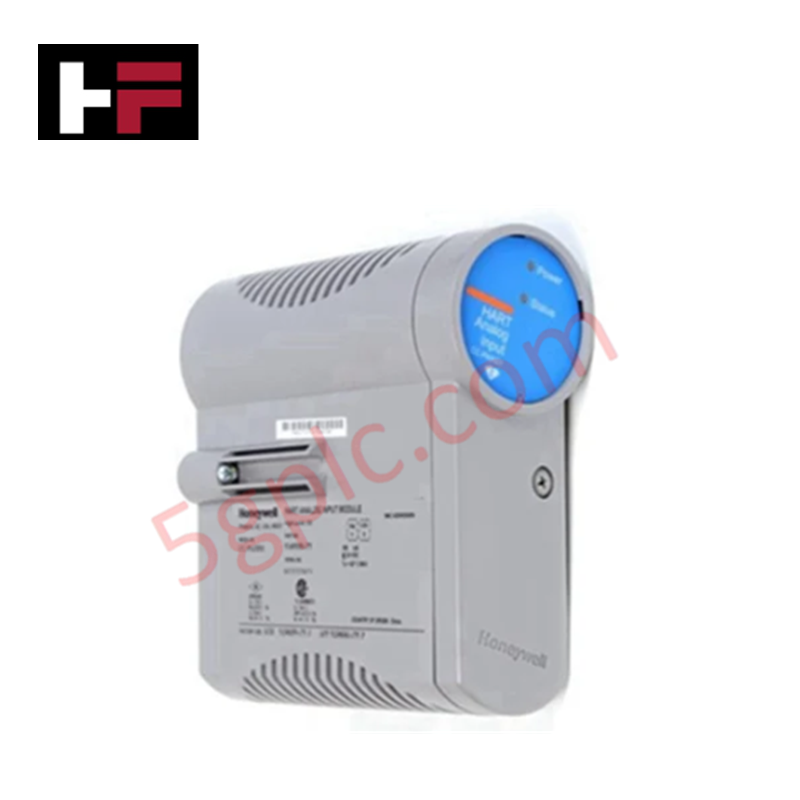
The Honeywell 900CP1-0300, also cataloged as the 900CP1 Control Processor Module, operates as a dedicated hardware component for process execution and real-time logic solving within ControlEdge HC900 controller architectures. The module processes system logic and field I/O execution cycles using integrated program and data memory. Multi-protocol industrial Ethernet interfaces allow concurrent deterministic control communication and high-level host telemetry.
Hardware Specifications
| Parameter | Specification |
|---|---|
| Model | 900CP1-0300 |
| Brand | Honeywell |
| Origin | USA |
| Weight | 320 g |
| Dimensions | Standard HC900 rack slot dimensions |
| Operating Temp | -40 to +70 deg C |
| Power Consumption | 24 V DC backplane supply |
| Architecture | High-speed processing engine with integrated storage |
| Communication Protocols | Ethernet/IP, Modbus TCP, PROFINET, OPC UA |
4-20 mA HART Loop Protocol & Channel Isolation
The Honeywell 900CP1-0300 central controller manages field process telemetry across analog subsystem racks while maintaining internal channel-to-channel isolation parameters. Digital data extracted via 4-20 mA HART loop protocol passes is mapped directly into local memory arrays for continuous processing. Onboard optical isolation circuits prevent common-mode voltage spikes and external electrical noise on long field wiring runs from entering the central processing core.
Frequently Asked Questions
Q: Does the 900CP1-0300 module support hot-swapping inside a live HC900 rack?
A: Hot-swapping (Removal and Insertion Under Power) requires adherence to HC900 rack hardware guidelines. The controller must be transitioned to a stopped or standby state before physical extraction to avoid backplane bus communication faults.
Q: How are network communications handled if one Ethernet protocol link fails?
A: The module executes concurrent networking stacks (Modbus TCP, PROFINET, Ethernet/IP, OPC UA) independently over its physical layer interfaces, ensuring isolated protocol traffic remains active during partial network drops.
Field Installation Guidelines
- Ensure total power to the HC900 controller rack chassis is switched off before inserting or seating the 900CP1-0300 module into its rack slot.
- Verify 24 V DC power polarity and stability prior to energizing the backplane rack assembly.
- Maintain clean routing separation between network communication Ethernet cables and high-voltage AC field power lines inside wireways to suppress electromagnetic interference.
- Ground the controller rack chassis to protective earth to enable the full functionality of integrated transient surge protection components.
Additional Information
- 100% Genuine Parts: All products are original and authentic, ensuring reliable industrial performance.
- 30-Day Refund Guarantee: Return any in-stock item within 30 days in original, unopened packaging for a full refund (excluding shipping and fees).
- 12-Month Warranty: Covers defects in materials or workmanship; excludes misuse, normal wear, or unauthorized modifications.
- Worldwide Shipping: We ship via USPS, UPS, FedEx, and DHL. Delivery times vary by country and may be subject to customs or import fees.
- Support & Contact: Technical and warranty assistance is available anytime. Contact us here: Contact.
- Purchase Guidance: Check product specifications and compatibility carefully before ordering to ensure proper application.


Tech & Buying Guide

FAT vs SAT in Industrial Control Systems: Key Differences and Execution Guide
Industrial control system deployment relies on strict verification protocols to guarantee operational safety, system stability, and regulatory compliance. Commissioning complex Programmable Logic Controller (PLC) racks, Distributed Control Systems (DCS), and Safety Instrumented Systems (SIS) requires two critical milestones: the Factory Acceptance Test (FAT) and the Site Acceptance Test (SAT). Both procedures validate that system automation meets design specifications, but they occur at different stages of project execution and target distinct operational risks.

Hub vs Switch vs Router in Industrial Automation Architecture
Modern factory automation relies on reliable industrial networking infrastructure to exchange real-time field data across operational technology systems. Engineers often encounter networking hardware like hubs, switches, and routers when integrating Programmable Logic Controllers, Distributed Control Systems, and SCADA monitoring nodes. Although these devices share physical ports, they operate at different layers of the Open Systems Interconnection reference model and deliver distinct traffic management capabilities.

Marshalling Cabinet Preventive Maintenance: Essential Healthiness Checks for PLC, DCS, and ESD Systems
Marshalling cabinets serve as the vital interface between field instrumentation and control room electronics in modern process facilities. Regular preventive maintenance of these cabinets ensures signal integrity across programmable logic controllers (PLCs), distributed control systems (DCS), and emergency shutdown (ESD) networks. System technicians must execute structured inspection protocols to mitigate environmental risks, identify loose wiring, and maintain continuous operational readiness.