










Product Details
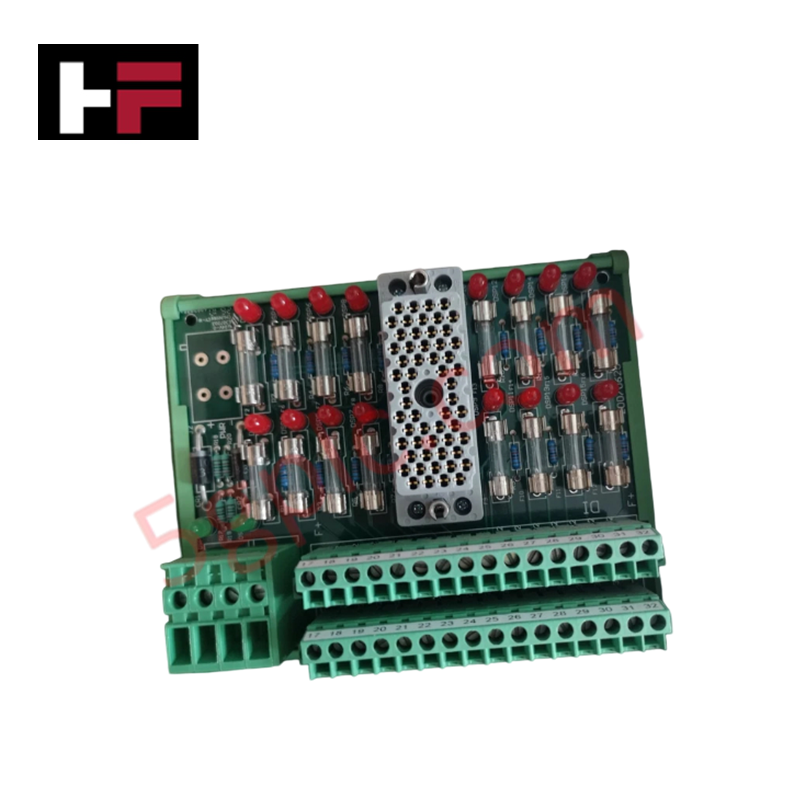
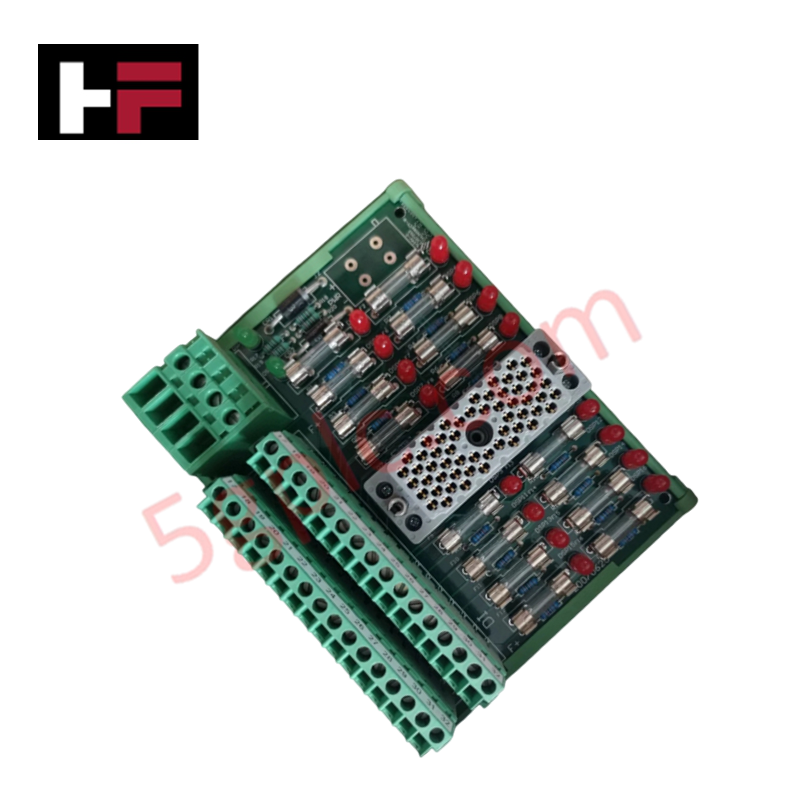
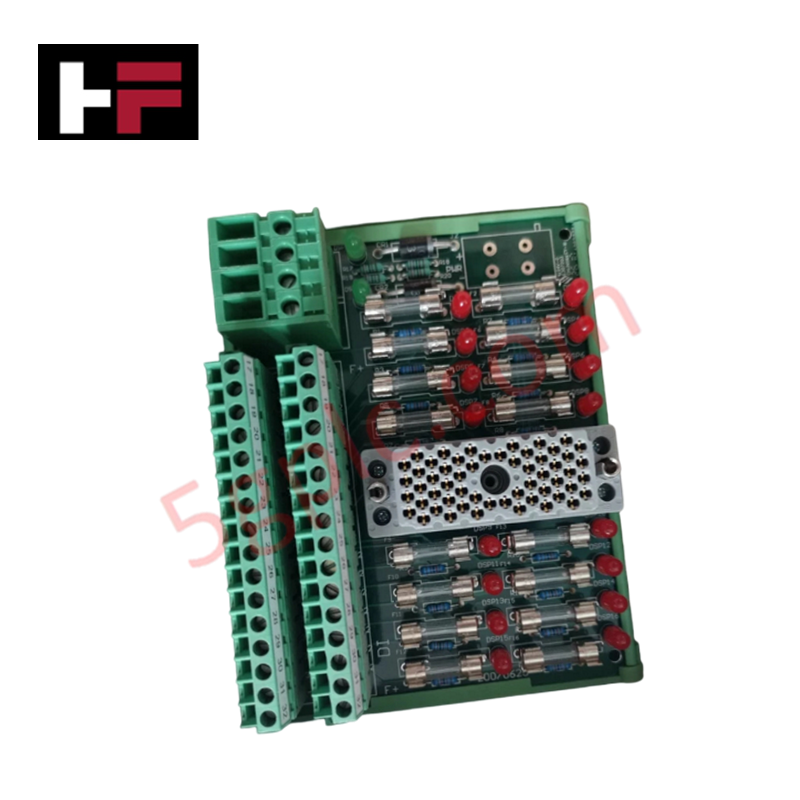
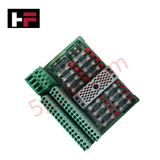
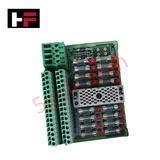
Configured for discrete status signal termination within SIS platforms, the Invensys Triconex 9563-810, also cataloged as the 9563-810 Termination Panel, provides direct physical execution for 16-point commoned digital input wiring. This hardware component serves as the interface between field devices and 32-point digital input modules, requiring two panels per module to accommodate the full 32-channel capacity.
Hardware Specifications
| Parameter | Specification |
|---|---|
| Model | 9563-810 |
| Brand | Invensys Triconex |
| Input Points | 16 commoned points |
| Leakage Current | 3.3 mA max / 2.5 mA typical |
SIS Triple Modular Redundancy (TMR) Integration
The 9563-810 panel is designed to maintain the integrity of triple modular redundancy (TMR) 2oo3 architecture by providing organized, protected signal pathways for safety-critical inputs. Each of the 16 input points is protected by an individual fuse, equipped with a visual blown-fuse indicator to facilitate rapid fault identification. This design ensures that a localized short-circuit on a single field input does not affect the remaining channels, supporting fail-safe state execution by containing faults at the termination level before they impact the primary digital input module logic.
Frequently Asked Questions
Q: How many 9563-810 panels are required for a 32-point digital input module?
A: Each 32-point digital input module (such as the 3503E or 3505E) requires two 9563-810 termination panels. The panels are supplied with labeling kits for points 1-16 and 17-32 to distinguish the two banks.
Q: What is the purpose of the PWR+ and PWR- terminals on this panel?
A: These terminals provide commoned power distribution for field devices connected to the panel, simplifying the wiring architecture for 24 VDC digital input loops.
Field Installation Guidelines
- Mount the termination panel in the cabinet using the provided mounting holes, ensuring adequate clearance for field cable strain relief.
- Verify that field wiring is connected to the commoned power terminals (PWR+ and PWR-) according to the system power distribution schematic to avoid ground loops.
- Ensure that all fuses are rated at 1 A (slow-blow) and are correctly seated to prevent nuisance trips during normal operation.
- Utilize the provided 1-16 or 17-32 labels to clearly identify the input signal mapping on each panel, ensuring consistency with the station configuration software.
- Prior to system commissioning, measure the leakage current across each point to ensure it remains within the specified range (typical 2.5 mA) and does not indicate a faulty field device or damaged wiring insulation.
Additional Information
- 100% Genuine Parts: All products are original and authentic, ensuring reliable industrial performance.
- 30-Day Refund Guarantee: Return any in-stock item within 30 days in original, unopened packaging for a full refund (excluding shipping and fees).
- 12-Month Warranty: Covers defects in materials or workmanship; excludes misuse, normal wear, or unauthorized modifications.
- Worldwide Shipping: We ship via USPS, UPS, FedEx, and DHL. Delivery times vary by country and may be subject to customs or import fees.
- Support & Contact: Technical and warranty assistance is available anytime. Contact us here: Contact.
- Purchase Guidance: Check product specifications and compatibility carefully before ordering to ensure proper application.




Tech & Buying Guide

Marshalling Cabinet Preventive Maintenance: Essential Healthiness Checks for PLC, DCS, and ESD Systems
Marshalling cabinets serve as the vital interface between field instrumentation and control room electronics in modern process facilities. Regular preventive maintenance of these cabinets ensures signal integrity across programmable logic controllers (PLCs), distributed control systems (DCS), and emergency shutdown (ESD) networks. System technicians must execute structured inspection protocols to mitigate environmental risks, identify loose wiring, and maintain continuous operational readiness.

Spatial Computing in Industrial Automation: Elevating PLC and DCS Operations with AR and VR
Industry 4.0 integrates digital intelligence into field operations, transforming factory automation landscapes worldwide. Spatial technologies—specifically Augmented Reality (AR) and Virtual Reality (VR)—redefine how engineers interact with industrial control systems. By bridging computer-generated CAD models with real-time operational technology (OT) data, immersive displays enable intuitive monitoring, rapid diagnostics, and safer maintenance across complex processing facilities.

Master Acceptance Testing: Understanding FAT and SAT in Industrial Control Systems
Factory Acceptance Testing (FAT) and Site Acceptance Testing (SAT) serve as critical quality assurance gateways in complex industrial control systems. Both procedures verify that programmable logic controllers (PLCs), distributed control systems (DCS), and associated field devices meet strict functional specifications. However, executing these tests effectively requires clear delineation between off-site staging and final field commissioning.