












Product Details
Product Description
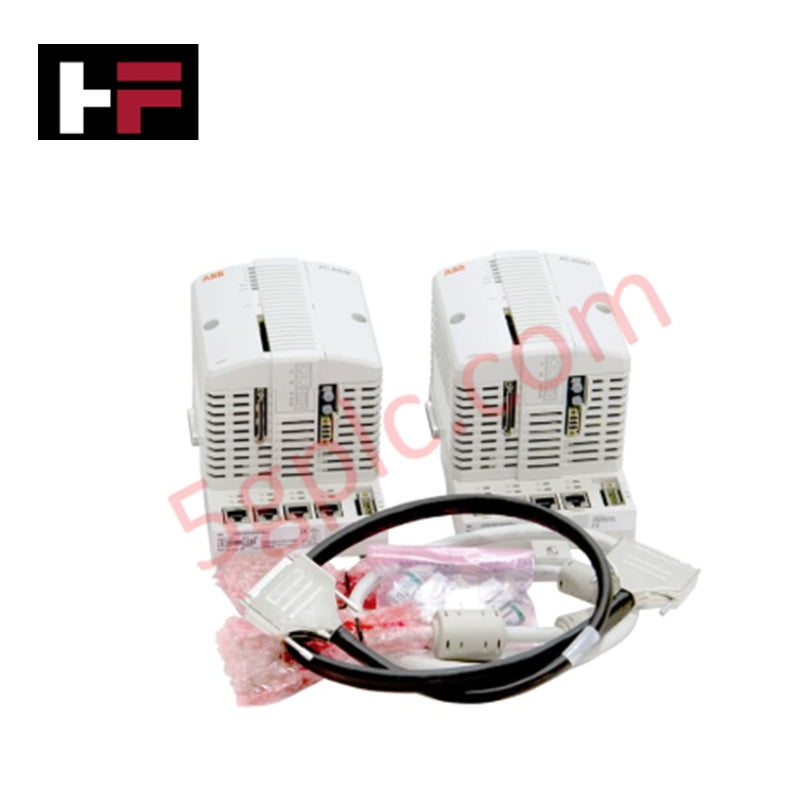
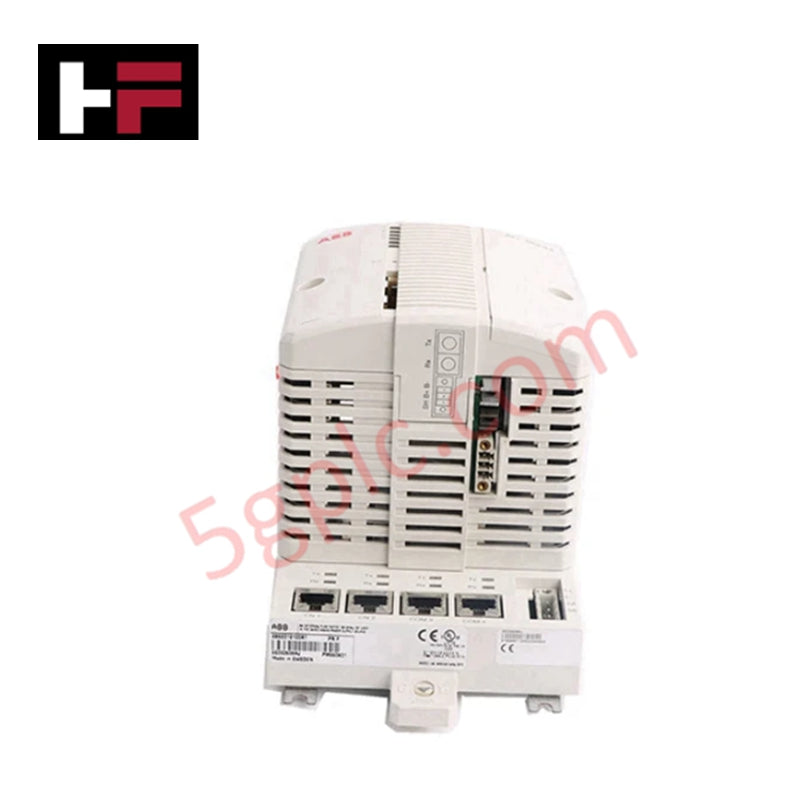
The PM858K02 (3BSE082896R1) redundant processor unit is part of ABB’s AC800M controller family, engineered for high-availability automation systems. It combines fast cycle execution, robust communication protocols, and redundancy features to ensure continuous operation in demanding industrial environments.
Technical Specifications
-
Processor: MPC866 embedded CPU
-
Redundancy Switch-over Time: ≤ 10 ms
-
Application Handling:
-
32 applications per controller
-
64 programs per application
-
128 diagrams per application
-
32 tasks per controller
-
Cycle Times:
-
32 configurable cycle times
-
Minimum cycle time down to 1 ms
-
Firmware Storage: 4 MB Flash PROM
-
Power Supply: 24 V DC (range 19.2–30 V DC)
-
Power Consumption: Typical 210 mA, maximum 360 mA
-
Power Dissipation: 5.1 W (maximum 8.6 W)
-
Redundant Power Input: Supported
-
Backup Battery: Lithium 3.6 V
-
Clock Synchronization: 1 ms accuracy via CNCP protocol
-
Event Handling:
-
Up to 3000 events per OPC client
-
Transmission speed: 36–86 events/sec, 113–143 data messages/sec
-
Communication Modules (CEX bus): Up to 12 modules, max 2.4 A supply current
-
I/O Clusters:
-
Non-redundant CPU: 1 electrical + 7 optical
-
Redundant CPU: 7 optical
-
I/O Capacity: Max 96 modules (single PM866) or 84 modules (redundant PM866)
-
Modulebus Scan Rate: 0–100 ms (depending on I/O count)
-
Electrical Modulebus Supply Current:
-
24 V: max 1.0 A
-
5 V: max 1.5 A
-
Ethernet:
-
2 channels, IEEE 802.3 standard
-
10 Mbit/s, RJ-45 (8-pole female)
-
Control Network Protocols: MMS and IAC
-
Recommended Backbone: 100 Mbit/s switched Ethernet
-
Real-time Clock Stability: 100 ppm (~1 h/year)
-
RS-232 Interfaces:
-
2 ports (general + service tool)
-
COM3 (non-redundant only): 75–19,200 baud, RJ-45, full RTS-CTS support
-
COM4 (non-redundant only): 9,600 baud, RJ-45, opto-isolated, no RTS-CTS support
Application Scenarios
-
Redundant CPU configurations for mission-critical process industries
-
OPC-based event-driven automation systems
-
Distributed control networks requiring synchronized cycle times
FAQ
Q: How fast is the redundancy switch-over? A: The PM858K02 achieves a maximum of 10 ms switch-over, ensuring minimal disruption.
Q: What is the maximum I/O capacity supported? A: Up to 96 modules with a single PM866, or 84 modules in redundant PM866 configurations.
Q: Can the unit synchronize with other AC800M controllers? A: Yes, synchronization accuracy is 1 ms using CNCP protocol.
Q: How does PM858K02 differ from PM858AK01? A: PM858K02 is optimized for redundancy and event handling, while PM858AK01 is a CPU board variant with similar architecture but different integration scope.
Additional Information
- 100% Genuine Parts: All products are original and authentic, ensuring reliable industrial performance.
- 30-Day Refund Guarantee: Return any in-stock item within 30 days in original, unopened packaging for a full refund (excluding shipping and fees).
- 12-Month Warranty: Covers defects in materials or workmanship; excludes misuse, normal wear, or unauthorized modifications.
- Worldwide Shipping: We ship via USPS, UPS, FedEx, and DHL. Delivery times vary by country and may be subject to customs or import fees.
- Support & Contact: Technical and warranty assistance is available anytime. Contact us here: Contact.
- Purchase Guidance: Check product specifications and compatibility carefully before ordering to ensure proper application.




Tech & Buying Guide

Why 24V DC Power Supplies Standardize Modern Industrial Automation
Industrial control cabinets worldwide rely on 24V DC as the universal power standard for field instrumentation, sensors, and controllers. Walk into any manufacturing plant, and you will find PLCs, human-machine interfaces (HMIs), and smart actuators running on extra-low voltage DC. Standardizing on 24V DC enhances operational safety, lowers cabinet footprint, and maintains steady control performance across factory networks.

Essential Motion Control Commands: A Practical Guide for Engineers
Automation engineers often rely on precise position and speed control to drive modern factory machinery. Modern industrial systems, such as Programmable Logic Controllers (PLCs) and Distributed Control Systems (DCS), depend heavily on standardized motion instructions. Mastering these commands ensures operational safety, protects mechanical components, and optimizes cycle times across production lines.
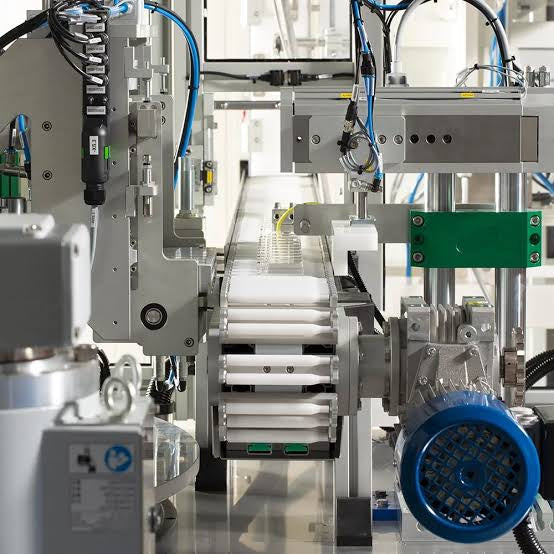
Mastering Modern Industrial Joystick Controls in Heavy Automation
Industrial joysticks play a pivotal role in human-machine interaction across heavy material handling and mobile hydraulics. These tactile controllers translate complex operator movements into precise electrical signals for PLCs, motion controllers, and DCS networks. Consequently, selecting and installing the right joystick architecture ensures operator safety, reduces fatigue, and optimizes equipment performance.