










Product Details
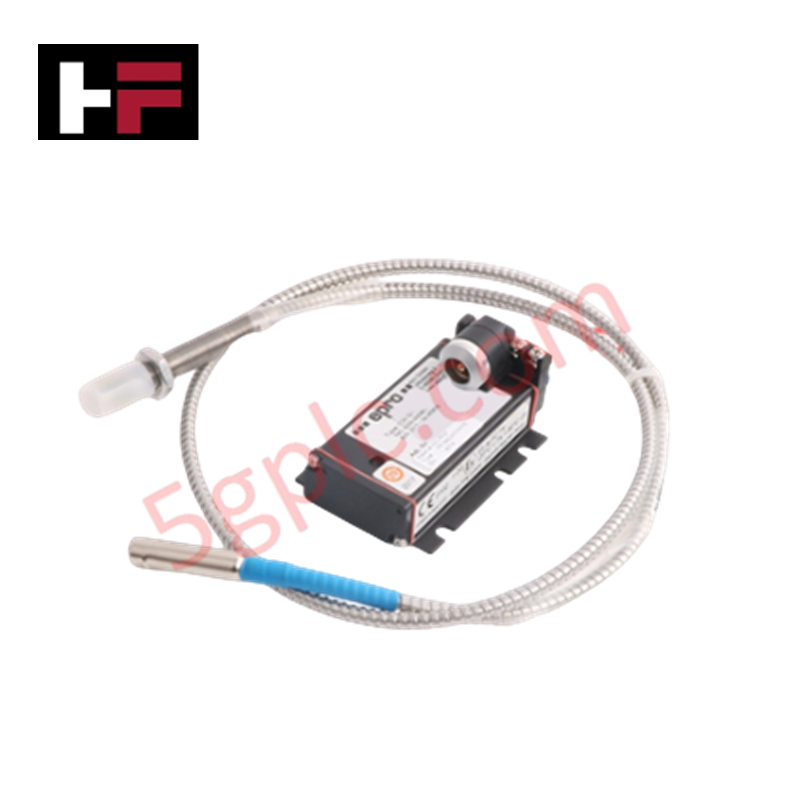
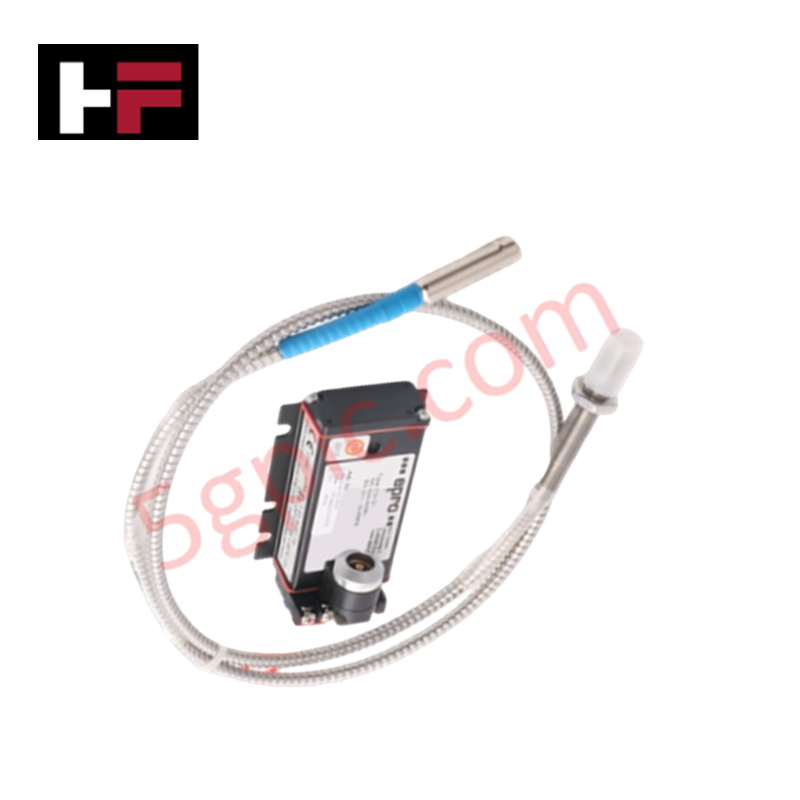
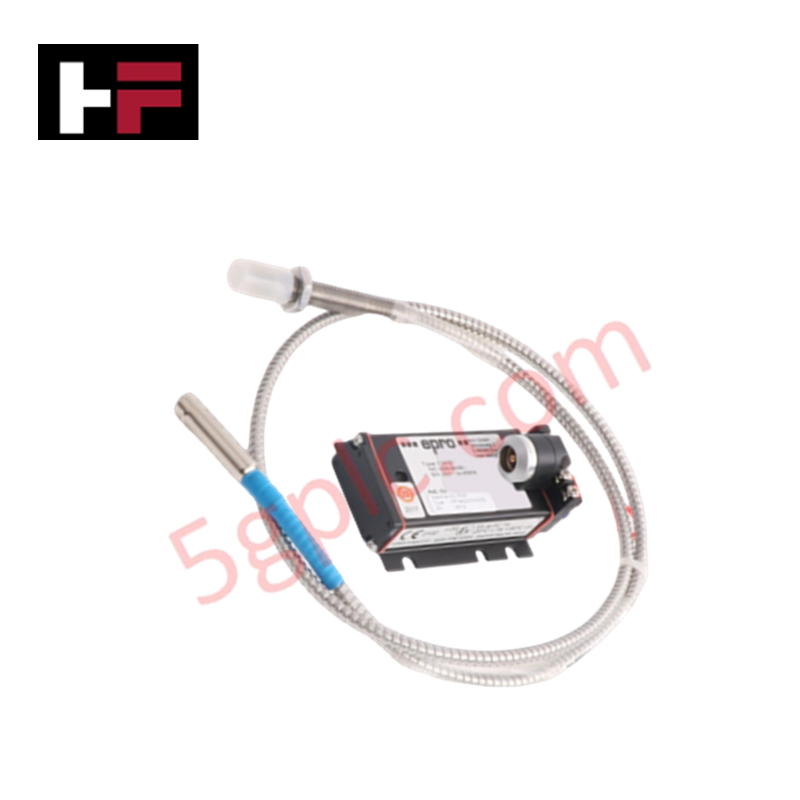
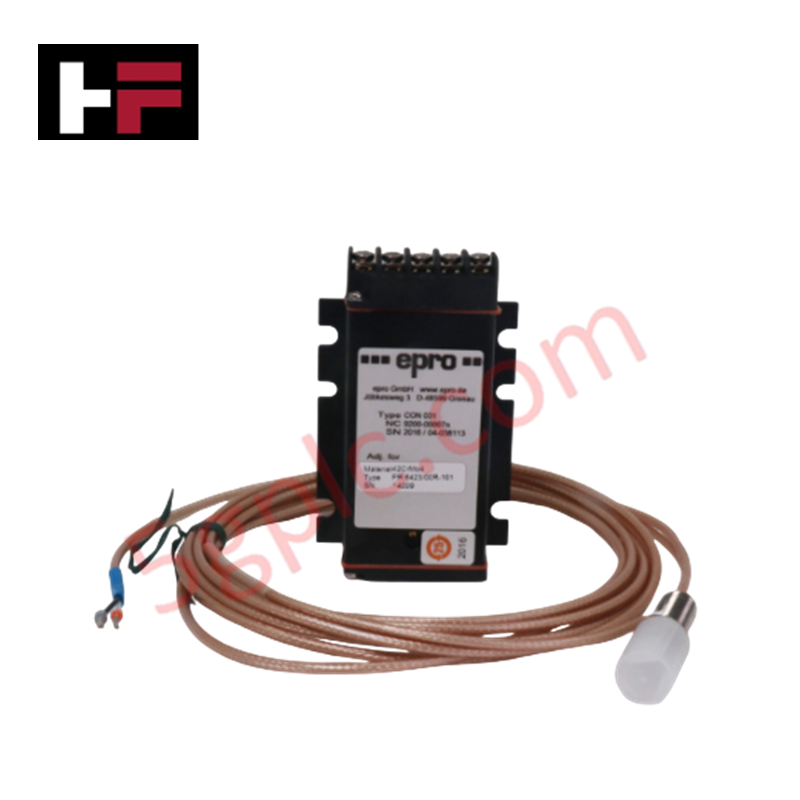
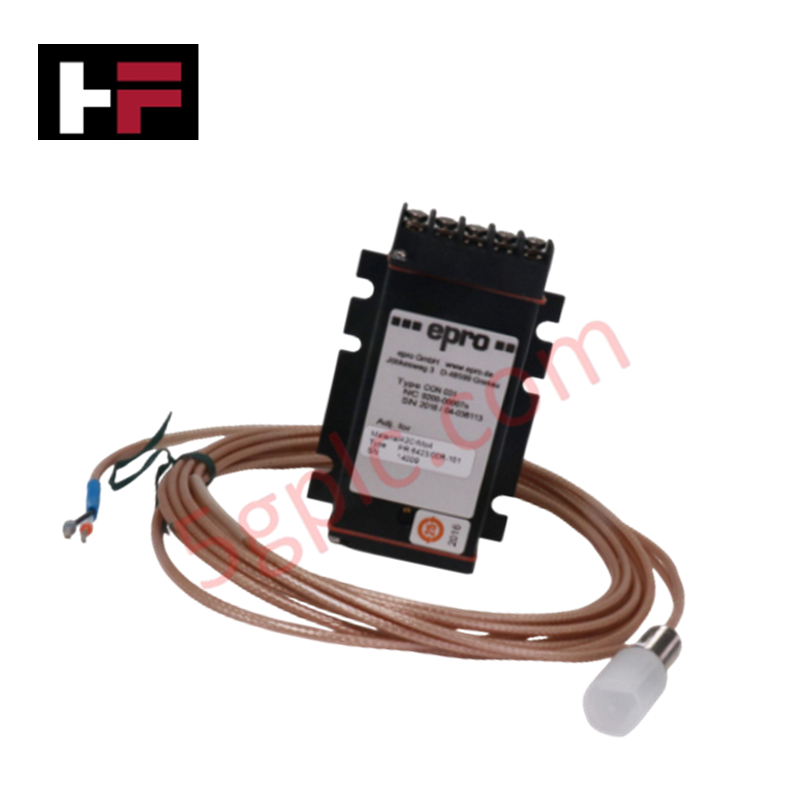
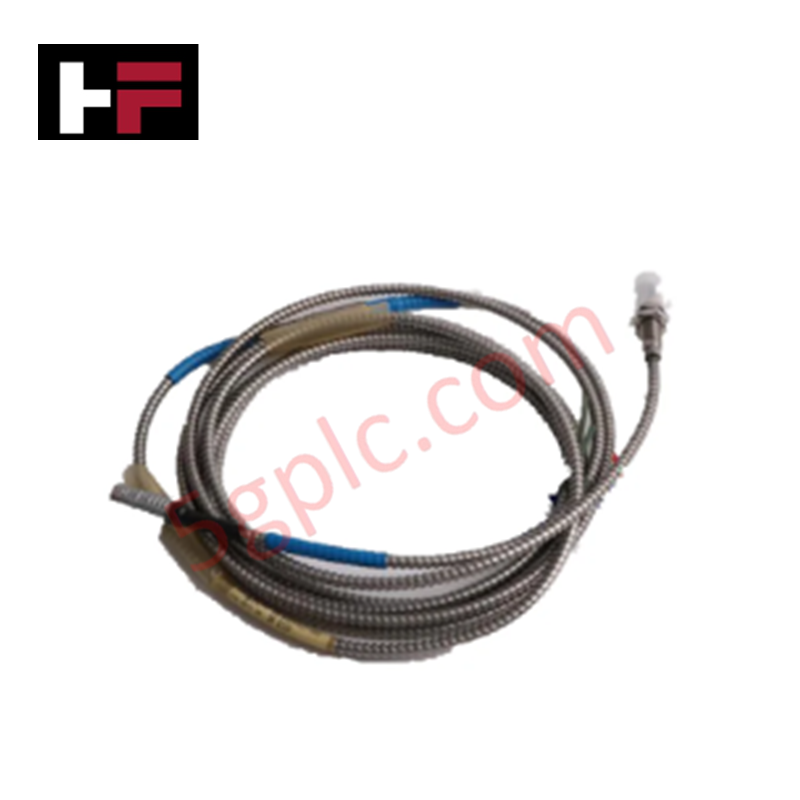
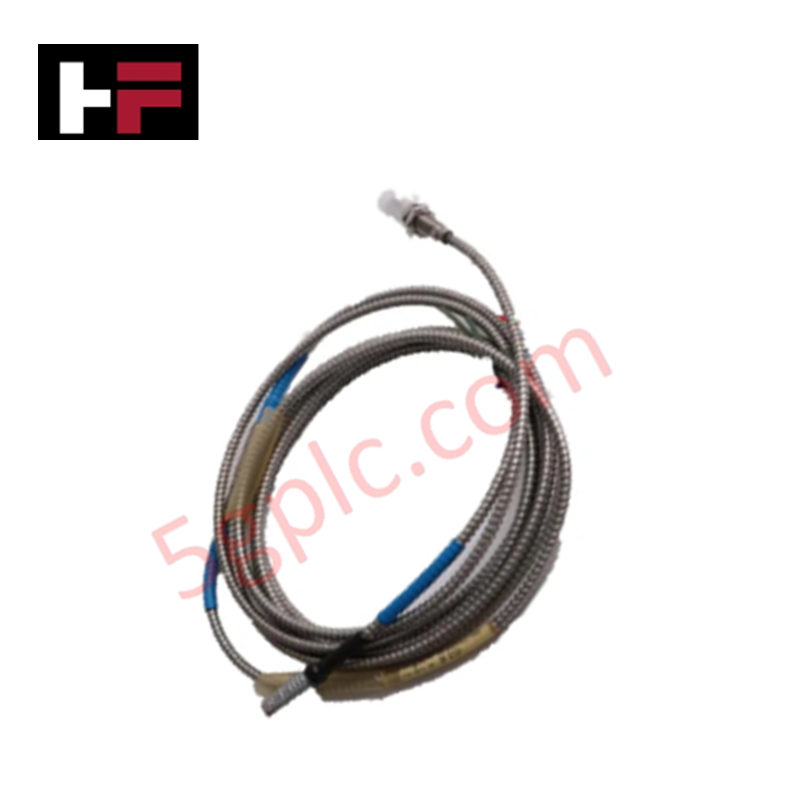
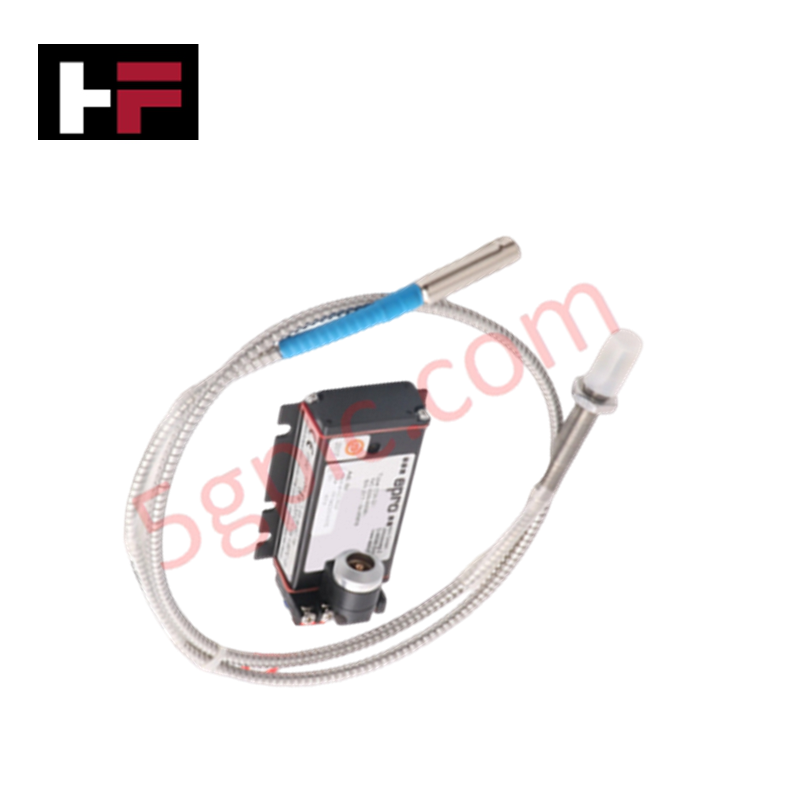
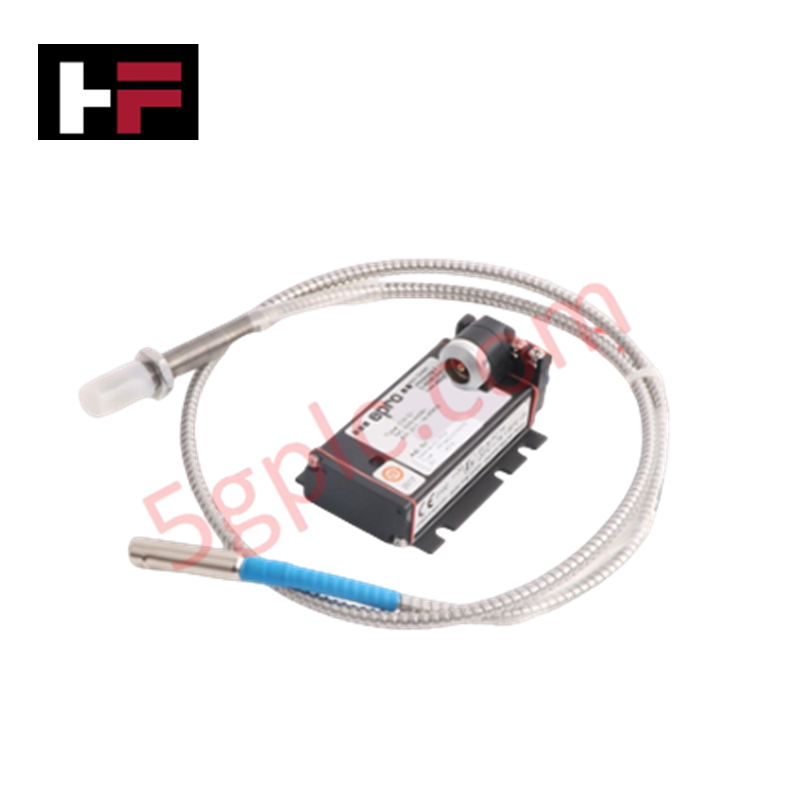
The Emerson CON021+PR6423/010-010-CN, also cataloged as the CON021+PR6423 Eddy Current Sensor System, operates as a dedicated hardware component for non-contact shaft displacement and vibration measurement within MMS 6000 and Ovation machinery protection networks.
Hardware Specifications
| Parameter | Specification |
|---|---|
| Model | CON021+PR6423/010-010-CN |
| Brand | Emerson |
| Origin | USA / Germany |
| Weight | Converter: 0.2 kg; Sensor assembly: approx. 0.15 kg |
| Dimensions | Converter: 4.4 cm x 10.2 cm x 10.8 cm; Sensor tip diameter: 8 mm |
| Operating Temp | Sensor Head & 1 m Lead: -35 to +200 deg C; Cable & Connector: -35 to +150 deg C; Driver ISF Calibration Window: 0 to +45 deg C |
| Power Consumption | Powered via monitoring rack backplane / loop supply |
| Measuring Range | 2.0 mm (80 mils) nominal |
| Initial Air Gap | 0.5 mm (20 mils) |
| Incremental Scale Factor (ISF) | 8 V/mm (203.2 mV/mil) +/- 5% |
| Deviation from Straight Line (DSL) | +/- 0.025 mm (+/- 1 mil) |
| Target Material | 42CrMo4 (AISI/SAE 4140) standard ferromagnetic steel |
| Minimum Shaft Diameter | 25 mm |
| Cable Option (010-010) | 1.0 m integral cable length with unarmored/standard cable jacket |
| Enclosure Protection | IP66 (IEC 60529) sensor head; PEEK sensor tip |
4-20 mA HART Loop Protocol and Channel Isolation
The CON021 signal converter conditions high-frequency magnetic field perturbations generated by the PR6423 sensor tip into a high-fidelity analog voltage output (-2 VDC to -18 VDC linear window). Designed for integration with upstream TSI and DCS platforms, the driver circuit includes high channel-to-channel isolation and low-pass filtering. This design prevents common-mode noise and cross-talk from nearby 4-20 mA HART loops or high-voltage lines, ensuring reliable telemetry in high-EMI power generation and turbine environments.
Frequently Asked Questions
Q: What physical features distinguish the /010-010 configuration from armored probe variants?
A: The /010-010 suffix designates a 1.0-meter integral probe lead without flexible stainless steel armor conduit, making it suitable for internal bearing housings or applications utilizing external protective tubing.
Q: How is the correct installation air gap verified electrically during setup?
A: Set the mechanical gap to approximately 0.5 mm, then verify that the CON021 signal output rests within the middle of its linear voltage band (typically around -10 VDC gap voltage) prior to locking down the mounting threads.
Q: What material properties are required for the target surface?
A: Calibrated system sensitivity relies on a standard ferromagnetic steel target, specifically 42CrMo4 (AISI/SAE 4140), with a minimum shaft diameter of 25 mm.
Field Installation Guidelines
- Mount the PR6423 threaded stainless steel sensor body into the bearing housing casing using a rigid bracket to minimize mechanical vibration.
- Advance the probe toward the shaft until the static gap measures 0.5 mm or the driver output reads -10 VDC gap voltage.
- Route the 1.0 m integral PTFE lead through clean cable paths, avoiding sharp metal edges or tight bends that exceed minimum bend radius limits.
- Fasten the CON021 converter onto an aluminum DIN-rail inside a sheltered junction box, ensuring low-resistance cabinet earth bonding.
- Connect probe extension cables to the CON021 terminals, anchoring cable drain shields to a dedicated system earth point to eliminate ground loop currents.
Additional Information
- 100% Genuine Parts: All products are original and authentic, ensuring reliable industrial performance.
- 30-Day Refund Guarantee: Return any in-stock item within 30 days in original, unopened packaging for a full refund (excluding shipping and fees).
- 12-Month Warranty: Covers defects in materials or workmanship; excludes misuse, normal wear, or unauthorized modifications.
- Worldwide Shipping: We ship via USPS, UPS, FedEx, and DHL. Delivery times vary by country and may be subject to customs or import fees.
- Support & Contact: Technical and warranty assistance is available anytime. Contact us here: Contact.
- Purchase Guidance: Check product specifications and compatibility carefully before ordering to ensure proper application.




Tech & Buying Guide

Master Acceptance Testing: Understanding FAT and SAT in Industrial Control Systems
Factory Acceptance Testing (FAT) and Site Acceptance Testing (SAT) serve as critical quality assurance gateways in complex industrial control systems. Both procedures verify that programmable logic controllers (PLCs), distributed control systems (DCS), and associated field devices meet strict functional specifications. However, executing these tests effectively requires clear delineation between off-site staging and final field commissioning.

Industrial Networking Essentials: Demystifying Hubs, Switches, and Routers in Control Systems
Industrial automation relies heavily on robust networking infrastructure to connect programmable logic controllers (PLCs), distributed control systems (DCS), and human-machine interfaces (HMIs). Modern factory automation environments generate vast amounts of real-time operational data across deterministic networks. Understanding the structural differences between hubs, switches, and routers ensures optimal traffic segmentation, minimizes latency, and maintains high network availability.

Safety Relays in Industrial Automation: Fundamentals, Design Standards, and Fail-Safe Architecture
Safety relays form the bedrock of functional safety in modern factory automation, preventing catastrophic equipment failure and protecting plant personnel. While standard electromechanical relays handle basic load switching, they lack the redundant diagnostics required for high-risk industrial environments. Modern industrial automation platforms—including programmable logic controllers (PLCs) and distributed control systems (DCS)—rely on specialized safety relays to monitor field devices and isolate hazards instantly.