










Product Details
Product Overview
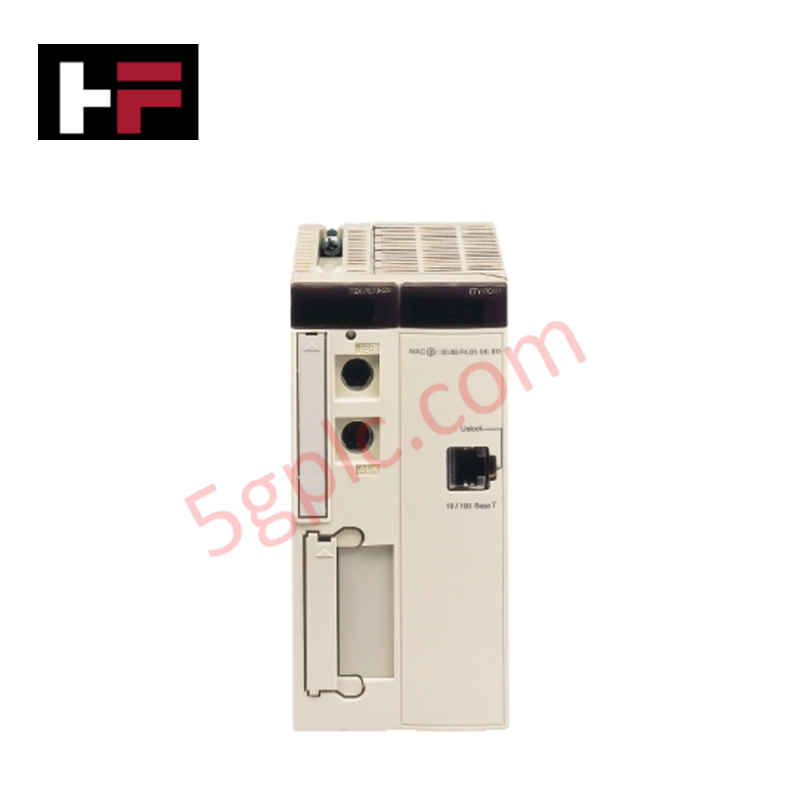
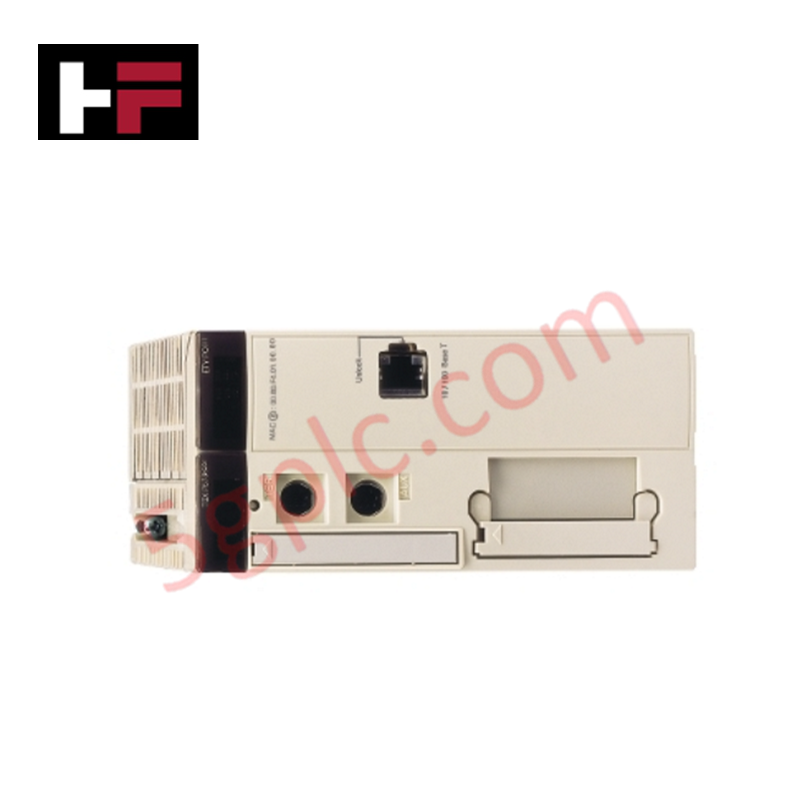
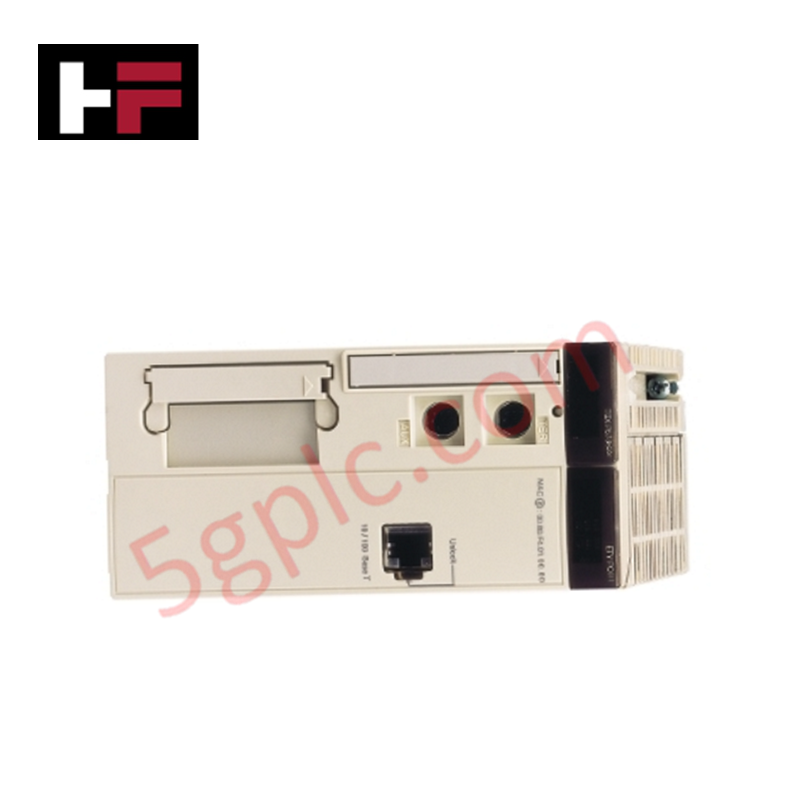
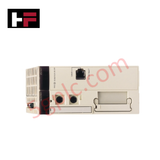
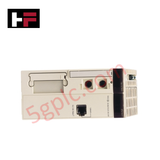
The Schneider Electric TSXP57303AM serves as a high-capacity, double-format central computing core within the Modicon Premium Automation platform. This powerful processor runs complex automation architectures, executing advanced logic control, multi-loop PID operations, and extensive fieldbus coordination via PL7 Junior or Pro software environments. By managing massive discrete and analog I/O counts across multi-rack topologies, this processor coordinates central data synchronization and precise field actuation for chemical processing lines, automotive assembly loops, and heavy industrial water filtration plants.
Technical Specifications
| Parameter | Technical Specification Value |
| Manufacturer | Schneider Electric |
| Model / Part Number | TSXP57303AM |
| Range of Product | Modicon Premium Automation platform |
| Product Type | Double-format PL7 central processing unit |
| Condition | 100% Brand New Original |
| Software Designation | PL7 Junior / PL7 Pro |
| Rack Capacity Limits |
Up to 16 racks (with 4, 6, or 8 slots) Up to 8 racks (with 12 slots) |
| Maximum System Slots | Supports 64, 96, or 128 slots depending on rack layout |
| Discrete I/O Processing Bounds | Up to 1024 Discrete I/O points |
| Analogue I/O Processing Bounds | Up to 128 Analogue I/O channels |
| Application Specific Channels | 32 dedicated channels |
| Process Control Loop Capacity | 15 up to 45 simple PID control loops |
| Integrated Connection Interfaces |
Non-isolated serial link: 2 x female mini-DIN connectors (Supports 19.2 to 115 kbit/s data transmission) |
| Communication Module Capacity |
2 x Fieldbus modules max (Limits to 1 if utilizing CANopen) 8 x AS-Interface bus modules 1 x Dedicated CANopen master card 3 x Network infrastructure modules |
| Onboard Volatile Memory (No Card) | 64 Kwords shared for application program and working data |
| Expanded Memory Capacity (With Card) |
Internal RAM tracks 80 Kwords of dedicated data PCMCIA card adds 384 Kwords program capacity PCMCIA card provides 2688 Kwords additional data storage |
| Maximum Data Object Areas |
16384 %Mi located internal bits 30.5 %MWi internal located data words 32 %KWi constant located internal words |
| Application Priority Structure | 1 master task, 64 event tasks, 1 fast task |
| Instruction Execution Velocity |
Boolean: 0.12 µs (no card) / 0.17 µs (with PCMCIA) Word/Fixed Arithmetic: 0.17 µs (no card) / 0.33 µs (with PCMCIA) Floating Point Math: 2.5 µs (no card) / 2.6 µs (with PCMCIA) |
| Processing Throughput Performance |
Boolean Only: 6.57 Kinst/ms (no card) / 4.49 Kinst/ms (with PCMCIA) Mixed (65% Boolean / 35% Fixed): 4.7 Kinst/ms (no card) / 3.08 Kinst/ms (with PCMCIA) |
| System Processing Overhead | 0.29 ms for fast task / 1.15 ms for master task |
| Visual Diagnostic LED Indicators |
Green LED: Processor running state (RUN) Red LED: I/O module or configuration fault (I/O) Red LED: Processor hardware or system error (ERR) Yellow LED: Traffic activity on terminal communication port (TER) |
| Power Requirements | 1000 mA current consumption at 5 V DC |
| Physical Enclosure Format | Double-format width housing |
| Product Net Weight | 0.52 kg (1.15 lb) |
Engineering Advantages
-
Double-Format Multi-Bus Architecture Consolidation: Complex factory layouts often require separate standalone hardware interfaces to control AS-Interface sensor paths, CANopen motion setups, and standard serial telemetry lines. The TSXP57303AM provides a double-width mechanical format that houses massive multi-protocol communication engines natively. The card concurrently coordinates up to 8 AS-Interface bus networks, 1 master CANopen ring, and 3 distinct network infrastructure modules, allowing facilities to tie disjointed floor layers into a single Premium rack slot.
-
Massive Multi-Rack IO Scaling via High-Capacity Memory Expansion: Large manufacturing processes can outgrow standard PLC memory profiles quickly, forcing expensive processor upgrades. The TSXP57303AM scales smoothly by utilizing dual-stage memory architecture. While the base module operates with 64 Kwords of program space, sliding a high-density PCMCIA card into the integrated front port unlocks 384 Kwords of program memory and an extra 2688 Kwords of dedicated data storage, giving the processor ample room to address up to 1024 discrete points and 128 analog paths across 16 interconnected remote racks.
-
Dual Mini-DIN High-Speed Serial Link Access: Field technicians often need to configure local terminal settings or query internal registers while the main processor communicates continuously with an underlying HMI screen. This module includes two independent integrated female mini-DIN serial connectors directly on the front panel faceplate. Operating at up to 115 kbit/s, this dual-port link gives maintenance engineers a dedicated programming channel while the adjacent port sustains constant process visualization data streams without signal degradation.
-
Prioritized Multi-Tasking Execution Engine: Mixing high-frequency safety interruptions or high-speed encoder indexing with slow, heavily dampening temperature control algorithms can destabilize standard single-threaded PLC processing speeds. The TSXP57303AM executes a highly structured application framework containing 1 master background task, 1 fast task, and up to 64 independent, event-triggered tasks. Real-time field interruptions bypass the standard master scan routine instantly, processing fast Boolean commands in 0.12 microseconds to maintain millisecond-level precision on time-critical packaging or stamping loops.
FAQs
-
Is this TSXP57303AM processor module a brand new original item?
Yes. We supply this product strictly as a 100% brand new, original factory-sealed unit. The processor arrives inside its authentic original Schneider Electric box with all factory security stickers intact, unblemished rear gold pins, and original technical inspection paperwork.
-
What is the function of the PCMCIA card slot on this double-format processor?
The front PCMCIA interface slot expands the physical memory limitations of the base processor hardware. Inserting a compatible PCMCIA memory card expands your operating capacity by adding 384 Kwords of application program storage and 2688 Kwords of extensive data logging space, which allows the CPU to process large project code and map extensive word tables.
-
Can this module run on standard single-width Modicon Premium backplane slots?
No. The TSXP57303AM features a physical double-format width specification. It requires two adjacent slot footprints on a standard Modicon Premium rack backplane to accommodate its internal dual-board communication engines and power dissipation hardware. Ensure your rack contains sufficient sequential slot space before mounting.
-
How does the processor handle system and configuration failures?
The processor features an active array of status LEDs on its front panel to accelerate fault tracing. If an internal configuration error or remote I/O drop failure occurs, the green RUN LED switches off while the red I/O fault light or the red system ERR light illuminates continuously. Simultaneously, the CPU flags the specific slot or network register inside the programming software, pointing technicians directly to the point of failure.
Additional Information
- 100% Genuine Parts: All products are original and authentic, ensuring reliable industrial performance.
- 30-Day Refund Guarantee: Return any in-stock item within 30 days in original, unopened packaging for a full refund (excluding shipping and fees).
- 12-Month Warranty: Covers defects in materials or workmanship; excludes misuse, normal wear, or unauthorized modifications.
- Worldwide Shipping: We ship via USPS, UPS, FedEx, and DHL. Delivery times vary by country and may be subject to customs or import fees.
- Support & Contact: Technical and warranty assistance is available anytime. Contact us here: Contact.
- Purchase Guidance: Check product specifications and compatibility carefully before ordering to ensure proper application.




Tech & Buying Guide

Understanding Marshalling Cabinets in Industrial Control Systems Architecture
Industrial control system deployments rely on structured signal distribution to bridge field instrumentation with central processing hardware. A marshalling cabinet serves as the vital intermediate connection point between heavy field home-run multi-pair cables and delicate input/output (I/O) modules housed inside Programmable Logic Controller (PLC) or Distributed Control System (DCS) enclosures. By segregating field cable terminations from control hardware, engineers maintain system flexibility, safeguard controller components, and streamline commissioning workflows.

FAT vs SAT in Industrial Control Systems: Key Differences and Execution Guide
Industrial control system deployment relies on strict verification protocols to guarantee operational safety, system stability, and regulatory compliance. Commissioning complex Programmable Logic Controller (PLC) racks, Distributed Control Systems (DCS), and Safety Instrumented Systems (SIS) requires two critical milestones: the Factory Acceptance Test (FAT) and the Site Acceptance Test (SAT). Both procedures validate that system automation meets design specifications, but they occur at different stages of project execution and target distinct operational risks.

Hub vs Switch vs Router in Industrial Automation Architecture
Modern factory automation relies on reliable industrial networking infrastructure to exchange real-time field data across operational technology systems. Engineers often encounter networking hardware like hubs, switches, and routers when integrating Programmable Logic Controllers, Distributed Control Systems, and SCADA monitoring nodes. Although these devices share physical ports, they operate at different layers of the Open Systems Interconnection reference model and deliver distinct traffic management capabilities.