










Product Details
Product Overview
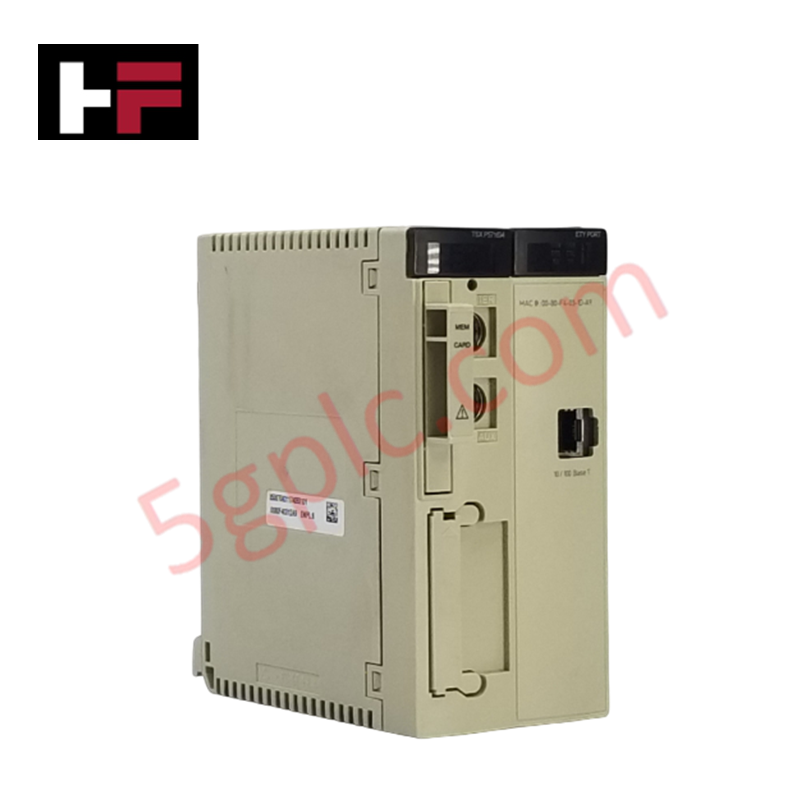
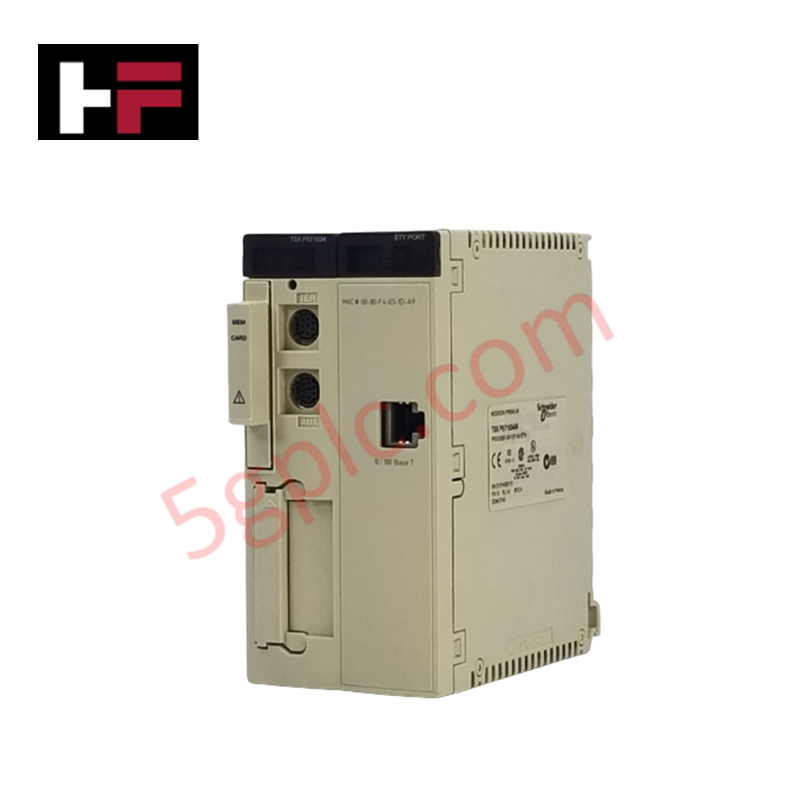
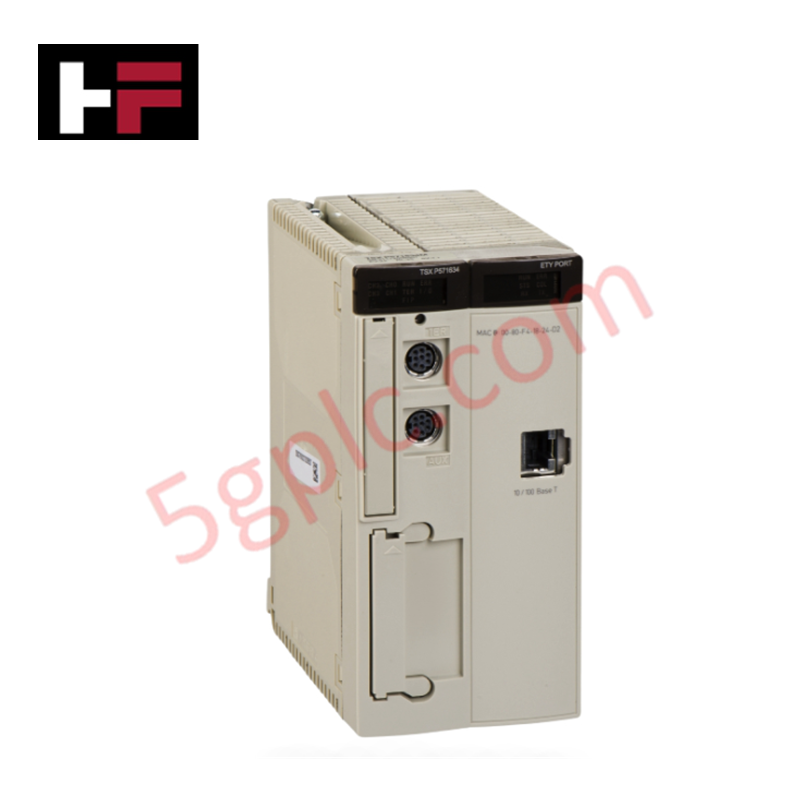
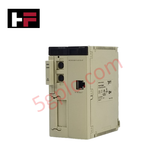
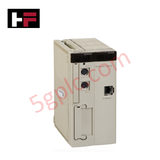
The Schneider Electric TSXP571634M serves as a high-performance Unity processor within the Modicon Premium automation platform. This double-format module executes complex processing, machine control, and industrial networking operations via Unity Pro software. It natively bridges field-level digital and analog data directly to plant-wide Ethernet TCP/IP networks, maintaining fast cycle times across large-scale distributed architectures. We guarantee this processor arrives in 100% brand new, original factory-sealed packaging.
Technical Specifications
| Parameter | Specification |
| Manufacturer | Schneider Electric |
| Product Line | Modicon Premium Automation Platform |
| Part Number | TSXP571634M |
| Product Type | Unity Processor Module |
| Software Designation | Unity Pro |
| Discrete I/O Capacity | 512 I/O |
| Analogue I/O Capacity | 24 I/O |
| Application Specific Channels | 8 |
| Integrated Communications |
1 x Ethernet TCP/IP (RJ45, 10BASE-T/100BASE-TX) 2 x Non-isolated serial link (Female Mini-DIN RS485, 19.2 kbit/s) |
| Base Onboard Memory | 96 kB Internal RAM for program and data (Without PCMCIA) |
| Memory Expansion Capacity | Up to 224 kB program / 96 kB data / 256 kB additional storage via PCMCIA card |
| Maximum Object Areas | 32 kB unlocated data, 4096 %Mi bits, 64 %KWi constants, 64 %MWi words |
| Application Task Structure | 1 Master task, 1 Fast task, 32 Event tasks |
| Execution Speed (Boolean) | 0.19 µs without PCMCIA / 0.25 µs with PCMCIA |
| Instruction Throughput (Max) | 4.76 Kinst/ms (100% Boolean without PCMCIA) |
| Current Consumption | 1650 mA at 5 V DC |
| Module Format / Weight | Double Format / 0.74 kg |
Engineering Advantages
-
Integrated Ethernet and Serial Infrastructure: The faceplate combines a 10/100 Mbps auto-sensing Ethernet TCP/IP RJ45 port alongside dual RS485 mini-DIN serial links. This hardware consolidation allows the processor to talk to supervisory SCADA systems over Ethernet while simultaneously scanning local variable frequency drives and modbus instrumentation over serial, eliminating external communication bridging cards.
-
Deterministic Task Prioritization: The execution engine splits application logic into 1 master task, 1 fast task, and up to 32 independent event tasks. This layout isolates critical, time-sensitive inputs—such as emergency stop loops or high-speed registration marks—from slower background data-logging routines, keeping process cycle times rock-solid.
-
Granular Real-Time Diagnostic Array: Ten distinct, front-facing LEDs present real-time diagnostics covering processor state (RUN/ERR), I/O bus health, and Ethernet link behavior (TX/RX/COL). Field technicians isolate network hardware collisions, configuration faults, or backplane bus drops instantly without hooking up a maintenance computer.
-
High-Density I/O Matrix Handling: The card manages 512 discrete I/O points, 24 analog channels, and 8 application-specific loops across a distributed layout of up to four 4/6/8-slot racks or two dense 12-slot racks. This capacity provides sufficient headroom to automate complete processing cells, water treatment stations, or material handling skids from a single slot footprint.
FAQs
-
Does this TSXP571634M processor arrive with a PCMCIA memory card pre-installed?
No. The processor houses an onboard internal RAM base of 96 kB for standalone operations. If your Unity Pro program requires additional code space or extensive %MW internal data logging storage, you must purchase and insert a compatible Schneider PCMCIA memory expansion card separately.
-
Can I program this module using legacy PL7 Junior or PL7 Pro software?
No. The TSXP571634M features an upgraded Unity-ready bootloader. It requires Schneider Electric’s Unity Pro (or EcoStruxure Control Expert) programming environment to compile, download, and configure the application hardware parameters.
-
What are the installation guidelines regarding backplane current restrictions?
The double-format TSXP571634M processor draws a substantial 1650 mA from the internal 5V DC backplane power rail. When configuring your Modicon Premium rack, you must calculate the total current draw of all combined I/O cards to ensure the rack’s primary power supply module provides sufficient current capacity.
-
Is this an authentic new component, and does it retain a factory seal?
Yes. We guarantee this TSXP571634M processor arrives as a 100% brand new, authentic Schneider Electric factory product. The unit ships inside its original corporate packaging, complete with untouched anti-static wraps, original quality control stamps, and pristine serial number labels.
Additional Information
- 100% Genuine Parts: All products are original and authentic, ensuring reliable industrial performance.
- 30-Day Refund Guarantee: Return any in-stock item within 30 days in original, unopened packaging for a full refund (excluding shipping and fees).
- 12-Month Warranty: Covers defects in materials or workmanship; excludes misuse, normal wear, or unauthorized modifications.
- Worldwide Shipping: We ship via USPS, UPS, FedEx, and DHL. Delivery times vary by country and may be subject to customs or import fees.
- Support & Contact: Technical and warranty assistance is available anytime. Contact us here: Contact.
- Purchase Guidance: Check product specifications and compatibility carefully before ordering to ensure proper application.




Tech & Buying Guide

Understanding Marshalling Cabinets in Industrial Control Systems Architecture
Industrial control system deployments rely on structured signal distribution to bridge field instrumentation with central processing hardware. A marshalling cabinet serves as the vital intermediate connection point between heavy field home-run multi-pair cables and delicate input/output (I/O) modules housed inside Programmable Logic Controller (PLC) or Distributed Control System (DCS) enclosures. By segregating field cable terminations from control hardware, engineers maintain system flexibility, safeguard controller components, and streamline commissioning workflows.

FAT vs SAT in Industrial Control Systems: Key Differences and Execution Guide
Industrial control system deployment relies on strict verification protocols to guarantee operational safety, system stability, and regulatory compliance. Commissioning complex Programmable Logic Controller (PLC) racks, Distributed Control Systems (DCS), and Safety Instrumented Systems (SIS) requires two critical milestones: the Factory Acceptance Test (FAT) and the Site Acceptance Test (SAT). Both procedures validate that system automation meets design specifications, but they occur at different stages of project execution and target distinct operational risks.

Hub vs Switch vs Router in Industrial Automation Architecture
Modern factory automation relies on reliable industrial networking infrastructure to exchange real-time field data across operational technology systems. Engineers often encounter networking hardware like hubs, switches, and routers when integrating Programmable Logic Controllers, Distributed Control Systems, and SCADA monitoring nodes. Although these devices share physical ports, they operate at different layers of the Open Systems Interconnection reference model and deliver distinct traffic management capabilities.