












Product Details
Product Overview
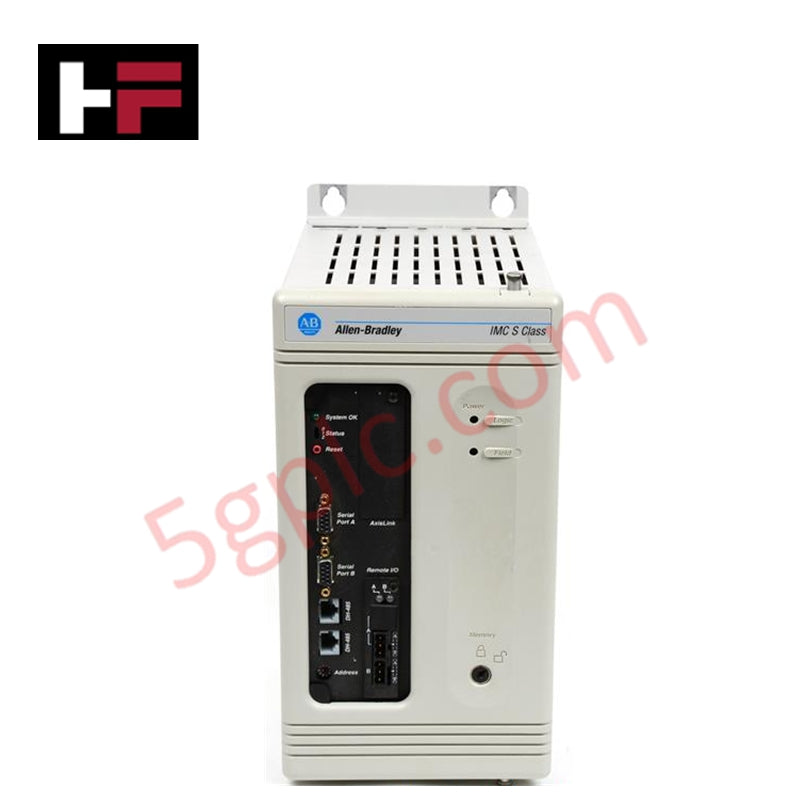
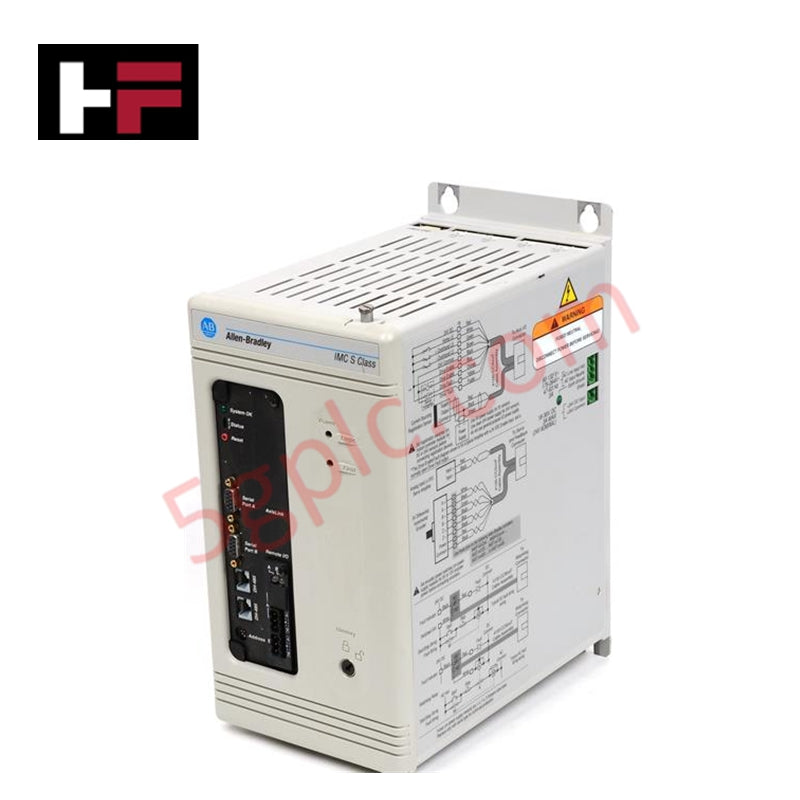
The Allen-Bradley 4100-234-R functions as a high-performance standalone motion controller within the IMC S-Class product line. This unit manages up to four axes of motion with precision, utilizing an Intel 80960SB microprocessor clocked at 16 MHz. It serves as a central hub for complex synchronized movements in compact automation cells. We supply this controller as 100% Brand New and Original, ensuring legacy systems maintain the exact timing and signal integrity required for mission-critical production lines.
Technical Specifications
The 4100-234-R integrates robust processing power with extensive I/O capabilities to handle high-resolution motion tasks.
-
Manufacturer: Allen-Bradley / Rockwell Automation
-
Product Line: IMC S-Class
-
Platform: Stand Alone / Compact
-
Axis Count: 4-Axis Control
-
Microprocessor: Intel 80960SB at 16 MHz
-
Resolution: 16 bits
-
Analog Output Range: +/- 10 Volts DC
-
Discrete Inputs: 20 Dedicated Channels
-
Input Voltage (Main): 90-132V AC or 175-264V AC (Selectable)
-
I/O Power Input: 5-40 Volts DC
-
Communication: Serial Port (Standard); Remote I/O (Optional)
-
Weight: 17.00 lbs (7.71 kg)
Engineering Advantages
-
High-Resolution Servo Command: The 16-bit resolution architecture ensures exceptionally smooth velocity profiles and positioning accuracy. This high granularity allows the controller to command subtle adjustments in motor torque and speed, reducing mechanical wear on drive components.
-
Intel 80960SB Processing Power: The dedicated 32-bit RISC microprocessor handles complex kinematic calculations locally. By offloading these tasks from a primary PLC, the 4100-234-R achieves faster loop update rates and superior synchronization between all four axes.
-
Flexible Industrial Networking: Standard serial ports facilitate direct peripheral interfacing, while the Remote I/O (RIO) option integrates the controller into larger Allen-Bradley architectures. This allows a master PLC-5 or SLC 500 system to monitor motion status and trigger profiles over the RIO network.
-
Robust I/O Density: 20 dedicated discrete inputs allow for direct wiring of limit switches, home sensors, and operator interface buttons. This direct-to-controller wiring minimizes signal propagation delay, ensuring the system responds to physical safety or end-of-travel limits in real-time.
FAQs
-
How do I configure the input voltage for the 4100-234-R? The unit supports both 110V and 220V AC nominal ranges. You must verify the internal jumper settings or terminal wiring according to the manual before applying power to prevent damage to the internal power supply module.
-
Can I expand the communication capabilities of this unit? Yes. While the unit comes with a standard Serial Port, it supports Remote I/O (RIO) as a communication option. This enables the controller to act as a remote station on an Allen-Bradley RIO network, facilitating centralized data collection and command execution.
-
What is the significance of the 16-bit resolution for my application? The 16-bit resolution provides 65,536 distinct points across the +/- 10V DC output range. This high resolution eliminates "stepping" in analog signals, which provides the fluid motion necessary for precision applications like CNC machining or robotic assembly.
-
Is this unit compatible with modern motors? The 4100-234-R outputs a standard +/- 10V analog signal. It controls any servo drive or motor amplifier that accepts a standard analog velocity or torque reference command, making it a versatile choice for both legacy and newer drive hardware.
Additional Information
- 100% Genuine Parts: All products are original and authentic, ensuring reliable industrial performance.
- 30-Day Refund Guarantee: Return any in-stock item within 30 days in original, unopened packaging for a full refund (excluding shipping and fees).
- 12-Month Warranty: Covers defects in materials or workmanship; excludes misuse, normal wear, or unauthorized modifications.
- Worldwide Shipping: We ship via USPS, UPS, FedEx, and DHL. Delivery times vary by country and may be subject to customs or import fees.
- Support & Contact: Technical and warranty assistance is available anytime. Contact us here: Contact.
- Purchase Guidance: Check product specifications and compatibility carefully before ordering to ensure proper application.




Tech & Buying Guide

Understanding Marshalling Cabinets in Industrial Control Systems Architecture
Industrial control system deployments rely on structured signal distribution to bridge field instrumentation with central processing hardware. A marshalling cabinet serves as the vital intermediate connection point between heavy field home-run multi-pair cables and delicate input/output (I/O) modules housed inside Programmable Logic Controller (PLC) or Distributed Control System (DCS) enclosures. By segregating field cable terminations from control hardware, engineers maintain system flexibility, safeguard controller components, and streamline commissioning workflows.

FAT vs SAT in Industrial Control Systems: Key Differences and Execution Guide
Industrial control system deployment relies on strict verification protocols to guarantee operational safety, system stability, and regulatory compliance. Commissioning complex Programmable Logic Controller (PLC) racks, Distributed Control Systems (DCS), and Safety Instrumented Systems (SIS) requires two critical milestones: the Factory Acceptance Test (FAT) and the Site Acceptance Test (SAT). Both procedures validate that system automation meets design specifications, but they occur at different stages of project execution and target distinct operational risks.

Hub vs Switch vs Router in Industrial Automation Architecture
Modern factory automation relies on reliable industrial networking infrastructure to exchange real-time field data across operational technology systems. Engineers often encounter networking hardware like hubs, switches, and routers when integrating Programmable Logic Controllers, Distributed Control Systems, and SCADA monitoring nodes. Although these devices share physical ports, they operate at different layers of the Open Systems Interconnection reference model and deliver distinct traffic management capabilities.