










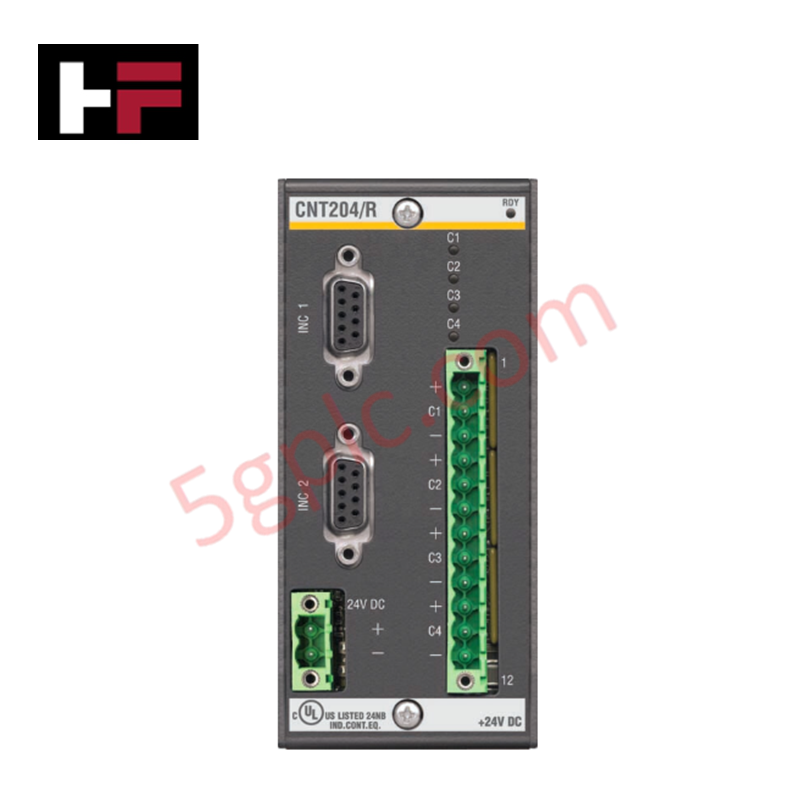
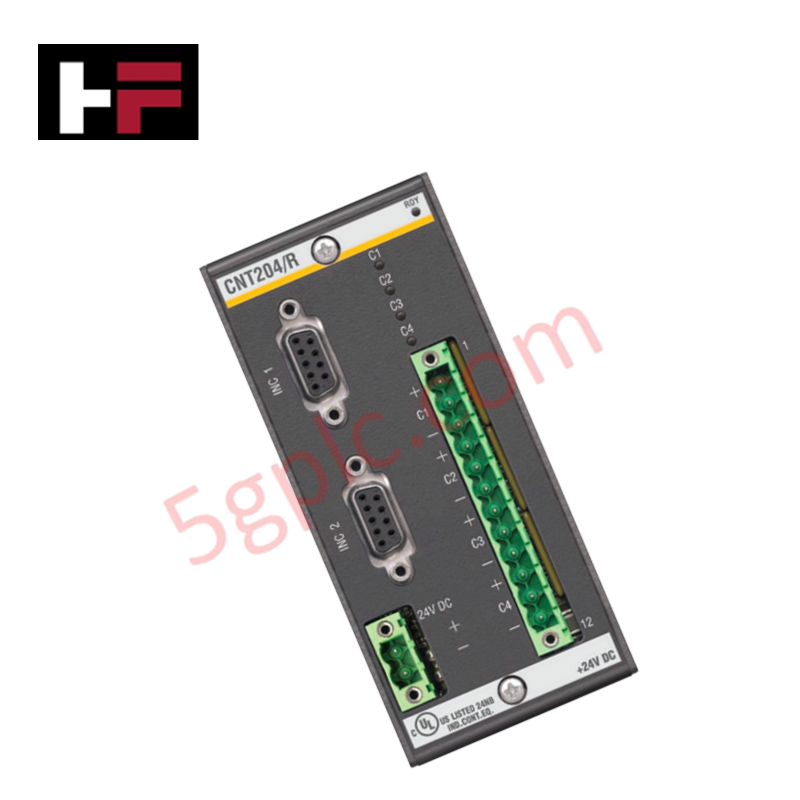
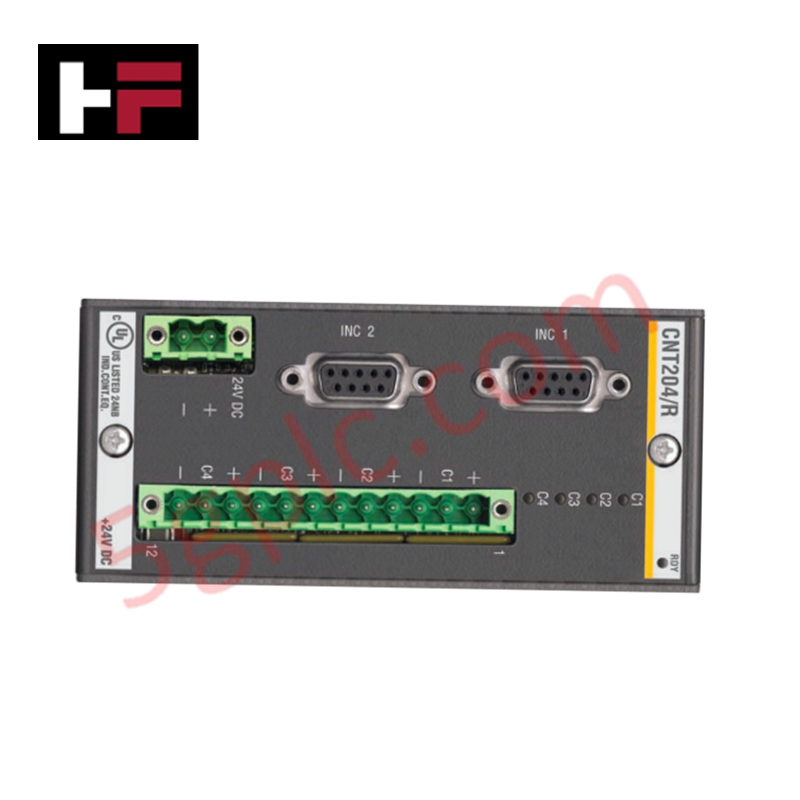
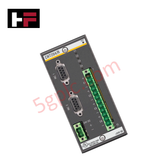
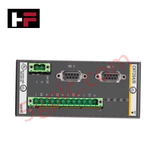
Product Details
Configured for high-speed pulse counting and incremental encoder signal acquisition in M1 control networks, the Bachmann CNT204/R (CNT200 Counter Module) provides direct physical execution of motion feedback and frequency monitoring.
Hardware Specifications
| Parameter | Specification |
|---|---|
| Model | CNT204/R |
| Brand | Bachmann |
| Origin | Germany |
| Weight | Not specified by manufacturer |
| Dimensions | Standard M1 module form factor |
| Operating Temp | -30 to 60 deg C |
| Power Consumption | 18-34 V DC (External) |
| Counter Resolution | 32-bit |
| Max Input Freq | 1 MHz (RS-422) / 300 kHz (HTL) |
| Encoder Supply | +5 V (200 mA) / +24 V (300 mA) |
Profinet / EtherNet/IP Deterministic Networks
The CNT204/R integrates with the M1 system backplane to facilitate deterministic feedback processing. The module utilizes high-speed internal bus communication to report accumulated counts and differential measurements to the central controller within specified scan cycle windows. Firmware flash compatibility is supported via the system backplane, ensuring synchronization with existing I/O density scaling configurations. The module maintains data consistency by processing incremental encoder inputs via differential RS-422 or single-ended HTL signaling, ensuring real-time alignment with the controller's motion control task requirements.
Frequently Asked Questions
Q: Can the HTL counter inputs be used simultaneously with the differential encoder inputs?
A: No. The internal logic limits the total input channel availability. Utilizing the RS-422 differential encoder inputs reduces the available HTL counter inputs from 4 to 2.
Q: Are the encoder power outputs short-circuit protected?
A: Yes. The +5 V and +24 V encoder power supply outputs are hardware-protected against short-circuit conditions to prevent damage to the module circuitry.
Field Installation Guidelines
- Wiring: Use shielded twisted-pair cabling for all encoder and counter signals to minimize electromagnetic interference. Terminate cable shields to a common ground bar as close to the entry point of the control cabinet as possible.
- Signal Integrity: Ensure that unused differential inputs are correctly terminated if signal reflections occur at high frequencies. For HTL signals, maintain strict adherence to voltage levels to avoid logic state ambiguity.
- Power Supply: Ensure the external power supply (18-34 V DC) is rated for the combined load of the module and the connected encoders.
- Environment: While the module is rated for condensation, ensure that direct moisture ingress onto the connectors is prevented to avoid galvanic corrosion of the pins.
Additional Information
- 100% Genuine Parts: All products are original and authentic, ensuring reliable industrial performance.
- 30-Day Refund Guarantee: Return any in-stock item within 30 days in original, unopened packaging for a full refund (excluding shipping and fees).
- 12-Month Warranty: Covers defects in materials or workmanship; excludes misuse, normal wear, or unauthorized modifications.
- Worldwide Shipping: We ship via USPS, UPS, FedEx, and DHL. Delivery times vary by country and may be subject to customs or import fees.
- Support & Contact: Technical and warranty assistance is available anytime. Contact us here: Contact.
- Purchase Guidance: Check product specifications and compatibility carefully before ordering to ensure proper application.
Tech & Buying Guide

Master Acceptance Testing: Understanding FAT and SAT in Industrial Control Systems
Factory Acceptance Testing (FAT) and Site Acceptance Testing (SAT) serve as critical quality assurance gateways in complex industrial control systems. Both procedures verify that programmable logic controllers (PLCs), distributed control systems (DCS), and associated field devices meet strict functional specifications. However, executing these tests effectively requires clear delineation between off-site staging and final field commissioning.

Industrial Networking Essentials: Demystifying Hubs, Switches, and Routers in Control Systems
Industrial automation relies heavily on robust networking infrastructure to connect programmable logic controllers (PLCs), distributed control systems (DCS), and human-machine interfaces (HMIs). Modern factory automation environments generate vast amounts of real-time operational data across deterministic networks. Understanding the structural differences between hubs, switches, and routers ensures optimal traffic segmentation, minimizes latency, and maintains high network availability.

Safety Relays in Industrial Automation: Fundamentals, Design Standards, and Fail-Safe Architecture
Safety relays form the bedrock of functional safety in modern factory automation, preventing catastrophic equipment failure and protecting plant personnel. While standard electromechanical relays handle basic load switching, they lack the redundant diagnostics required for high-risk industrial environments. Modern industrial automation platforms—including programmable logic controllers (PLCs) and distributed control systems (DCS)—rely on specialized safety relays to monitor field devices and isolate hazards instantly.