












Product Details
Product Overview
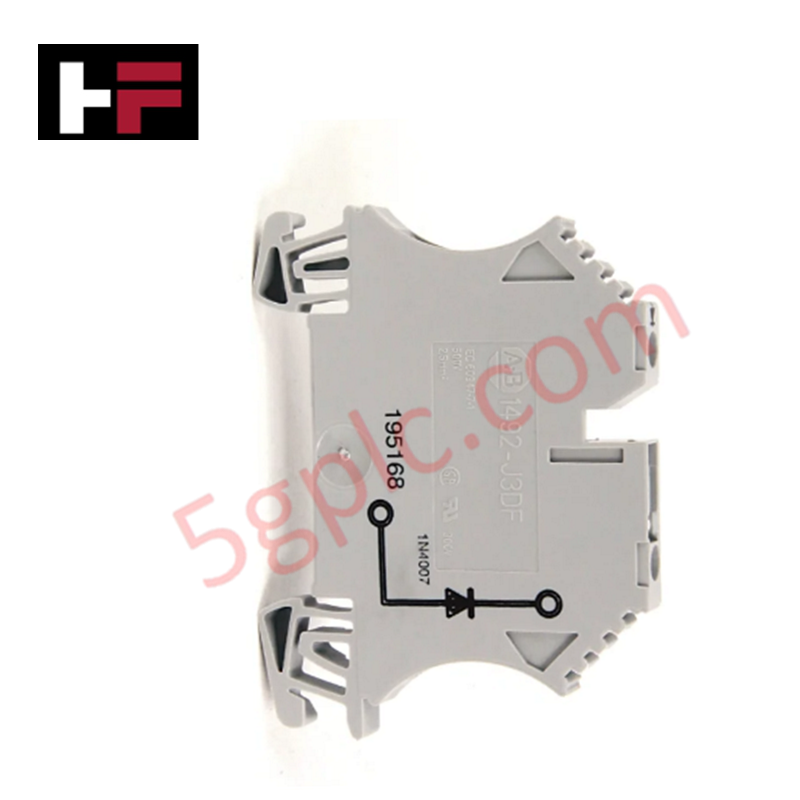
The 1492-J3 serves as a high-density, single-circuit IEC Feed-Through Terminal Block within the Allen-Bradley 1492 family. This 5mm wide component facilitates efficient point-to-point wiring on standard 35mm DIN rails. It supports a wide range of industrial wire gauges while maintaining a compact footprint to save cabinet space. We provide this unit as 100% Brand New original hardware, ensuring optimal conductivity and mechanical grip for your control system's electrical distribution.
Technical Specifications
The 1492-J3 utilizes a rugged screw-clamp design for reliable electrical termination:
| Parameter | Specification |
| Manufacturer | Allen-Bradley / Rockwell Automation |
| Circuit Type | Single Circuit Feed-Through |
| Wire Range (Solid/Stranded) | #30…12 AWG (0.5…2.5 $mm^2$) |
| Current Rating (UL/CSA) | 24 Amps |
| Voltage Rating (UL/CSA) | 600V AC/DC |
| Terminal Width | 5.1 mm (0.20 in.) |
| Mounting | 35mm DIN Rail |
| Tightening Torque | 0.4…0.8 Nm (3.5…7.1 lb-in) |
| Material | Polyamide 6.6 (UL 94-V0) |
Engineering Advantages
-
Optimized Space Efficiency: The 5.1mm housing width allows for a high density of terminations per foot of DIN rail. This reduces the size of junction boxes and control cabinets in complex automation projects.
-
Superior Vibration Resistance: The screw-clamp mechanism maintains a gas-tight connection that resists loosening from mechanical shock or thermal expansion. This ensures long-term signal integrity without the need for periodic retightening.
-
Universal DIN Rail Compatibility: The snap-on foot design allows for rapid mounting on standard 35mm top-hat rails. This facilitates easy expansion or reconfiguration of the terminal bank.
-
Side-Entry Bridge Support: The 1492-J3 supports center-jumping and side-bridging accessories. This enables engineers to distribute common power or neutral signals across multiple blocks quickly and neatly.
-
High-Visibility Marking: The block features dedicated slots for snap-in markers. This allows for clear, professional-grade labeling of every circuit, which speeds up troubleshooting and maintenance.
Installation Guidelines
-
DIN Rail Alignment: Position the 1492-J3 over the 35mm rail and press down firmly until the foot locks onto the rail edge.
-
Wire Preparation: Strip approximately 10mm of insulation from the wire. Insert the conductor fully into the clamp cage to ensure the screw clamps onto the copper, not the insulation.
-
Torque Application: Use a flat-head screwdriver to apply between 0.4 and 0.8 Nm of torque. Correct torque prevents wire damage while ensuring a permanent electrical bond.
-
End Protection: Always install a 1492-EBJ3 end barrier at the end of a terminal block run to cover the exposed metal parts and prevent short circuits.
FAQs
Q: What is the maximum wire size the 1492-J3 can accommodate?
A: The 1492-J3 accepts wire sizes up to 12 AWG (2.5 $mm^2$). For larger gauges, consider the 1492-J4 or 1492-J6 modules.
Q: Can I use this terminal block for both DC and AC circuits?
A: Yes. The 1492-J3 handles both AC and DC voltages up to a maximum rating of 600V, making it suitable for motor control, PLC power distribution, and signal loops.
Q: Does the 1492-J3 require an end cap?
A: Yes. Because one side of the terminal block is "open" to expose the bus bar, you must install a 1492-EBJ3 end barrier at the end of the stack to ensure an IP20 safety rating.
Q: Is the material flame retardant?
A: Absolutely. The housing uses Polyamide 6.6, which carries a UL 94-V0 flame rating, the highest standard for self-extinguishing plastic in electrical components.
Additional Information
- 100% Genuine Parts: All products are original and authentic, ensuring reliable industrial performance.
- 30-Day Refund Guarantee: Return any in-stock item within 30 days in original, unopened packaging for a full refund (excluding shipping and fees).
- 12-Month Warranty: Covers defects in materials or workmanship; excludes misuse, normal wear, or unauthorized modifications.
- Worldwide Shipping: We ship via USPS, UPS, FedEx, and DHL. Delivery times vary by country and may be subject to customs or import fees.
- Support & Contact: Technical and warranty assistance is available anytime. Contact us here: Contact.
- Purchase Guidance: Check product specifications and compatibility carefully before ordering to ensure proper application.
Tech & Buying Guide

Navigating Industrial Automation Failures: Types, Causes, and Mitigation Strategies
Modern manufacturing relies heavily on automated control systems to maximize throughput and maintain product quality. However, unplanned downtime in industrial automation can cost facility operators thousands of dollars per hour. Understanding how programmable logic controllers (PLCs), distributed control systems (DCS), and field instrumentation fail empowers engineering teams to implement robust preventive maintenance strategies.

Essential Motion Control Commands: A Practical Guide for Engineers
Automation engineers often rely on precise position and speed control to drive modern factory machinery. Modern industrial systems, such as Programmable Logic Controllers (PLCs) and Distributed Control Systems (DCS), depend heavily on standardized motion instructions. Mastering these commands ensures operational safety, protects mechanical components, and optimizes cycle times across production lines.

The Role of Intrinsic Safety Barriers in PLC and DCS Architectures
Implementing robust protection in hazardous industrial environments represents a fundamental safety requirement in factory automation. Process facilities often handle volatile gases, dusts, and chemical agents that pose significant combustion risks. Consequently, control system engineers must deploy energy-limiting interfaces to isolate safe-area control cabinets from hazardous-area field instrumentation. This article examines the function, selection, and electrical principles of intrinsic safety barriers within modern PLC and DCS networks.