










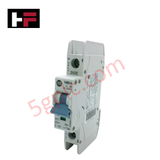
Product Details
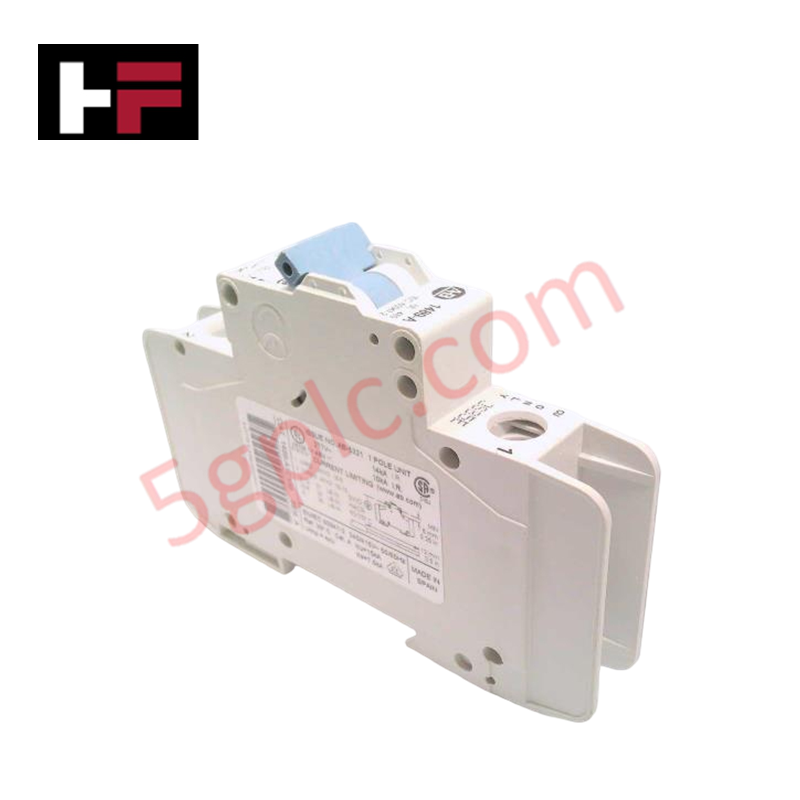
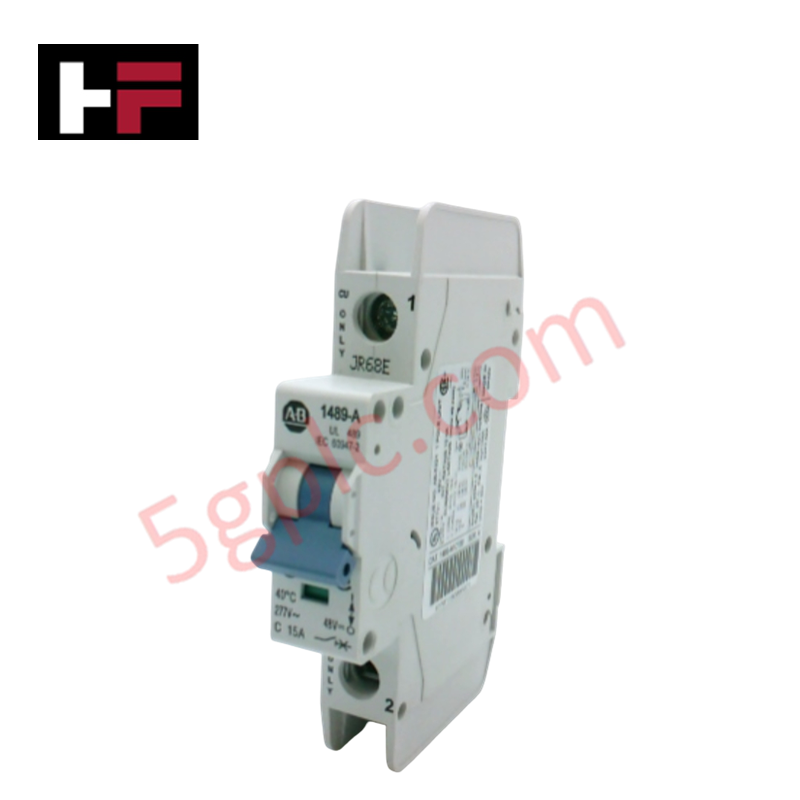
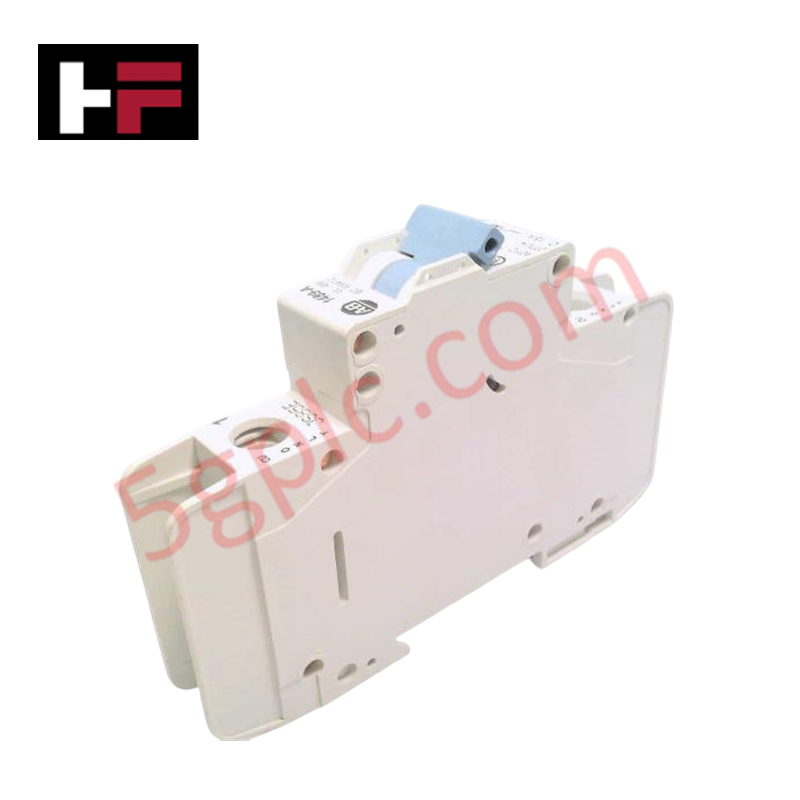
Configured for overcurrent protection in control circuit branches, the Allen-Bradley 1489-A1C100 (1489-A1C100 Miniature Circuit Breaker) provides direct physical/electrical execution of single-pole circuit interruption under overload and short-circuit conditions.
Hardware Specifications
| Parameter | Specification |
|---|---|
| Model | 1489-A1C100 |
| Brand | Allen-Bradley |
| Origin | USA |
| Weight | 0.11 kg |
| Dimensions | Not Specified |
| Operating Temp | Not Specified |
| Power Consumption | Not Applicable |
| Current Rating | 10 A |
| Voltage Rating | 277 VAC / 48 VDC |
| Trip Curve | C-Curve |
Profinet / EtherNet/IP Deterministic Networks
The 1489-A1C100 utilizes a C-curve trip characteristic, engineered to accommodate the moderate inrush currents typical of standard control devices while providing rapid disconnect during fault events. Within modular control architectures, this device is installed on DIN rails to facilitate organized I/O density scaling. While this mechanical protector does not exchange data via industrial networks, it maintains the electrical integrity required for downstream components that operate on deterministic networks. Firmware flash compatibility is not applicable, though users should ensure that the interrupt capacity is coordinated with the total fault current available at the specific branch to prevent nuisance tripping.
Frequently Asked Questions
Q: Can this 1-pole circuit breaker be used in DC control loops?
A: The device is rated for 48 VDC. Ensure that the specific DC circuit load characteristics do not exceed the arc-quenching capability of the single-pole contact structure, as breaking capacity in DC applications is significantly different from AC.
Q: Is this device compatible with standard auxiliary contact blocks?
A: The 1489-A series is designed to accept field-mountable auxiliary contacts and signal switches to provide status telemetry to a PLC or external monitoring system. Consult the component documentation for specific accessory part numbers.
Field Installation Guidelines
- Secure the breaker onto a standard 35 mm DIN rail; confirm that the mechanical latch is fully locked to ensure stability.
- Route line-side supply conductors to the top terminals and load-side conductors to the bottom terminals, observing proper conductor sizing for a 10 A load.
- Apply manufacturer-specified torque to terminal clamps to prevent localized overheating caused by loose connections.
- Route secondary control circuit wiring away from high-power AC lines or VFD output cables to minimize electromagnetic interference.
- Inspect the surrounding enclosure to ensure it provides sufficient environmental protection and that no conductive dust or debris is present.
- Perform a continuity check after installation to confirm the breaker successfully transitions between "ON" and "OFF" states before energizing the load circuit.
Additional Information
- 100% Genuine Parts: All products are original and authentic, ensuring reliable industrial performance.
- 30-Day Refund Guarantee: Return any in-stock item within 30 days in original, unopened packaging for a full refund (excluding shipping and fees).
- 12-Month Warranty: Covers defects in materials or workmanship; excludes misuse, normal wear, or unauthorized modifications.
- Worldwide Shipping: We ship via USPS, UPS, FedEx, and DHL. Delivery times vary by country and may be subject to customs or import fees.
- Support & Contact: Technical and warranty assistance is available anytime. Contact us here: Contact.
- Purchase Guidance: Check product specifications and compatibility carefully before ordering to ensure proper application.
Tech & Buying Guide

Navigating Industrial Automation Failures: Types, Causes, and Mitigation Strategies
Modern manufacturing relies heavily on automated control systems to maximize throughput and maintain product quality. However, unplanned downtime in industrial automation can cost facility operators thousands of dollars per hour. Understanding how programmable logic controllers (PLCs), distributed control systems (DCS), and field instrumentation fail empowers engineering teams to implement robust preventive maintenance strategies.

Essential Motion Control Commands: A Practical Guide for Engineers
Automation engineers often rely on precise position and speed control to drive modern factory machinery. Modern industrial systems, such as Programmable Logic Controllers (PLCs) and Distributed Control Systems (DCS), depend heavily on standardized motion instructions. Mastering these commands ensures operational safety, protects mechanical components, and optimizes cycle times across production lines.

The Role of Intrinsic Safety Barriers in PLC and DCS Architectures
Implementing robust protection in hazardous industrial environments represents a fundamental safety requirement in factory automation. Process facilities often handle volatile gases, dusts, and chemical agents that pose significant combustion risks. Consequently, control system engineers must deploy energy-limiting interfaces to isolate safe-area control cabinets from hazardous-area field instrumentation. This article examines the function, selection, and electrical principles of intrinsic safety barriers within modern PLC and DCS networks.