












Product Details
Product Overview
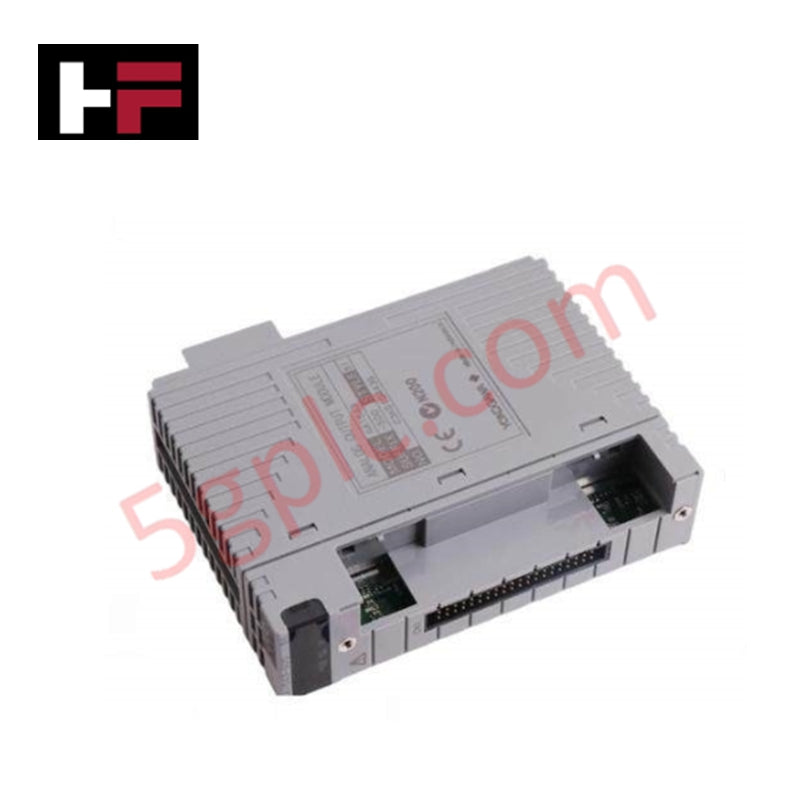
The Yokogawa PFCS-S5120 serves as a core processing powerhouse within the Field Control Station (FCS) architecture. This module executes critical control logic and manages high-speed data arbitration between the I/O nest and the supervisory network. By integrating seamlessly with Vnet/IP and ESB Bus protocols, the PFCS-S5120 ensures deterministic response times for complex industrial loops. We supply this unit as 100% Brand New, providing factory-certified performance for your mission-critical DCS infrastructure.
Technical Specifications
The PFCS-S5120 utilizes a high-density, rack-mounted design engineered for continuous operation in demanding thermal environments.
-
Manufacturer: Yokogawa
-
Model: PFCS-S5120 S1
-
Function: Field Control Station (FCS) Module
-
Power Input: 5.0 VDC (Supplied via node interface unit)
-
Installation Requirement: Dedicated Slot 1 (I/O Nest)
-
Communication Protocols: Vnet/IP, ESB Bus, and proprietary Yokogawa interfaces
-
Operating Temperature: -10°C to +55°C
-
Storage Temperature: -40°C to +85°C
-
Humidity: 5% to 95% RH (Non-condensing)
-
Build Standard: EMI-shielded, vibration-resistant, industrial-grade housing
Engineering Advantages
The PFCS-S5120 addresses the rigorous demands of modern process plants through superior hardware engineering:
-
Precision Timing & Synchronization: The module enforces strict clock synchronization across the ESB bus. This prevents data skewing and ensures that digital output modules execute commands in the exact sequence defined by the controller logic.
-
Industrial-Grade EMI Shielding: High-frequency noise from nearby Variable Frequency Drives (VFDs) often corrupts control signals. The PFCS-S5120 features a reinforced EMI-shielded chassis that rejects electromagnetic interference, maintaining signal purity in electrically noisy environments.
-
Optimized Thermal Dissipation: The module's internal component layout promotes efficient heat transfer. This design prevents localized hotspots, allowing the unit to maintain stable processing speeds even at its upper operating limit of +55°C.
-
Vibration Resistance: Yokogawa utilizes ruggedized mounting connectors that withstand the constant low-frequency vibrations typical of heavy manufacturing floors. This mechanical integrity eliminates intermittent contact failures and extends the lifecycle of the I/O nest.
FAQs
Why must I install the PFCS-S5120 specifically in Slot 1?
The I/O nest backplane assigns primary bus arbitration and power distribution priority to Slot 1. Installing the PFCS-S5120 in any other slot prevents the module from initializing the communication bus and results in a system configuration error.
Does this module require a separate external power supply?
No. The PFCS-S5120 draws its required 5.0 VDC directly from the node interface unit through the backplane connectors. Ensure your node interface unit provides a stable voltage within the specified range to avoid logic resets.
Is the S1 version compatible with older CENTUM hardware?
The S1 suffix indicates a specific hardware revision. While it maintains broad compatibility with Yokogawa's Vnet/IP ecosystem, you should verify your current system software revision and backplane model to ensure full driver support and feature parity.
How does the module handle high-humidity environments?
The PFCS-S5120 features industrial-grade coatings that protect the PCB from moisture ingress up to 95% RH. However, we recommend maintaining a non-condensing environment within the control cabinet to prevent terminal oxidation and potential short circuits.
Additional Information
- 100% Genuine Parts: All products are original and authentic, ensuring reliable industrial performance.
- 30-Day Refund Guarantee: Return any in-stock item within 30 days in original, unopened packaging for a full refund (excluding shipping and fees).
- 12-Month Warranty: Covers defects in materials or workmanship; excludes misuse, normal wear, or unauthorized modifications.
- Worldwide Shipping: We ship via USPS, UPS, FedEx, and DHL. Delivery times vary by country and may be subject to customs or import fees.
- Support & Contact: Technical and warranty assistance is available anytime. Contact us here: Contact.
- Purchase Guidance: Check product specifications and compatibility carefully before ordering to ensure proper application.


Tech & Buying Guide

Mastering the Siemens PLC Scan Cycle: How the CPU Executes Automation Programs
Industrial automation relies heavily on programmable logic controllers (PLCs) to manage complex manufacturing processes. Many engineers dive straight into programming without mastering the underlying architecture. However, understanding how a PLC CPU executes a program ensures reliable system design. Therefore, mastering the scan cycle optimizes both performance and troubleshooting in modern control systems.

How to Connect to Siemens S7 PLCs: 5 Essential Communication Methods
Establishing a reliable hardware link between a programming terminal and a Siemens SIMATIC controller is essential for engineering workflows. Field engineers rely on distinct physical layers, ranging from legacy serial connections to high-speed Industrial Ethernet protocols. Modern factory automation environments prioritize fast data transfer and seamless driver integration. Selecting the correct connection method simplifies program downloads, online monitoring, and system troubleshooting in complex control systems.

Will PLCs Become Obsolete? The Future of Control Systems in Industry 4.0
Modern manufacturing is undergoing a rapid technological transformation driven by Industry 4.0 innovations. Technologies like Artificial Intelligence (AI), Machine Learning (ML), and the Industrial Internet of Things (IIoT) are dominating discussions across the factory automation sector. Consequently, many engineers wonder if these advanced digital tools will eventually replace traditional Programmable Logic Controllers (PLCs). However, evaluating the core physics of industrial operations reveals a very different reality for control systems.