












Product Details
Product Description
The General Electric PQMII-C is a high-precision Power Quality Meter within the Multilin product family, engineered for comprehensive monitoring of utility and industrial power systems. This unit provides advanced detection of voltage and frequency anomalies, ensuring the stability of sensitive electrical infrastructure. By utilizing programmable setpoints and high-speed data acquisition, the PQMII-C serves as a critical diagnostic tool for energy management and equipment protection.
Voltage Monitoring Parameters
The PQMII-C offers sophisticated tracking for both over and under-voltage conditions to prevent hardware fatigue and operational failures.
-
Undervoltage Pickup: 0.50 to 0.99 x VT (0.01 steps)
-
Undervoltage Dropout: 103% of pickup level
-
Overvoltage Pickup: 1.01 to 1.25 x VT (0.01 steps)
-
Overvoltage Dropout: 97% of pickup level
-
Phase Configuration: User-programmable for any single phase, any two, or all three phases
-
Time Delay Range: 0.5 to 600.0 seconds
-
Timing Accuracy: -0/+1 second
Frequency Surveillance and Control
For grid stability and generator synchronization, the PQMII-C monitors frequency deviations with high granularity.
-
Frequency Range: 20.00 to 70.00 Hz
-
Pickup Accuracy: ±0.02 Hz
-
Underfrequency Dropout: Pickup + 0.03 Hz
-
Overfrequency Dropout: Pickup - 0.03 Hz
-
Response Time: 0.1 to 10.0 seconds
-
Operational Requirement: Minimum 20V applied for accurate sensing
Energy Pulse Output and Physical Specs
The meter facilitates external integration through programmable pulse outputs for energy consumption tracking.
-
Monitored Parameters: Positive/Negative kWh, Positive/Negative kvarh, and kVAh
-
Pulse Width: 100 to 2000 ms (10 ms increments)
-
Minimum Interval: 500 ms
-
Dimensions: 215 mm x 152 mm x 152 mm (8.5" x 6" x 6")
-
Shipping Weight: 2.3 kg (5 lbs)
Applications and Integration
The PQMII-C is typically deployed in main incoming feeders, motor control centers (MCC), and distributed generation sites. It allows engineers to capture power quality events and automate load shedding or capacitor bank switching based on real-time voltage and frequency data.
FAQ
Can the PQMII-C monitor specific phases for voltage drops?
Yes, the unit is fully programmable, allowing the operator to trigger alarms or actions based on a single phase, two phases, or a balanced three-phase monitoring logic.
What is the minimum voltage required for frequency monitoring?
The meter requires at least 20V applied to the inputs to maintain accurate frequency tracking and pickup performance.
Additional Information
- 100% Genuine Parts: All products are original and authentic, ensuring reliable industrial performance.
- 30-Day Refund Guarantee: Return any in-stock item within 30 days in original, unopened packaging for a full refund (excluding shipping and fees).
- 12-Month Warranty: Covers defects in materials or workmanship; excludes misuse, normal wear, or unauthorized modifications.
- Worldwide Shipping: We ship via USPS, UPS, FedEx, and DHL. Delivery times vary by country and may be subject to customs or import fees.
- Support & Contact: Technical and warranty assistance is available anytime. Contact us here: Contact.
- Purchase Guidance: Check product specifications and compatibility carefully before ordering to ensure proper application.
Tech & Buying Guide
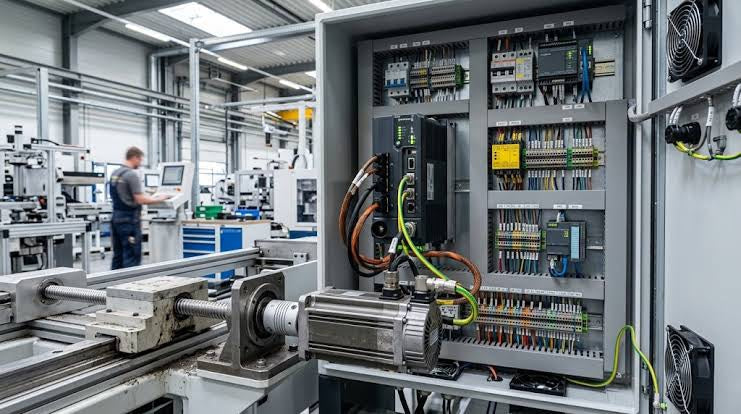
Demystifying Programmable Logic Controllers: Comprehensive Guide to PLC Classification and Selection in Industrial Automation
Modern industrial automation heavily relies on Programmable Logic Controllers (PLCs) to drive factory floor efficiency. Over my 15 years as an industrial automation expert working with DCS, TSI, and control systems, I have seen PLCs evolve into the central nervous system of modern manufacturing. Selecting the right controller requires a deep understanding of PLC types based on physical size, hardware architecture, and power supply configurations.

Comprehensive Guide to PLC Types in Modern Industrial Automation
Modern industrial automation relies on programmable logic controllers to govern critical factory operations. System integrators classify PLCs based on scale, hardware architecture, and power supply design. Understanding these core categories enables automation engineers to select the right control system architecture. Consequently, proper hardware selection optimizes performance while minimizing long-term operational costs.

Demystifying the DDE Protocol in Legacy Industrial Automation Systems
Modern control systems rely heavily on seamless interprocess communication to exchange operational data between software programs. Microsoft first introduced the Dynamic Data Exchange (DDE) protocol in 1987 to enable real-time data sharing. In factory automation, DDE served as an early bridge between control software and Windows desktop applications. Therefore, understanding DDE mechanics provides crucial insights into how legacy industrial networks established software-level connectivity.