










Product Details
Product Overview
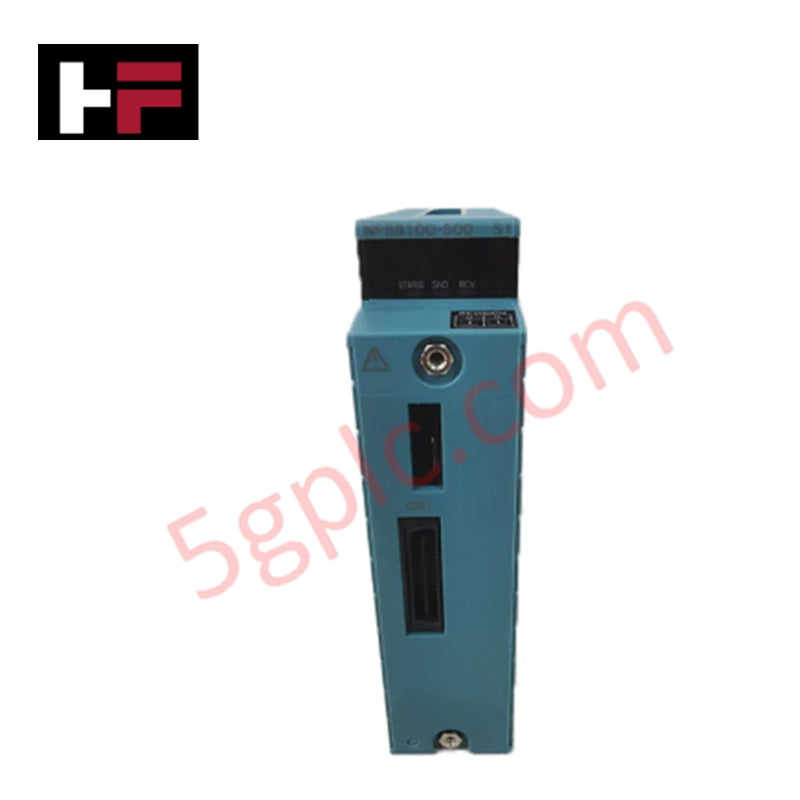
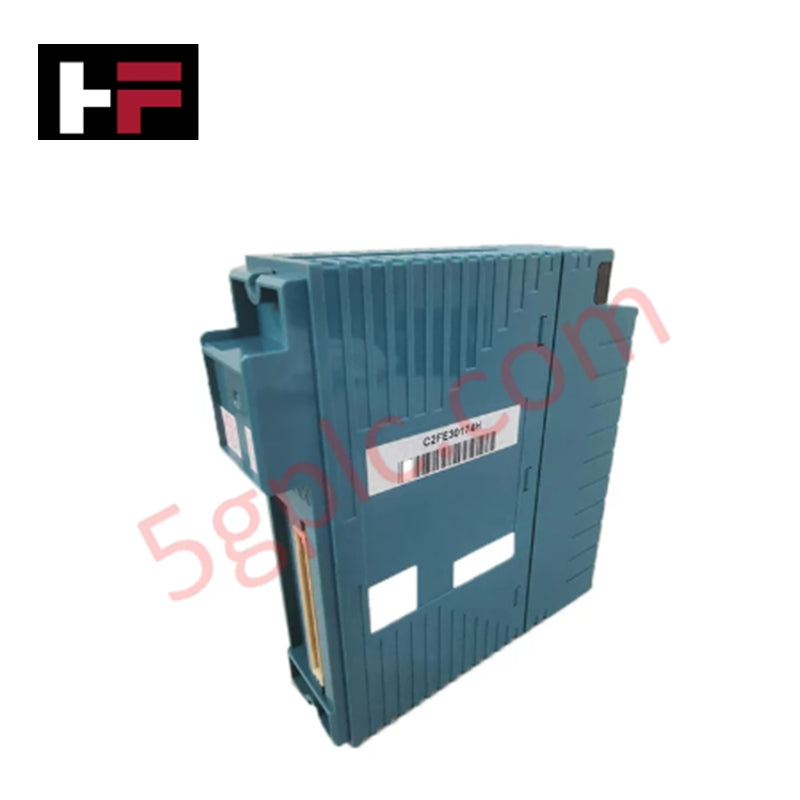
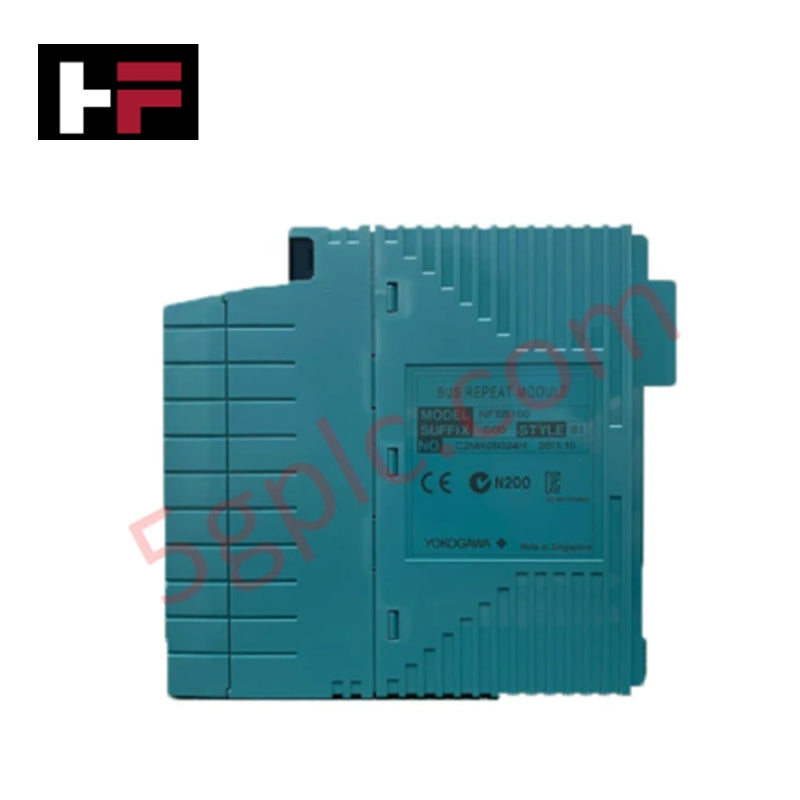
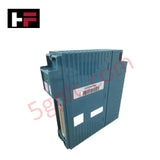
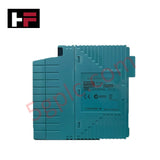
The Yokogawa NFSB100-S00 functions as a high-speed Bus Repeat Module designed to extend the physical reach of the internal system bus. It receives communication signals from one bus segment, regenerates them to eliminate degradation, and re-transmits them to the next segment with full signal strength. We supply this unit as 100% Brand New and Original, providing the essential hardware needed to maintain deterministic performance across large-scale distributed control systems (DCS).
Part Number Breakdown
The NFSB100-S00 follows a standard Yokogawa identification structure for bus interface hardware:
-
NFSB100: ESB Bus Repeat Module.
-
-S: Standard hardware configuration.
-
0: Basic type (Always 0).
-
0: Standard specification without additional options.
Technical Specifications
The NFSB100-S00 maintains strict synchronization across multiple bus segments within its compact frame.
| Parameter | Specification Details |
| Primary Function | Signal Regeneration and Bus Extension |
| Bus Type | Proprietary Internal System Bus (ESB) |
| Dimensions (H x W x D) | 130 mm x 100 mm x 42 mm |
| Weight | 0.25 kg |
| Operating Temperature | 0 to 55 °C |
| Storage Temperature | -20 to 70 °C |
| Signal Integrity | Active Jitter Cleaning and Amplification |
| Condition | 100% Brand New Original |
Engineering Advantages
-
Seamless Network Scalability: The NFSB100-S00 overcomes the physical distance limitations inherent in single bus segments. It allows engineers to place remote I/O stations significantly further from the central controller, facilitating large-scale plant layouts without compromising communication speed.
-
Deterministic Data Integrity: The module cleans up signal noise and boosts strength during the re-transmission process. This active regeneration ensures that the control system retains high-fidelity data, even as the network expands to include additional nodes.
-
Segment Isolation for Fault Protection: This module incorporates electrical isolation between bus segments. This architecture prevents a local cable fault or electrical surge on one segment from propagating through the entire network, protecting the central CPU and ensuring continuous operation of unaffected zones.
-
Minimal Latency Design: While repeaters typically introduce delays, the NFSB100-S00 utilizes optimized circuitry to minimize signal propagation time. This ensures that the control network maintains the strict determinism required for high-speed safety and process loops.
FAQs
Does the NFSB100-S00 support redundant bus configurations?
Yes. In systems implementing a redundant control bus, you typically install two NFSB100-S00 modules to maintain high availability over extended distances. This setup ensures that if one repeater or bus line fails, the secondary path maintains the communication link.
How many nodes can I add by using this repeat module?
The module removes the physical signal limitations for distance, but you must still adhere to the maximum node count defined by your specific Yokogawa system software (e.g., CENTUM VP). Consult your system configuration manual to verify the total addressable capacity.
What is the installation procedure for the NFSB100-S00?
The module installs into a dedicated slot within the control station. Ensure you power down the target segment before insertion and verify that all bus cables use the correct termination resistors to prevent signal reflection.
How do I verify the authenticity of this unit?
We offer only 100% Brand New units in original Yokogawa factory-sealed packaging. Every module features a unique, verifiable serial number and the manufacturer's quality control stamp, ensuring it meets all factory specifications.
Additional Information
- 100% Genuine Parts: All products are original and authentic, ensuring reliable industrial performance.
- 30-Day Refund Guarantee: Return any in-stock item within 30 days in original, unopened packaging for a full refund (excluding shipping and fees).
- 12-Month Warranty: Covers defects in materials or workmanship; excludes misuse, normal wear, or unauthorized modifications.
- Worldwide Shipping: We ship via USPS, UPS, FedEx, and DHL. Delivery times vary by country and may be subject to customs or import fees.
- Support & Contact: Technical and warranty assistance is available anytime. Contact us here: Contact.
- Purchase Guidance: Check product specifications and compatibility carefully before ordering to ensure proper application.


Tech & Buying Guide

Will PLCs Become Obsolete? The Future of Control Systems in Industry 4.0
Modern manufacturing is undergoing a rapid technological transformation driven by Industry 4.0 innovations. Technologies like Artificial Intelligence (AI), Machine Learning (ML), and the Industrial Internet of Things (IIoT) are dominating discussions across the factory automation sector. Consequently, many engineers wonder if these advanced digital tools will eventually replace traditional Programmable Logic Controllers (PLCs). However, evaluating the core physics of industrial operations reveals a very different reality for control systems.

Demystifying Open Platform Communication (OPC): The Backbone of Industrial Interoperability
Interoperability remains a cornerstone requirement for modern smart factories and process automation. Open Platform Communication (OPC) bridges the gap between disparate hardware platforms, control systems, and visualization software. By establishing a universal communication standard, OPC allows field controllers, SCADA platforms, and enterprise software from different vendors to exchange real-time data seamlessly.

Understanding Siemens PLC Memory Cards: MMC, SMC, and SD Solutions in Industrial Automation
Memory management plays a pivotal role in maintaining control system reliability across modern manufacturing plants. Industrial control systems rely on specialized memory cards to store project logic, firmware updates, and retentive system data. Siemens uses several memory architectures, including Micro Memory Cards (MMC) and SIMATIC Memory Cards (SMC). Engineers must understand these hardware variations to ensure zero data loss and minimize downtime during maintenance routines.