










Product Details
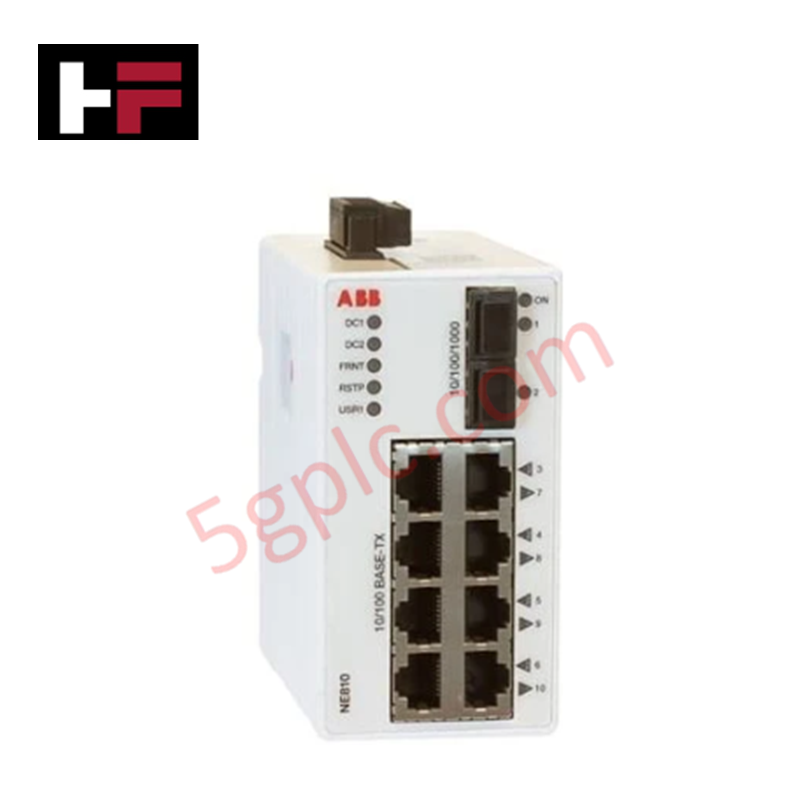
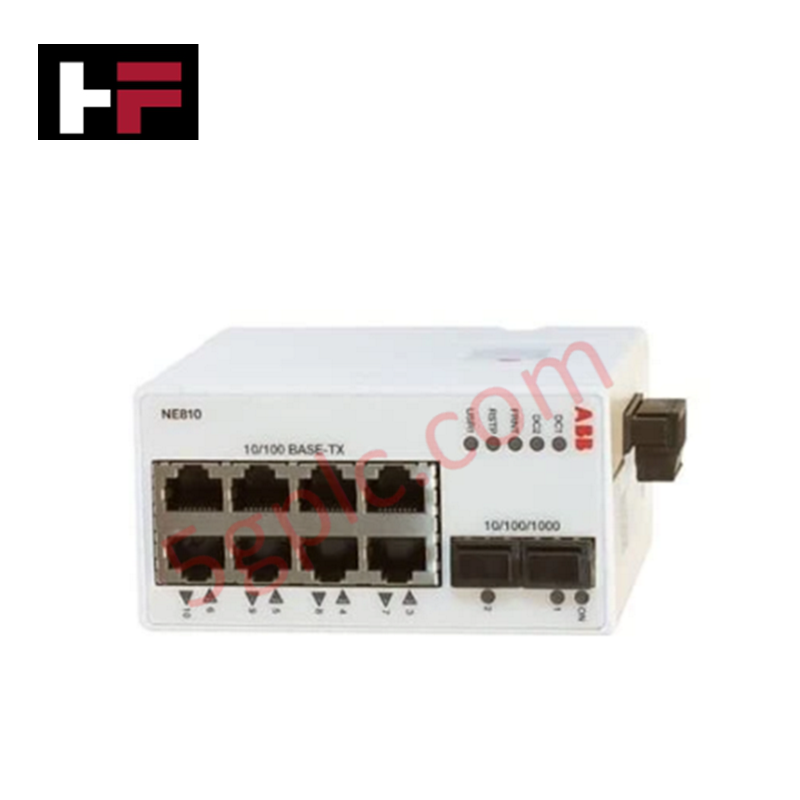
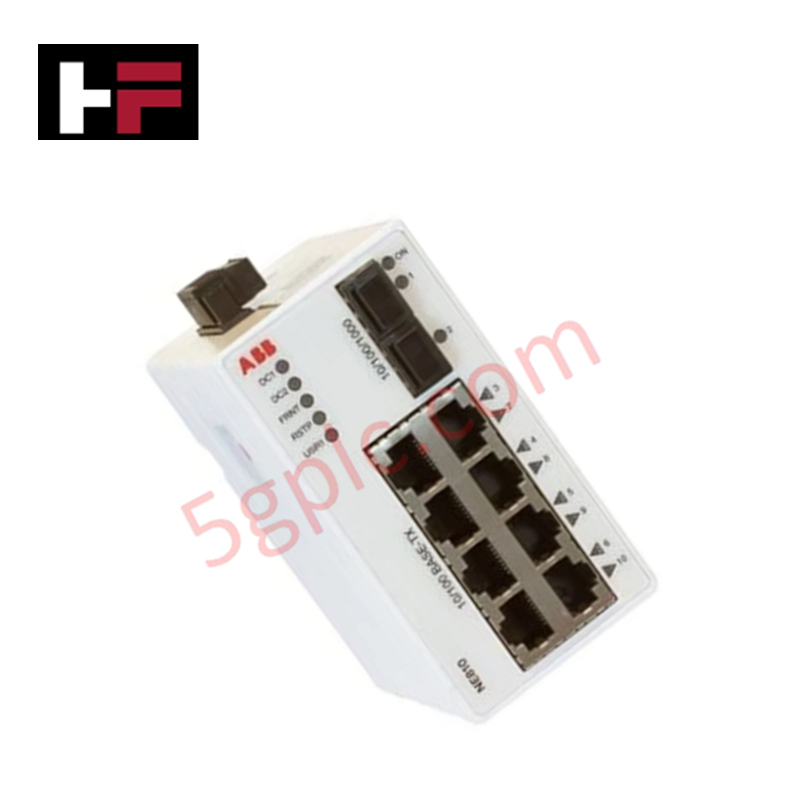
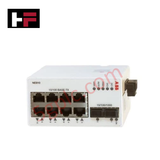
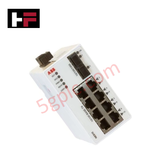
The ABB NE810 3BSE080207R1, also cataloged as the NE810 Managed Ethernet Switch, operates as a dedicated hardware component for high-speed packet routing and network redundancy within ABB automation networks. The unit processes traffic across 8 Ethernet TX 10/100 ports and 2 dual-rate 10/100/1000 Mbit/s SFP slots, executing Fast Recovery of Network Topology (FRNT) ring reconfiguration to maintain deterministic data flow across industrial control architectures.
Hardware Specifications
| Parameter | Specification |
|---|---|
| Model | NE810 3BSE080207R1 |
| Brand | ABB |
| Origin | Standard ABB Manufacturing Operations |
| Product Type | Managed Industrial Ethernet Switches |
| Switch Architecture | Layer 2 Managed Switch |
| Ethernet TX Ports | 8 x 10/100 Mbit/s ports |
| SFP Ports | 2 x 10/100/1000 Mbit/s SFP slots |
| Redundancy Protocol | FRNT (Fast Recovery of Network Topology) |
| Operating Voltage | 19 to 60 VDC redundant dual input |
| Rated Current | 240 mA @ 24 VDC, 120 mA @ 48 VDC |
| Operating Temp | -40 to +70 deg C |
| Dimensions | 52 mm x 100 mm x 101 mm (W x H x D) |
| Net Weight | 0.7 kg (1.54 lbs) |
| Protection Rating | IP40 metal housing, G3 conformal coating |
| Certifications | Marine DNV, EN 50581:2012 RoHS, WEEE 2012/19/EU |
Backplane Bus Communication Velocity and Deterministic Networks
The managed switch routes data frames between distributed I/O racks and supervisory systems, supporting optimal backplane bus communication velocity across connected network nodes. By maintaining low latency forwarding and deterministic prioritization for Profinet and EtherNet/IP deterministic networks, the module prevents network congestion. Firmware flash compatibility across the onboard management system ensures steady protocol conversion, VLAN tagging, and fast FRNT link failover.
Frequently Asked Questions
Q: How does the redundant power input operate on the NE810?
A: The switch accepts dual 19 to 60 VDC power feeds via detachable screw terminals. If one DC supply fails, the internal diode logic switches power draw to the secondary supply without interrupting switch operation.
Q: What network recovery times does FRNT technology provide during a link fault?
A: FRNT ring redundancy reconfigures network topology paths in milliseconds following a cable break or port disconnection, maintaining continuous data transmission.
Field Installation Guidelines
- DIN-Rail Mounting: Snap the integrated rear DIN-rail clip firmly onto a standard 35 mm DIN rail inside the panel enclosure to ensure mechanical stability.
- Power Wiring: Connect primary and secondary 19 to 60 VDC power leads to the detachable screw terminal block, observing correct wire polarity.
- Cable Shielding: Use shielded twisted-pair (STP) Ethernet cables and ground the shield at the RJ-45 connector or chassis ground lug to dissipate high-frequency electrical noise.
- Thermal Management: Maintain at least 50 mm of vertical clearance above and below the metal housing to allow free air convection in -40 to +70 deg C operating environments.
Additional Information
- 100% Genuine Parts: All products are original and authentic, ensuring reliable industrial performance.
- 30-Day Refund Guarantee: Return any in-stock item within 30 days in original, unopened packaging for a full refund (excluding shipping and fees).
- 12-Month Warranty: Covers defects in materials or workmanship; excludes misuse, normal wear, or unauthorized modifications.
- Worldwide Shipping: We ship via USPS, UPS, FedEx, and DHL. Delivery times vary by country and may be subject to customs or import fees.
- Support & Contact: Technical and warranty assistance is available anytime. Contact us here: Contact.
- Purchase Guidance: Check product specifications and compatibility carefully before ordering to ensure proper application.






Tech & Buying Guide

The Shift to Flexible IO Modules in Modern Industrial Automation
Traditional control systems rely on dedicated Input Output (IO) cards for industrial automation. Each conventional module processes a single signal type, such as Digital Input (DI), Digital Output (DO), Analog Input (AI), or Analog Output (AO). A standard 16-channel card accepts only one specific channel type across all ports. This inflexible hardware design often creates severe engineering bottlenecks during project execution. Engineers frequently must install entirely new cards to accommodate a single extra sensor. Consequently, late design changes increase control cabinet space requirements and drive up project costs.

DCS Commissioning Steps in Industrial Automation Projects
Commissioning a Distributed Control System (DCS) represents a crucial milestone when deploying modern process automation infrastructure. Field engineers must execute systematic verification steps to transition complex control hardware from static installation to dynamic plant control. Proper commissioning ensures that controllers, I/O modules, network switches, and HMI software operate in strict compliance with engineering design specifications before introducing live process fluids.

PLC and DCS Control System Spares Strategy: Engineering Guidelines
Modern factory automation relies on high-speed fiber optic backbones to link distributed control systems across noise-intensive industrial environments. Unlike copper wiring, optical fibers transmit data via light pulses, making them completely immune to electromagnetic interference (EMI). Field engineers must master optical cable joining and fusion splicing techniques to guarantee low-loss data transmission across critical Programmable Logic Controller (PLC) and Distributed Control System (DCS) nodes.