










Product Details
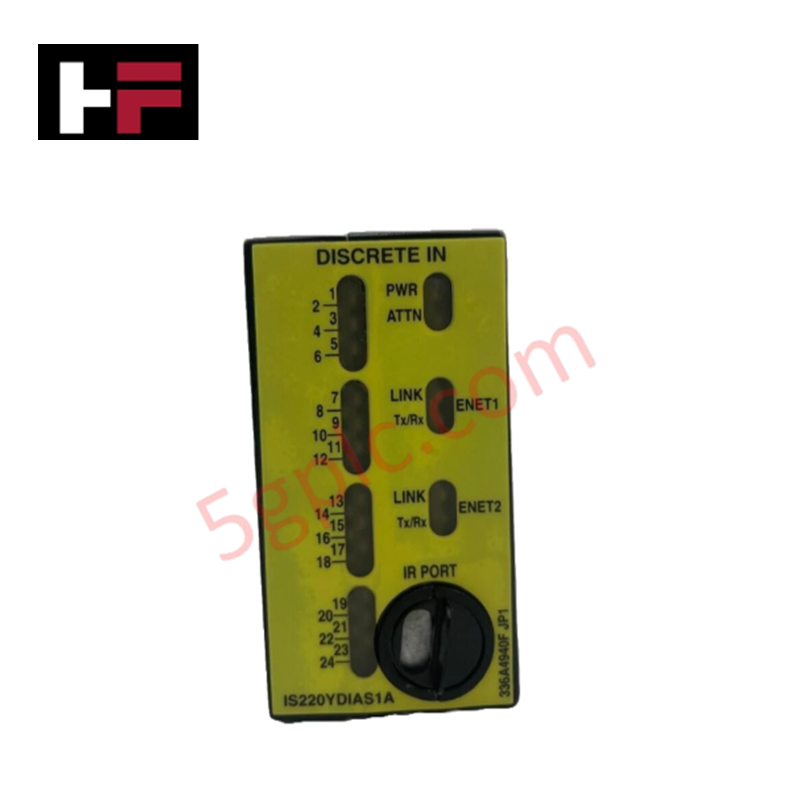
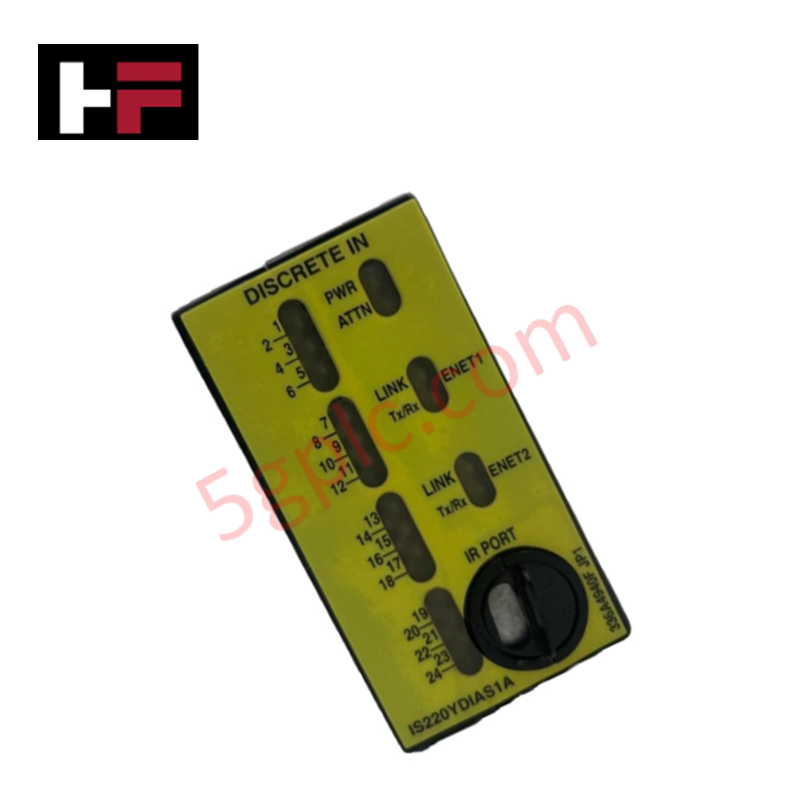
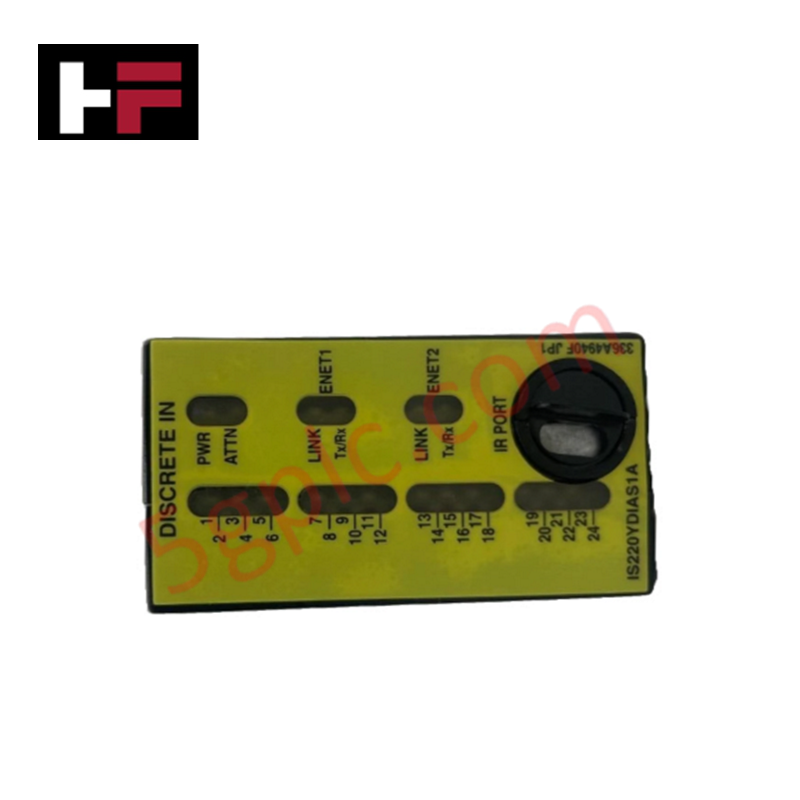
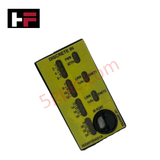
The GE IS220YDIAS1AK, also cataloged as the IS220YDIA Discrete Contact Input I/O Module, operates as a dedicated hardware component for discrete contact status monitoring within Mark VIe control system networks.
Hardware Specifications
| Parameter | Specification |
|---|---|
| Model | IS220YDIAS1AK |
| Brand | General Electric |
| Origin | USA |
| Weight | 0.91 kg (2 lbs) |
| Dimensions | 138 x 86 x 56 mm |
| Operating Temp | -30 to 65 deg C |
| Power Consumption | 18 to 32 VDC input supply |
| System Series | Mark VIe |
| Onboard Memory | 256 MB DDR SDRAM |
| Operating System | QNX Neutrino |
| Software Compatibility | ControlST V04.03.18C |
| Relative Humidity | 5% to 95% (non-condensing) |
Backplane Bus Communication Velocity and Firmware Flash Compatibility
Powered by the QNX Neutrino real-time operating system and 256 MB of DDR SDRAM, the IS220YDIAS1AK maintains high backplane bus communication velocity across dual IONet Ethernet interfaces. The module digitizes optical and contact sensor inputs, applying noise filtering and sequence-of-events (SOE) timestamping at the hardware layer. Dedicated internal memory architectures ensure full firmware flash compatibility through GE ControlST management software, allowing online flash updates without disturbing adjacent I/O packs on the terminal board.
Frequently Asked Questions
Q: What operating system and memory architecture power the IS220YDIAS1AK module?
A: The module operates on the QNX Neutrino real-time operating system utilizing 256 MB of onboard DDR SDRAM.
Q: What power supply range is required for module operation?
A: The module operates within an input supply range of 18 VDC to 32 VDC.
Q: How is firmware maintained on the IS220YDIAS1AK?
A: The module features firmware flash compatibility managed directly through GE ControlST V04.03.18C or compatible system software.
Field Installation Guidelines
Isolate power to the field terminal board before attaching or removing the IS220YDIAS1AK I/O pack. Maintain electrostatic discharge (ESD) protection by using a grounded wrist strap attached to the metal cabinet frame. Align the module connectors with the matching terminal board interface, push firmly until fully seated, and secure the mechanical retaining screws to establish ground continuity. Connect Ethernet network lines to the designated IONet ports before energizing the 24 VDC power feed.
Additional Information
- 100% Genuine Parts: All products are original and authentic, ensuring reliable industrial performance.
- 30-Day Refund Guarantee: Return any in-stock item within 30 days in original, unopened packaging for a full refund (excluding shipping and fees).
- 12-Month Warranty: Covers defects in materials or workmanship; excludes misuse, normal wear, or unauthorized modifications.
- Worldwide Shipping: We ship via USPS, UPS, FedEx, and DHL. Delivery times vary by country and may be subject to customs or import fees.
- Support & Contact: Technical and warranty assistance is available anytime. Contact us here: Contact.
- Purchase Guidance: Check product specifications and compatibility carefully before ordering to ensure proper application.


Tech & Buying Guide

How to Connect to Siemens S7 PLCs: 5 Essential Communication Methods
Establishing a reliable hardware link between a programming terminal and a Siemens SIMATIC controller is essential for engineering workflows. Field engineers rely on distinct physical layers, ranging from legacy serial connections to high-speed Industrial Ethernet protocols. Modern factory automation environments prioritize fast data transfer and seamless driver integration. Selecting the correct connection method simplifies program downloads, online monitoring, and system troubleshooting in complex control systems.

Will PLCs Become Obsolete? The Future of Control Systems in Industry 4.0
Modern manufacturing is undergoing a rapid technological transformation driven by Industry 4.0 innovations. Technologies like Artificial Intelligence (AI), Machine Learning (ML), and the Industrial Internet of Things (IIoT) are dominating discussions across the factory automation sector. Consequently, many engineers wonder if these advanced digital tools will eventually replace traditional Programmable Logic Controllers (PLCs). However, evaluating the core physics of industrial operations reveals a very different reality for control systems.

Demystifying Open Platform Communication (OPC): The Backbone of Industrial Interoperability
Interoperability remains a cornerstone requirement for modern smart factories and process automation. Open Platform Communication (OPC) bridges the gap between disparate hardware platforms, control systems, and visualization software. By establishing a universal communication standard, OPC allows field controllers, SCADA platforms, and enterprise software from different vendors to exchange real-time data seamlessly.