












Product Details
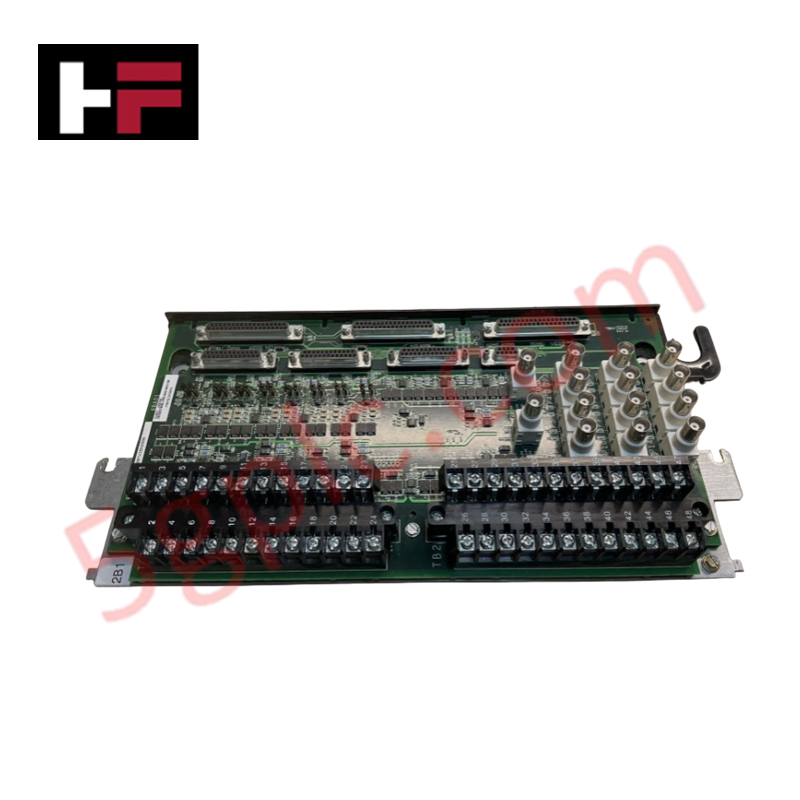
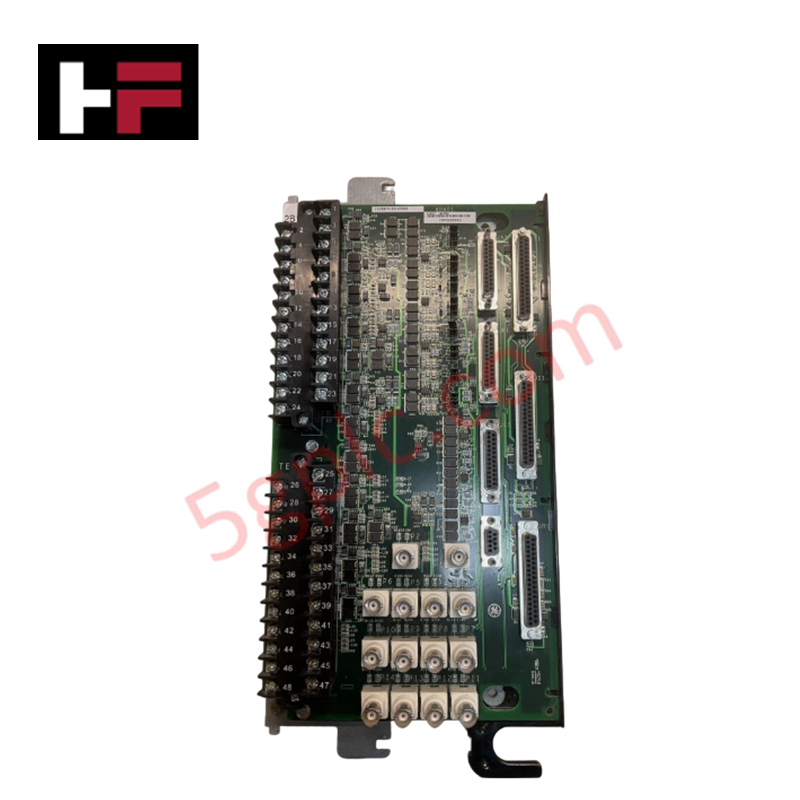
Configured for high-frequency signal acquisition in Mark VI control platforms, the GE IS200TVIBH2B (IS200TVIBH2B Vibration Terminal Board) provides direct physical/electrical execution of transducer interfacing for mechanical monitoring.
Hardware Specifications
| Parameter | Specification |
|---|---|
| Model | IS200TVIBH2B |
| Brand | General Electric |
| Origin | USA |
| Weight | Not specified |
| Dimensions | 13 in x 7 in |
| Operating Temp | 0 to 60 deg C |
| Power Consumption | Not specified |
| Channel Count | 13 |
| Compatibility | Bently Nevada Proximitor, Seismic, Accelerometer, Velomitor |
Eddy-Current Probe Scaling and Signal Processing
The IS200TVIBH2B serves as the interface between turbine-mounted transducers and the VVIB processing boards. It supports multiple probe technologies, including Proximitors and seismic sensors. To ensure accurate rotor dynamics analysis, the board facilitates consistent signal path impedance, allowing for precise eddy-current probe scaling. This configuration ensures that gap voltage validation remains within the operational -10 VDC target range. The terminal board maintains signal integrity to enable effective cross-talk suppression between the 13 channels before the signals are routed to the VVIB boards for analog-to-digital conversion and subsequent transmission via the VME bus to the central controller.
Frequently Asked Questions
Q: Does the IS200TVIBH2B support hot-swapping?
A: Hot-swapping the terminal board is restricted due to the direct electrical connection with active vibration probes. Isolation of the VVIB power supply is required prior to removal to prevent transient voltage spikes on the transducer loops.
Q: How are TMR (Triple Modular Redundancy) configurations managed?
A: In TMR mode, the terminal board distributes signals to three concurrent VVIB processing units. The system controller performs voting logic on the digitized signals to reject outlier data caused by individual channel faults.
Field Installation Guidelines
- Mounting: Secure the board into the designated Mark VI rack slot. Verify that the rear-plane connectors are fully seated to maintain ground continuity, which is required for low-noise sensor signal acquisition.
- Shielding: All transducer cabling must use high-quality shielded twisted-pair conductors. Terminate shields at the cabinet-level grounding bar using 360-degree clamps to minimize susceptibility to electromagnetic interference.
- Probe Wiring: Ensure that the wiring polarity matches the transducer requirements (e.g., Bently Nevada interface standards). Improper wiring can invert signal polarity, leading to incorrect rotor position or vibration amplitude data.
- Thermal Management: Maintain clear airflow paths in the Mark VI cabinet. The 0 to 60 deg C operating range must be strictly observed to prevent thermal drift in the analog input circuits, which would invalidate rotor dynamic measurements.
Additional Information
- 100% Genuine Parts: All products are original and authentic, ensuring reliable industrial performance.
- 30-Day Refund Guarantee: Return any in-stock item within 30 days in original, unopened packaging for a full refund (excluding shipping and fees).
- 12-Month Warranty: Covers defects in materials or workmanship; excludes misuse, normal wear, or unauthorized modifications.
- Worldwide Shipping: We ship via USPS, UPS, FedEx, and DHL. Delivery times vary by country and may be subject to customs or import fees.
- Support & Contact: Technical and warranty assistance is available anytime. Contact us here: Contact.
- Purchase Guidance: Check product specifications and compatibility carefully before ordering to ensure proper application.


Tech & Buying Guide

Demystifying CPU Communication Ports in Siemens PLC Architectures
Industrial automation relies heavily on robust data exchange between devices. Without seamless connectivity, field instruments, network switches, human-machine interfaces, and programmable logic controllers cannot coordinate effectively. Therefore, understanding the various CPU communication ports available in Siemens hardware ensures efficient factory automation design and seamless system integration.

Mastering the Siemens PLC Scan Cycle: How the CPU Executes Automation Programs
Industrial automation relies heavily on programmable logic controllers (PLCs) to manage complex manufacturing processes. Many engineers dive straight into programming without mastering the underlying architecture. However, understanding how a PLC CPU executes a program ensures reliable system design. Therefore, mastering the scan cycle optimizes both performance and troubleshooting in modern control systems.

How to Connect to Siemens S7 PLCs: 5 Essential Communication Methods
Establishing a reliable hardware link between a programming terminal and a Siemens SIMATIC controller is essential for engineering workflows. Field engineers rely on distinct physical layers, ranging from legacy serial connections to high-speed Industrial Ethernet protocols. Modern factory automation environments prioritize fast data transfer and seamless driver integration. Selecting the correct connection method simplifies program downloads, online monitoring, and system troubleshooting in complex control systems.