












Product Details
Product Overview
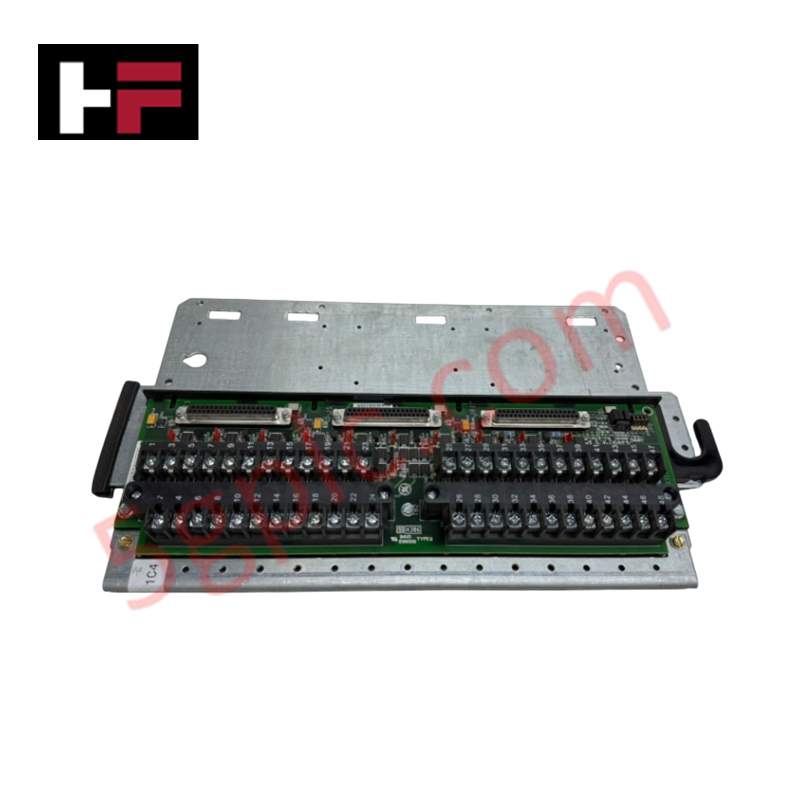
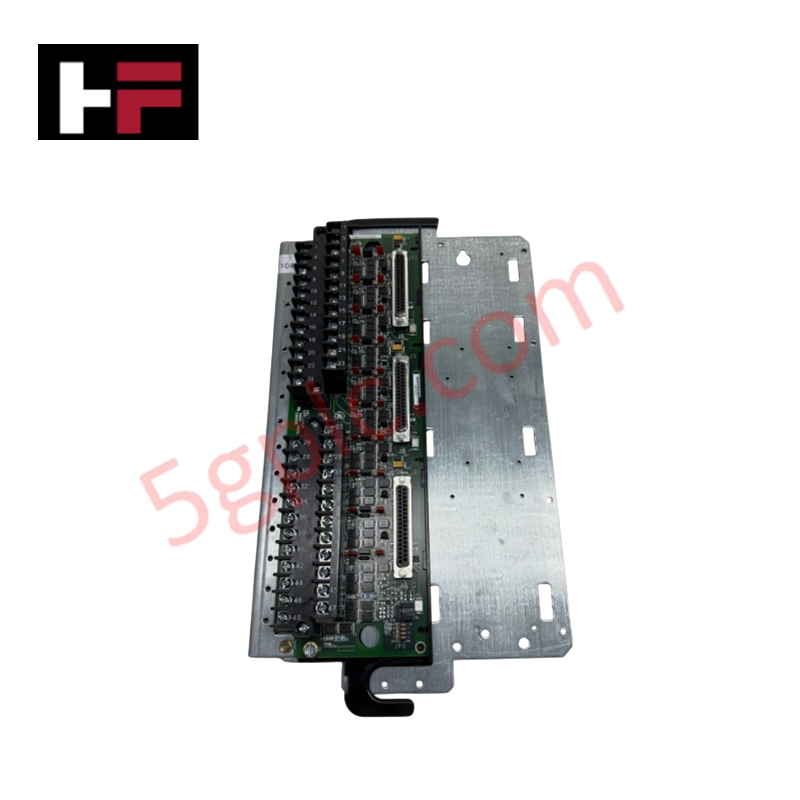
The General Electric IS200TBAIH1CDD stands as a high-precision Analog Input Terminal Board engineered specifically for the GE Mark VIe turbine control platform. This module facilitates the critical interface between field instrumentation and the digital control core, processing high-speed analog signals with exceptional temporal accuracy. We supply this board as 100% Brand New and Original, ensuring your critical infrastructure benefits from authentic, USA-manufactured hardware that meets the stringent requirements of modern power generation and industrial automation.
Technical Specifications
The IS200TBAIH1CDD utilizes Surface-Mount Technology (SMT) to deliver high channel density and superior synchronization in a compact form factor.
| Attribute | Technical Specification |
| Manufacturer | General Electric (GE) |
| Series | Mark VIe |
| Total Channels | 12 Channels (10 Inputs / 2 Outputs) |
| Synchronization Accuracy | ±1 ns |
| Clock Frequency | Up to 200 MHz |
| Input Span (Transmitters) | 1-5 V DC |
| Voltage Range (Inputs) | ±5 V, ±10 V DC |
| Output Configuration | 0-20 mA and 0-200 mA |
| Operating Temperature | 30°C to +65°C |
| Dimensions | 10.16 cm (W) x 33.02 cm (H) |
| Max Lead Resistance | 15 $\Omega$ |
Engineering Advantages
-
Nano-Second Synchronization: The module achieves an industry-leading synchronization accuracy of ±1 ns via a 200 MHz clock frequency. This eliminates jitter in high-speed control loops, ensuring precise data alignment across complex turbine subsystems.
-
Universal Input Compatibility: The IS200TBAIH1CDD accepts a vast array of signal types, including two-wire, three-wire, four-wire, and externally powered transmitters. It handles standard 1-5 V DC spans as well as higher voltage ±10 V DC signals, providing a single-board solution for diverse field sensor fleets.
-
High-Current Output Capability: Unlike standard low-power boards, this module supports analog outputs up to 200 mA. This allows the Mark VIe system to drive heavy-duty actuators and specialized control devices without requiring additional amplification stages.
-
Simplified Field Wiring: Two dedicated I/O terminal blocks support up to #12 AWG wires. Each block features 24 terminals secured by heavy-duty screws, while adjacent shield terminal attachment points provide a direct path to ground for effective EMI/RFI mitigation.
-
Industrial Robustness: Built with Surface-Mount Technology (SMT), the board maintains structural integrity in high-vibration environments. It operates reliably in elevated temperatures up to 65°C, making it ideal for installation in non-conditioned turbine enclosures.
FAQs
-
Can the IS200TBAIH1CDD replace earlier "CDC" or "CDB" revisions?
Yes. The "CDD" suffix identifies the latest hardware revision level. It maintains full backward compatibility with previous versions of the TBAIH1 board within the Mark VIe series, functioning as a direct "drop-in" replacement.
-
How does the board handle signal noise in long-distance wiring?
The board features a 15 $\Omega$ maximum lead resistance tolerance and dedicated shield attachment points next to every terminal block. These shield points allow engineers to terminate cable drains immediately at the board, preventing noise injection into the 1-5 V DC signal path.
-
What is the advantage of the 200 MHz clock frequency?
The high clock frequency enables the ±1 ns synchronization accuracy. In turbine applications where timing between fuel valves and ignition systems is critical, this speed ensures that the analog data is captured and processed with zero perceptible lag.
-
Is this part currently in stock and ready for international shipping?
We maintain the IS200TBAIH1CDD in stock as 100% Brand New units. These boards are original USA-manufactured parts and are ready for immediate international dispatch to minimize your facility's downtime.
Additional Information
- 100% Genuine Parts: All products are original and authentic, ensuring reliable industrial performance.
- 30-Day Refund Guarantee: Return any in-stock item within 30 days in original, unopened packaging for a full refund (excluding shipping and fees).
- 12-Month Warranty: Covers defects in materials or workmanship; excludes misuse, normal wear, or unauthorized modifications.
- Worldwide Shipping: We ship via USPS, UPS, FedEx, and DHL. Delivery times vary by country and may be subject to customs or import fees.
- Support & Contact: Technical and warranty assistance is available anytime. Contact us here: Contact.
- Purchase Guidance: Check product specifications and compatibility carefully before ordering to ensure proper application.


Tech & Buying Guide
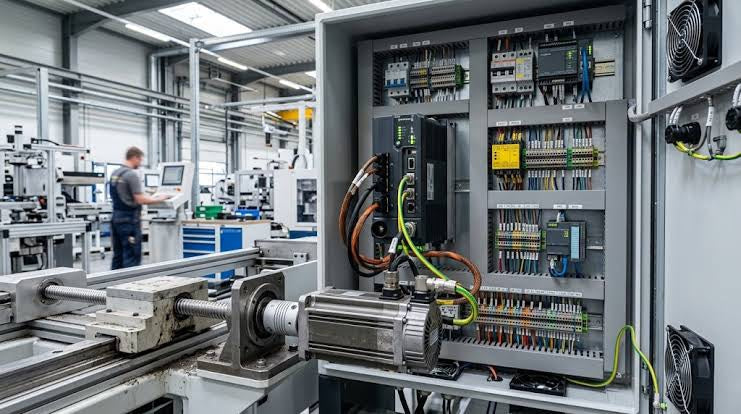
Demystifying Programmable Logic Controllers: Comprehensive Guide to PLC Classification and Selection in Industrial Automation
Modern industrial automation heavily relies on Programmable Logic Controllers (PLCs) to drive factory floor efficiency. Over my 15 years as an industrial automation expert working with DCS, TSI, and control systems, I have seen PLCs evolve into the central nervous system of modern manufacturing. Selecting the right controller requires a deep understanding of PLC types based on physical size, hardware architecture, and power supply configurations.

Comprehensive Guide to PLC Types in Modern Industrial Automation
Modern industrial automation relies on programmable logic controllers to govern critical factory operations. System integrators classify PLCs based on scale, hardware architecture, and power supply design. Understanding these core categories enables automation engineers to select the right control system architecture. Consequently, proper hardware selection optimizes performance while minimizing long-term operational costs.

Demystifying the DDE Protocol in Legacy Industrial Automation Systems
Modern control systems rely heavily on seamless interprocess communication to exchange operational data between software programs. Microsoft first introduced the Dynamic Data Exchange (DDE) protocol in 1987 to enable real-time data sharing. In factory automation, DDE served as an early bridge between control software and Windows desktop applications. Therefore, understanding DDE mechanics provides crucial insights into how legacy industrial networks established software-level connectivity.