













Product Details
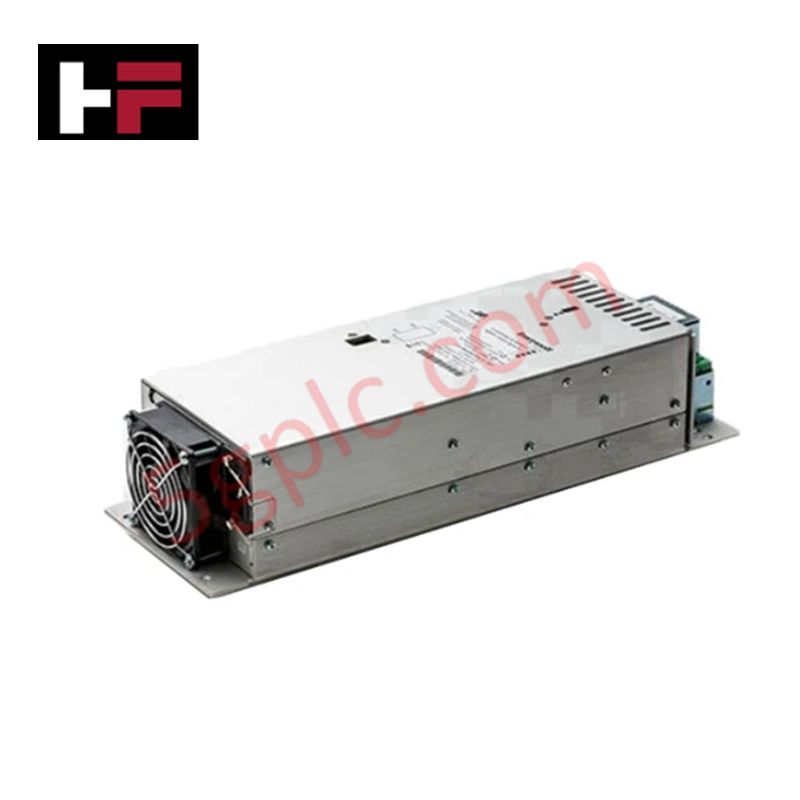
The Honeywell FS-PSU-UNI2450U, also cataloged as the FS-PSU-UNI2450U Power Supply, operates as a dedicated hardware component for converting and distributing regulated system voltage within Safety Manager and FSC system racks.
Hardware Specifications
| Parameter | Specification |
|---|---|
| Model | FS-PSU-UNI2450U |
| Brand | Honeywell |
| Origin | Netherlands |
| Weight | 4 kg (Shipping Weight) |
| Operating Temp | -0 to 60 deg C |
| Power Consumption | Internal conversion loss dependent on load |
| Product Type | Universal Power Supply Unit |
| Input Voltage Range | 110-240 VAC / DC universal input range |
| Output Voltage | 24 VDC nominal bus rail supply |
| Output Current Rating | 50 A max load rating |
| Electrical Isolation | Primary-to-secondary galvanic separation |
Channel-to-Channel Isolation and Power Distribution Integrity
The FS-PSU-UNI2450U provides primary-to-secondary galvanic isolation to prevent external mains surge propagation from damaging downstream logic cards and signal conditioning modules. Designed to maintain steady-state output voltage under fluctuating line conditions, the internal regulation loop suppresses switching noise and common-mode transients. When deployed in redundant system buses, the module provides isolated feed paths that allow parallel power sharing across the backplane structure while isolating internal fault conditions from affecting the central 24 VDC distribution loop.
Frequently Asked Questions
Q: Does replacing the FS-PSU-UNI2450U require a complete system shutdown?
A: In configured dual-redundant power rack configurations, a faulty PSU module can be unbolted and replaced while the parallel unit maintains backplane rail voltage, provided cabinet safety protocols are observed.
Q: How does the power supply handle primary AC input voltage transients?
A: Internal galvanic barriers and passive filtering stages clamp line surges, preventing voltage spikes from reaching sensitive backplane logic components or field output circuits.
Q: What cooling provisions are necessary during continuous full-load operation?
A: The module relies on convection and internal cabinet airflow. Free space around cabinet ventilation grilles must be maintained to prevent thermal cut-off triggering under elevated ambient conditions.
Field Installation Guidelines
- Mount the power supply unit into its assigned rack chassis position and secure all structural fixing screws to establish proper mechanical grounding.
- Verify primary input power lines are fully de-energized before connecting AC/DC mains conductors to the input terminal block.
- Attach cabinet protective earth (PE) grounding cables to the unit ground point using a low-impedance connection prior to applying power.
- Segregate high-voltage primary input cabling from low-voltage 24 VDC output distribution wires to prevent electromagnetic noise coupling.
- Ensure ambient air temperature around the rack chassis does not exceed 60 deg C during peak continuous output current draw.
Additional Information
- 100% Genuine Parts: All products are original and authentic, ensuring reliable industrial performance.
- 30-Day Refund Guarantee: Return any in-stock item within 30 days in original, unopened packaging for a full refund (excluding shipping and fees).
- 12-Month Warranty: Covers defects in materials or workmanship; excludes misuse, normal wear, or unauthorized modifications.
- Worldwide Shipping: We ship via USPS, UPS, FedEx, and DHL. Delivery times vary by country and may be subject to customs or import fees.
- Support & Contact: Technical and warranty assistance is available anytime. Contact us here: Contact.
- Purchase Guidance: Check product specifications and compatibility carefully before ordering to ensure proper application.




Tech & Buying Guide

Will PLCs Become Obsolete? The Future of Control Systems in Industry 4.0
Modern manufacturing is undergoing a rapid technological transformation driven by Industry 4.0 innovations. Technologies like Artificial Intelligence (AI), Machine Learning (ML), and the Industrial Internet of Things (IIoT) are dominating discussions across the factory automation sector. Consequently, many engineers wonder if these advanced digital tools will eventually replace traditional Programmable Logic Controllers (PLCs). However, evaluating the core physics of industrial operations reveals a very different reality for control systems.

Demystifying Open Platform Communication (OPC): The Backbone of Industrial Interoperability
Interoperability remains a cornerstone requirement for modern smart factories and process automation. Open Platform Communication (OPC) bridges the gap between disparate hardware platforms, control systems, and visualization software. By establishing a universal communication standard, OPC allows field controllers, SCADA platforms, and enterprise software from different vendors to exchange real-time data seamlessly.

Understanding Siemens PLC Memory Cards: MMC, SMC, and SD Solutions in Industrial Automation
Memory management plays a pivotal role in maintaining control system reliability across modern manufacturing plants. Industrial control systems rely on specialized memory cards to store project logic, firmware updates, and retentive system data. Siemens uses several memory architectures, including Micro Memory Cards (MMC) and SIMATIC Memory Cards (SMC). Engineers must understand these hardware variations to ensure zero data loss and minimize downtime during maintenance routines.