












Product Details
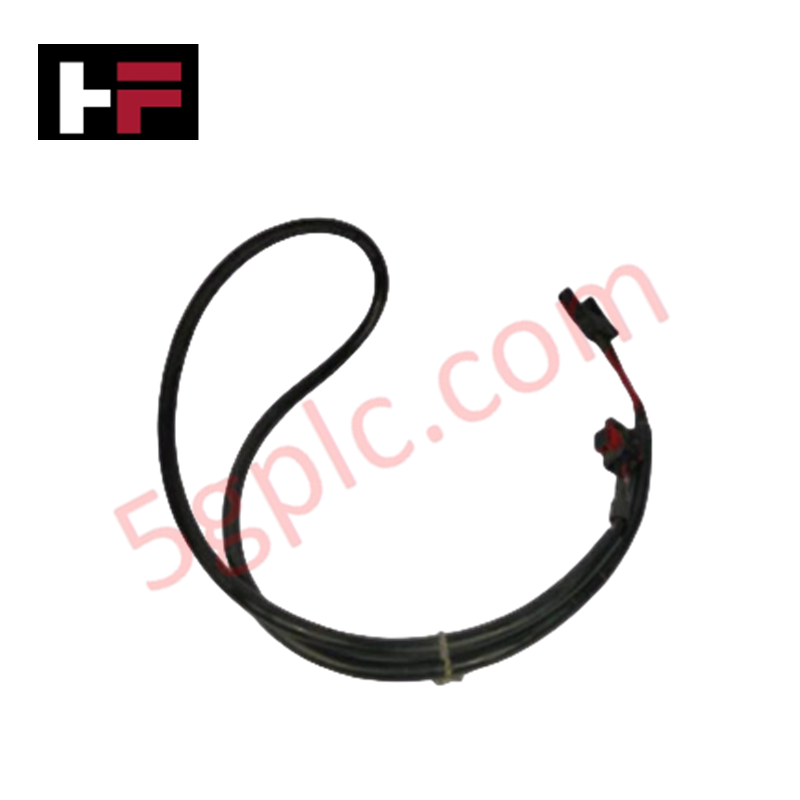
The Honeywell FS-PDC-CPSET, also cataloged as the FS-PDC-CPSET Power Distribution Cable Set, operates as a dedicated hardware component for routing regulated 24 VDC primary power from system bus bars to central controller modules within Honeywell Safety Manager platforms.
Hardware Specifications
| Parameter | Specification |
|---|---|
| Model | FS-PDC-CPSET |
| Brand | Honeywell |
| Origin | Netherlands |
| Weight | 5 kg (Shipping Weight) |
| Dimensions | Cable 1: 54 cm (21.26 in), Cable 2: 77 cm (30.31 in) |
| Operating Temp | -20 to 70 deg C |
| Power Consumption | Passive distribution assembly |
| Conductor Specification | CC600 2 x 2.5 mm2 copper conductors |
| Bus Bar Connector | 2-pole Squeeze To Release type (D-TAB-200-STR) |
| Controller Connector | 2-pole Mate-N-Lok connector |
| System Voltage | 24 VDC nominal |
| Approvals | UL, CSA (FM pending) |
Channel-to-Channel Isolation and Power Distribution Integrity
The FS-PDC-CPSET utilizes high-grade CC600 2 x 2.5 mm2 dual-core conductors to minimize line resistance and thermal dissipation across the 24 VDC controller supply loop. Engineered to maintain physical and electrical decoupling between redundant power rails, the cable set preserves channel-to-channel isolation parameters throughout the backplane power tree. By preventing voltage dips during transient load surges, the assembly ensures uninterrupted power feed to control processors, supporting stable field communications over 4-20 mA HART loop protocol interfaces without introducing inductive noise or line cross-talk.
Frequently Asked Questions
Q: How do the two cable lengths in the FS-PDC-CPSET function within a redundant Control Processor rack?
A: The differing lengths (54 cm for FS-PDC-CP24-1 and 77 cm for FS-PDC-CP24-2) match the specific physical routing distance from the central 24 VDC power bus bar to the primary and secondary controller module slots, preventing excess cable slack in the cabinet.
Q: What mechanism prevents accidental disconnects at the power bus bar side during cabinet vibration?
A: The bus bar connection utilizes a positive-locking 2-pole D-TAB-200-STR "Squeeze To Release" connector that secures firmly to the bus bar terminals until manually disengaged.
Q: Are the conductors rated to handle the initial inrush current of a central processor boot cycle?
A: Yes, the 2.5 mm2 cross-section copper conductors are rated to sustain continuous operational current and transient inrush currents without measurable DC voltage drop across the length of the harness.
Field Installation Guidelines
- De-energize the 24 VDC power distribution bus bar prior to connecting or disconnecting power cable harnesses.
- Align the Mate-N-Lok connector with the power input receptacle on the Control Processor and press firmly until the locking latch clicks into position.
- Attach the D-TAB-200-STR connector to the 24 VDC bus bar terminal, ensuring the squeeze-to-release tab fully engages the bus bar tab profile.
- Route the cables through dedicated low-voltage wiring channels, avoiding sharp metal chassis edges and maintaining a minimum bend radius to protect the outer cable insulation.
- Inspect connector contact surfaces for cleanliness and oxidation before final mating to ensure low-resistance power distribution to the safety system.
Additional Information
- 100% Genuine Parts: All products are original and authentic, ensuring reliable industrial performance.
- 30-Day Refund Guarantee: Return any in-stock item within 30 days in original, unopened packaging for a full refund (excluding shipping and fees).
- 12-Month Warranty: Covers defects in materials or workmanship; excludes misuse, normal wear, or unauthorized modifications.
- Worldwide Shipping: We ship via USPS, UPS, FedEx, and DHL. Delivery times vary by country and may be subject to customs or import fees.
- Support & Contact: Technical and warranty assistance is available anytime. Contact us here: Contact.
- Purchase Guidance: Check product specifications and compatibility carefully before ordering to ensure proper application.


Tech & Buying Guide
Demystifying Programmable Logic Controllers: Comprehensive Guide to PLC Classification and Selection in Industrial Automation
Modern industrial automation heavily relies on Programmable Logic Controllers (PLCs) to drive factory floor efficiency. Over my 15 years as an industrial automation expert working with DCS, TSI, and control systems, I have seen PLCs evolve into the central nervous system of modern manufacturing. Selecting the right controller requires a deep understanding of PLC types based on physical size, hardware architecture, and power supply configurations.

Comprehensive Guide to PLC Types in Modern Industrial Automation
Modern industrial automation relies on programmable logic controllers to govern critical factory operations. System integrators classify PLCs based on scale, hardware architecture, and power supply design. Understanding these core categories enables automation engineers to select the right control system architecture. Consequently, proper hardware selection optimizes performance while minimizing long-term operational costs.

Demystifying the DDE Protocol in Legacy Industrial Automation Systems
Modern control systems rely heavily on seamless interprocess communication to exchange operational data between software programs. Microsoft first introduced the Dynamic Data Exchange (DDE) protocol in 1987 to enable real-time data sharing. In factory automation, DDE served as an early bridge between control software and Windows desktop applications. Therefore, understanding DDE mechanics provides crucial insights into how legacy industrial networks established software-level connectivity.