












Product Details
Product Overview
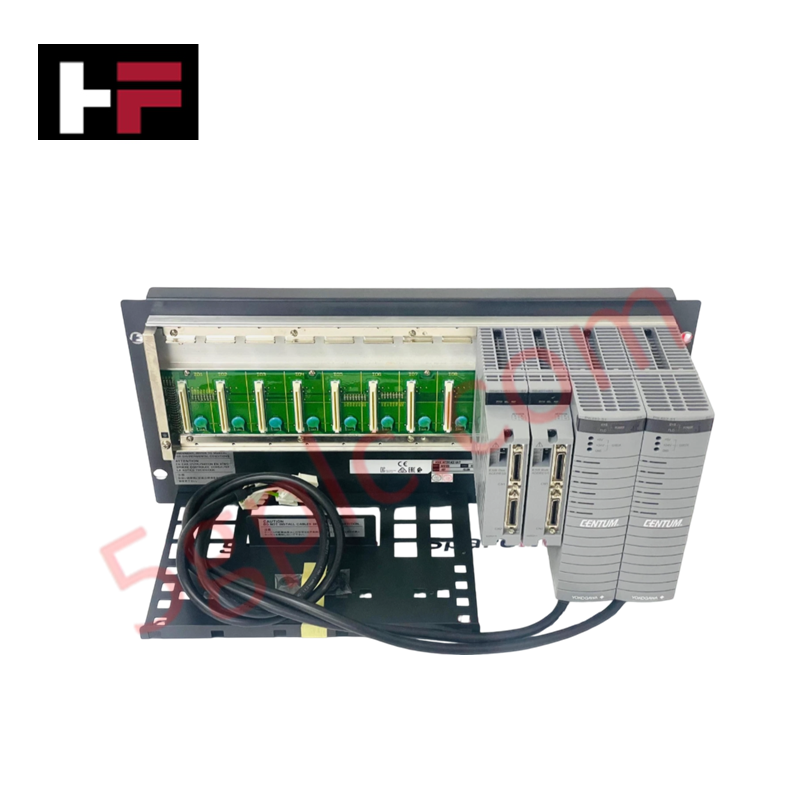
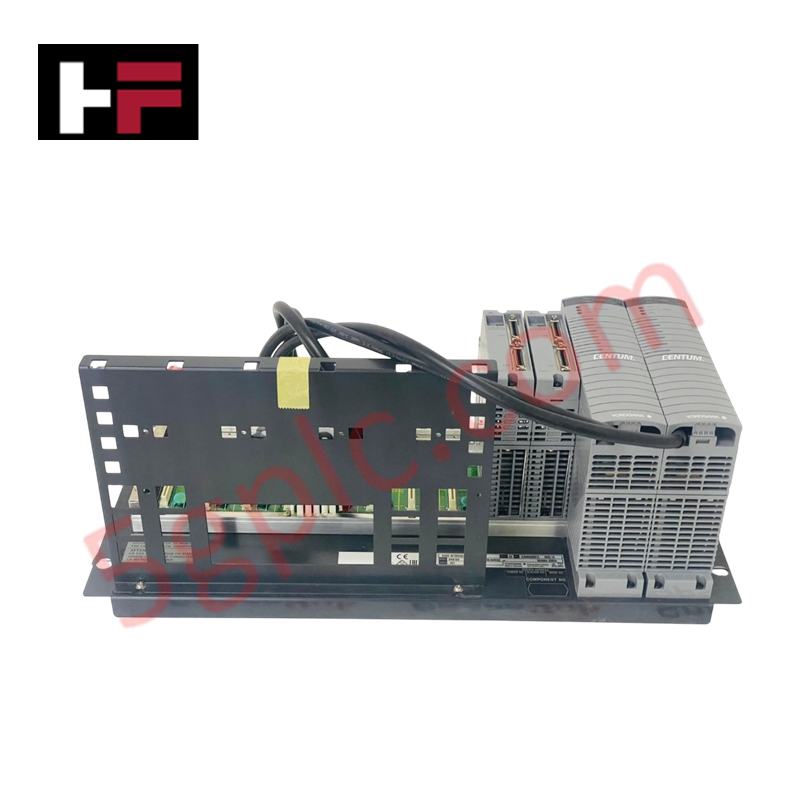
The Yokogawa ANB10D-420/CU2T serves as a high-availability node unit designed specifically for the CENTUM VP Distributed Control System (DCS). This unit facilitates seamless communication between the Field Control Unit (FCU) and various I/O modules. Unlike standard nodes, the ANB10D architecture supports dual-redundant ESB bus configurations, ensuring zero signal interruption even if one communication path fails. We supply this unit as 100% Brand New and Original, providing the technical integrity required for mission-critical industrial processes.
Part Number Breakdown
The suffix and option codes define the specific hardware capabilities of this unit:
| Code | Identification | Technical Definition |
| ANB10D | Model | Node Unit for Dual-Redundant ESB Bus |
| -4 | Power Redundancy | Equipped with Dual-redundant power supplies |
| 2 | Voltage | 220 - 240 V AC power supply input |
| 0 | Protection | Basic type (Non-explosion protection) |
| /CU2T | Option | Connector Unit with Terminator (Includes 2x S9564FA) |
Technical Specifications
The ANB10D-420/CU2T integrates robust electrical specs to handle continuous heavy-load processing:
-
Communication Interface: Dual-Resistant ESB Bus (Redundant)
-
Input Power: 220 V to 240 V AC (Wide range tolerance)
-
Frequency: 50/60 Hz
-
Redundancy: Supports both Power Supply and Communication Redundancy
-
Termination: Integrated CU2T module with S9564FA terminators
-
Mounting: Standard 19-inch rack-mount compatibility
-
I/O Module Slots: Supports multiple Yokogawa I/O modules per node
Engineering Advantages
-
Fault-Tolerant Communication: The dual-redundant ESB bus architecture eliminates single points of failure. If a cable breaks or a port fails, the system automatically switches to the secondary path without dropping process data.
-
Power Reliability: Two independent power modules load-share the system requirements. This allows for live replacement of a power module or survival during the loss of a primary power circuit.
-
Simplified Bus Termination: The /CU2T option includes the specific S9564FA terminators. This simplifies the end-of-line configuration for the ESB bus, preventing signal reflection and noise without requiring external termination blocks.
-
Direct DCS Integration: This unit communicates natively with CENTUM VP controllers. Engineers save hours on configuration because the system recognizes the ANB10D hardware automatically upon connection to the ESB bus.
FAQs
-
Does the ANB10D-420/CU2T include the ESB bus cables? No, the unit includes the connector unit and terminators (/CU2T), but you must specify and purchase the ESB bus cables separately based on the distance between your FCU and the node.
-
Can I use this unit in a single-bus (non-redundant) setup? While the ANB10D supports redundancy, it can operate in a non-redundant mode. However, for cost-sensitive applications that do not require dual paths, the ANB10N model is the standard alternative.
-
What happens if one power supply fails? The secondary power supply unit immediately takes over the full load. The DCS will trigger a system alarm to alert the operator, allowing for a "hot" replacement of the failed module without shutting down the entire node.
-
Is this unit compatible with 110V AC environments? No. The "2" in the suffix code designates a 220-240V AC power supply. For 100-120V AC environments, you must order the ANB10D-410 variant.
Additional Information
- 100% Genuine Parts: All products are original and authentic, ensuring reliable industrial performance.
- 30-Day Refund Guarantee: Return any in-stock item within 30 days in original, unopened packaging for a full refund (excluding shipping and fees).
- 12-Month Warranty: Covers defects in materials or workmanship; excludes misuse, normal wear, or unauthorized modifications.
- Worldwide Shipping: We ship via USPS, UPS, FedEx, and DHL. Delivery times vary by country and may be subject to customs or import fees.
- Support & Contact: Technical and warranty assistance is available anytime. Contact us here: Contact.
- Purchase Guidance: Check product specifications and compatibility carefully before ordering to ensure proper application.


Tech & Buying Guide

Spatial Computing in Industrial Automation: Elevating PLC and DCS Operations with AR and VR
Industry 4.0 integrates digital intelligence into field operations, transforming factory automation landscapes worldwide. Spatial technologies—specifically Augmented Reality (AR) and Virtual Reality (VR)—redefine how engineers interact with industrial control systems. By bridging computer-generated CAD models with real-time operational technology (OT) data, immersive displays enable intuitive monitoring, rapid diagnostics, and safer maintenance across complex processing facilities.

Master Acceptance Testing: Understanding FAT and SAT in Industrial Control Systems
Factory Acceptance Testing (FAT) and Site Acceptance Testing (SAT) serve as critical quality assurance gateways in complex industrial control systems. Both procedures verify that programmable logic controllers (PLCs), distributed control systems (DCS), and associated field devices meet strict functional specifications. However, executing these tests effectively requires clear delineation between off-site staging and final field commissioning.

Industrial Networking Essentials: Demystifying Hubs, Switches, and Routers in Control Systems
Industrial automation relies heavily on robust networking infrastructure to connect programmable logic controllers (PLCs), distributed control systems (DCS), and human-machine interfaces (HMIs). Modern factory automation environments generate vast amounts of real-time operational data across deterministic networks. Understanding the structural differences between hubs, switches, and routers ensures optimal traffic segmentation, minimizes latency, and maintains high network availability.